Workplace Challenge Ideas: 20 Challenges for Office, Remote, and Hybrid Teams
The best workplace challenges are short, easy to join, and scored so that taking part counts as much as winning. Here are 20 ideas for office, remote, wellness, learning, and giving-back challenges, with how to run and score each one.
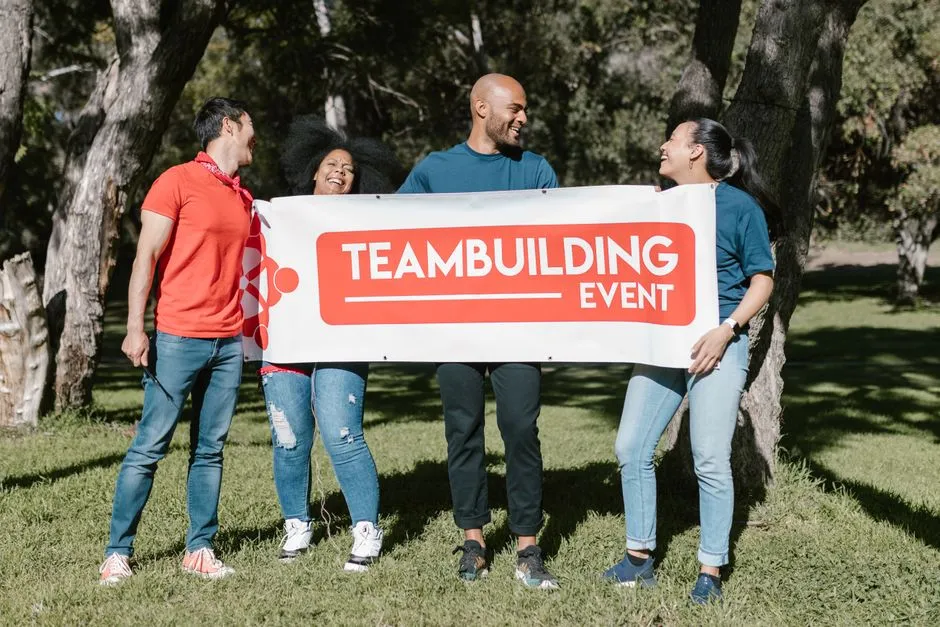
The best workplace challenges are short, easy to join, and scored so that taking part counts as much as winning: a scavenger hunt or trivia league for connection, a movement or mindfulness streak for wellness, a micro-learning streak for growth, or a volunteer drive for giving back. Run each one for four to eight weeks with a clear start and finish, post the standings where everyone can see them, and reset before interest fades. In Give River, a gamified Season turns recognition itself into a team-wide challenge, ranked by drops on the River Rankings leaderboard; the Free plan includes one Season at a time.
Workplace challenges at a glance
| Type | Try this first | Keep score by | Best format |
|---|---|---|---|
| Office | Office scavenger hunt | Points per item found, with photo proof | Teams |
| Remote and hybrid | Weekly trivia league | A running league table | Mixed-location teams |
| Wellness | Movement-break bingo | Lines completed | Individuals adding to a team total |
| Learning | Micro-learning streak | Days in a row | Individuals |
| Giving back | Volunteer hours challenge | Hours per person | Teams |
Office challenges
The best in-person challenges get people out of their seats and mix teams that rarely work together.
1. Office scavenger hunt
Teams of four to six get 45 minutes and a list of clues that send them around the building: a photo with someone from another floor, the oldest item in the supply closet. Score it: a point per item with photo proof, plus a bonus for the first team back. For a bigger version, see our Amazing Race challenges for team building.
2. Lunch-break relay
A 20-minute relay with office-friendly legs: stack cups, solve a riddle, pass a message down the line without writing it down. Score it: fastest time, with a separate prize for the best team name. Our relay race ideas have more legs.
3. Cross-team lunch roulette
Each week, pair people at random with someone from another team for lunch or coffee. Score it: a point per new person met, on a shared sheet; everyone who reaches four in a month goes into a prize draw.
4. Five-day thank-you streak
Everyone thanks one colleague a day for five working days, on a whiteboard, in a shared channel, or as a public shout-out, naming what the person did and why it mattered. Score it: everyone who keeps the streak wins; there's no leaderboard to top. Borrow wording from these thank-you messages for coworkers or our peer-to-peer recognition activities.
Remote and hybrid challenges
Pick challenges people can join from anywhere and in any time zone, and mix office and remote people on every team.
5. Weekly trivia league
Fifteen minutes of trivia at the same time each week, with a rotating host who adds one round about their own team's work. Score it: round points add up in a league table; the team on top after six or eight weeks wins. See online trivia for teams for formats.
6. Photo-a-day challenge
Post a daily prompt (your desk view, your lunch, something that made you smile) and ask people to share a photo in a shared channel or app. Nobody has to be online at the same time. Score it: a point per day posted, plus a weekly favorite chosen by vote. More ideas: virtual team challenge games.
7. Virtual escape room
Teams of five or fewer solve puzzles on a video call to "escape" before the clock runs out. Score it: time to escape, plus a penalty minute for each hint. Our guide to virtual escape rooms covers setup.
8. Festive background contest
For a December call, invite people to decorate their real or virtual background for any holiday they celebrate, or just for winter. Keep it optional. Score it: a quick vote in categories such as most creative. For more, see these free virtual holiday team-building activities, and if the challenge closes out the year, pair it with one of these employee holiday gift ideas.
Wellness challenges
Reward healthy habits, not body measurements. Score effort and consistency, and offer an alternative to every activity so people with different abilities, schedules, and caregiving duties can take part.
9. Movement minutes challenge
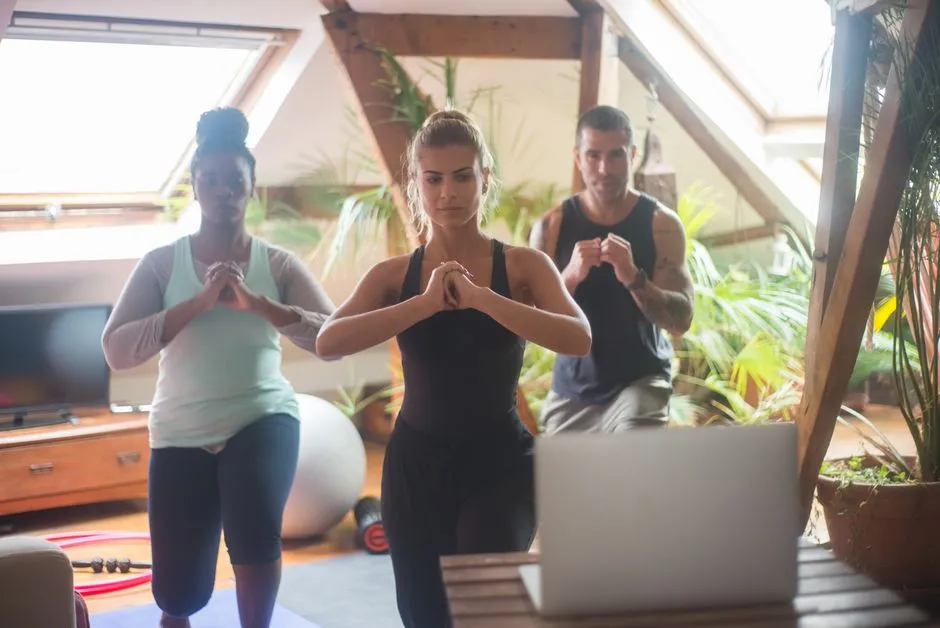
Instead of step counts, people log minutes of any movement they choose (walking, stretching, wheelchair laps, yoga) against a daily target they set themselves. Score it: a point for each day someone hits their own target, so consistency beats fitness. Our workplace wellness challenge ideas have 25 more.
10. Movement-break bingo
A bingo card of small habits: take the stairs, hold a walking meeting, stretch for two minutes, step outside at lunch. Score it: a point per completed line and a bonus for a full card. Read more in employee wellness gamification tips.
11. Mindful minute streak
One minute of quiet breathing or reflection each workday for three weeks. It needs no equipment, so it suits remote and frontline teams. Score it: days in a row, with a short grace window so one missed day doesn't end a streak. See virtual wellness challenge ideas.
12. Screen-free evening
One evening a week, screens go away after work; people share a note or photo of what they did instead. Score it: a point per evening claimed, on the honor system. The goal is the habit, not the ranking.
Learning challenges
Keep the daily step small. Ten minutes a day beats a two-hour course nobody finishes.
13. Micro-learning streak
Everyone completes one short lesson a day from your library: a leadership skill, a wellbeing practice, a tool your team uses. Score it: days in a row, or lessons completed for people on different schedules. See how micro-learning in Give River works.
14. Teach-back challenge
Each person teaches the team one thing in ten minutes, such as a spreadsheet shortcut or a customer insight, one or two sessions a week for a month. Score it: a point for teaching, a point per session attended, and a vote for the most useful tip.
15. Book or podcast club sprint
One chapter or episode a week; members post a three-sentence takeaway and one thing they'll try. Score it: a point per takeaway, and two more for reporting back on what they tried.
16. New-skill sprint
Everyone picks one skill to build over eight weeks, breaks it into weekly milestones, and shares progress at a short check-in. Score it: milestones completed, so a beginner and an expert can compete. For the thinking behind it, see gamified personal growth.
Giving-back challenges
Score participation, so people who can't give money can still give time.
17. Volunteer hours challenge
Teams log volunteer hours over a month, for causes they choose or at an event you organize. Score it: hours per person, so a small team can beat a large one. See our team-building volunteer activities.
18. Donation drive
Each department runs a collection point for food, coats, school supplies, or books for a local charity. Score it: the share of each team that took part, not the number of items, so nobody feels pressure to spend. Read more about charitable giving at work.
19. Virtual volunteering sprint
Remote teams take on an online project in short bursts, such as mentoring a student or reviewing a nonprofit's website. Score it: tasks or hours per person. Find projects in our list of virtual community service projects.
20. Cleanup or sustainability challenge
A local park or beach cleanup, or a month of walking, cycling, or car-sharing to work. Score it: bags collected per team, or green commute days per person. See environmental sustainability initiatives.
Team or individual: choosing the format
| Format | Best for | Watch out for |
|---|---|---|
| Individual | Habits: movement, learning streaks, thank-yous | The same few people winning. Set a target everyone can reach and draw a prize among those who hit it |
| Team | Events and projects: hunts, trivia, volunteering | Uneven team sizes. Balance teams or score per person |
| Individual actions, team totals | Longer challenges across departments | Keeping score by hand. Let software total the points |
A department cup, where every action counts toward a department's total, keeps quieter people involved: their points matter to the team even if they'll never top an individual leaderboard.
How to keep score so more people play
- Reward taking part. Give points for every entry, and use thresholds ("everyone who reaches 20 points wins") alongside first place.
- Cap daily points, so nobody races ahead in a single weekend.
- Keep it short. Four to eight weeks, then a reset. Shorter creates urgency; longer gives slow starters time to catch up.
- Post the rules and the standings, so people can see how far they are from the next place.
- Close with recognition. Announce the winners and thank everyone who took part. Prizes don't have to be cash; see these types of employee recognition.
- Ask what to change. A two-question survey afterward tells you what to run next; see our pulse survey questions and cadence.
Pair a challenge with a Season in Give River
A gamified Season in Give River is a time-bound cycle of one to three months with a clear start, finish, and reset, ranked by drops: received, given, earned, or all of them. Run one alongside a challenge and recognize standout entries with Drops, so the effort shows up on the leaderboard. Seasons come with every plan, Free included. (For why points and leaderboards work, see gamification in the workplace.) Setting up a Season takes five decisions:
- A goal. Boost performance, build connectedness, foster growth and learning, or promote wellness. The goal sets how people are ranked (drops received, all drops, drops earned, or drops given), and you can pick a different rule.
- Who competes. Individual or Teams. A team's points are the sum of its members' points, so balance team sizes.
- The length. 4, 8, or 12 weeks, or your own dates.
- The prizes. Drop prizes for the top places, paid automatically after the Season ends. In a Teams Season, every member of a winning team gets the full prize.
- The reminders. Admins who can send team emails can plan a kickoff, a mid-season boost, a final-week email, and a results email.
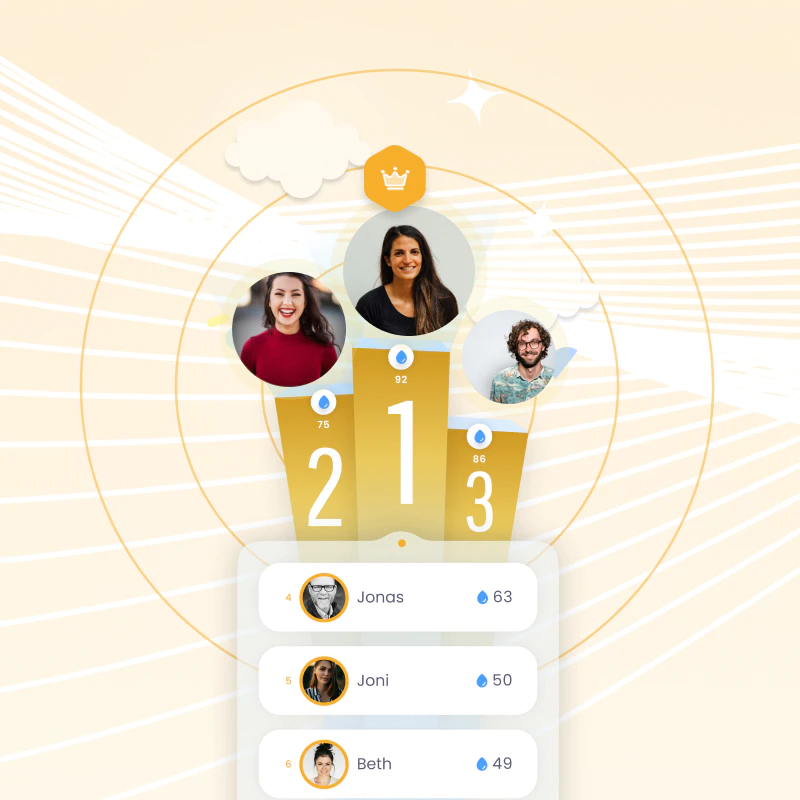
During a Season, the Season tab in River Rankings shows the standings, how far each person or team is behind the one ahead, and a How to win card with your contribution and the Season's rules. Season rankings reset when the next Season starts.
Three more Give River features fit the ideas above; see pricing for which plan includes each:
- Drop Dares are opt-in challenges with a theme, a joining fee in coins (an in-app currency), and drop prizes for the top three. Teammates post a photo or video as their entry, which suits one-entry ideas such as a festive background or a cleanup before-and-after.
- Health Challenges are real-world activities, such as running a 5K or taking a screen-free day, that members claim with a note or photo. An admin approves the claim and the member earns drops. There's a starter set of about twenty, and admins can write their own.
- River Runs, on Core, are 5–20 minute micro-learning courses on wellness, professional development, and soft skills, plus your own content. Lessons earn drops, and each day you watch or finish one adds to your River Runs streak.
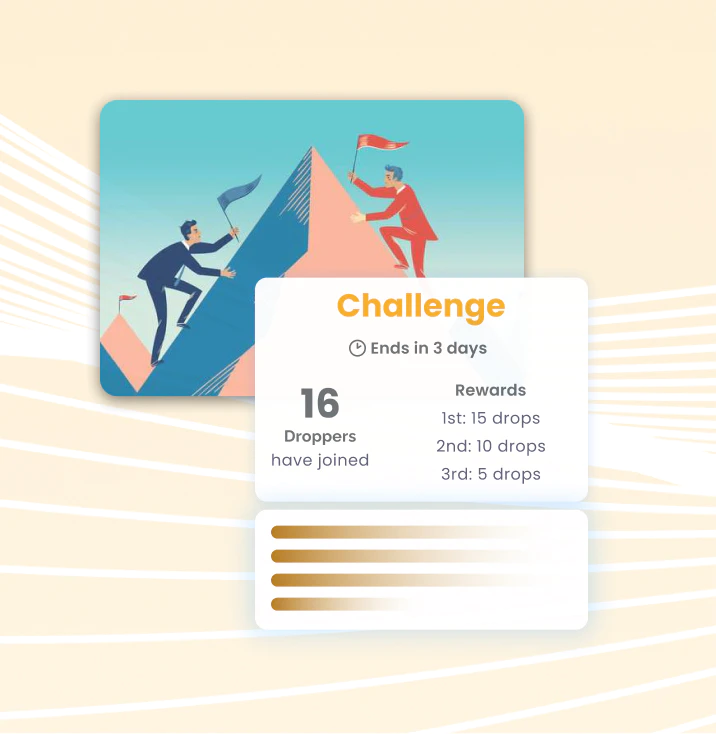
Drops earned from River Runs, Health Challenges, and Dares count toward a Season ranked by drops earned, so one Season can combine several challenges. Give River's team-building activities are part of the Growth plan.
Frequently asked questions
What is a workplace challenge?
A time-bound activity where employees work toward a goal, alone or in teams, and keep score along the way. Common types are office games, remote games, wellness habits, learning streaks, and giving-back drives.
How long should a workplace challenge last?
Four to eight weeks suits most challenges: long enough to get going, short enough to keep the energy up. Give River Seasons come in 4, 8, and 12-week lengths, or your own dates.
How do you keep score fairly in a team challenge?
Score per person or keep teams the same size, give points for taking part as well as for winning, and cap daily points. Post the rules before you start and the standings while it runs.
What prizes work for workplace challenges?
Public recognition, a team lunch, a trophy that passes to the next winner, or a small reward. In Give River, Season prizes are paid in drops, and on Core drops can be redeemed for gift cards and custom company rewards.
How do you run a challenge for remote and hybrid teams?
Choose challenges people can join from anywhere at any time, such as a photo-a-day or a micro-learning streak, and mix office and remote people on every team. Keep the standings where everyone can see them, not on an office whiteboard.
Can you run workplace challenges in Give River for free?
Yes. Give River Free includes one gamified Season at a time, the River Rankings leaderboard, and peer recognition for up to 25 members, with no time limit. Core, at $4.99 per user per month, adds River Runs micro-learning and gift cards.
More from this category.

Best Gamified Employee Engagement Platforms (2026)
Six engagement platforms compared on leaderboards, challenges, and campaigns, from their own sites, plus how to gamify engagement without making it childish.

Why the Best Team Meeting Ice Breakers Are Worth Every Minute
The best team meeting ice breakers can be the difference between a room full of disengaged faces and a team that's genuinely ready to collaborate. Whether you're running a daily standup, a new-hire kickoff, or a large all-hands, how you…
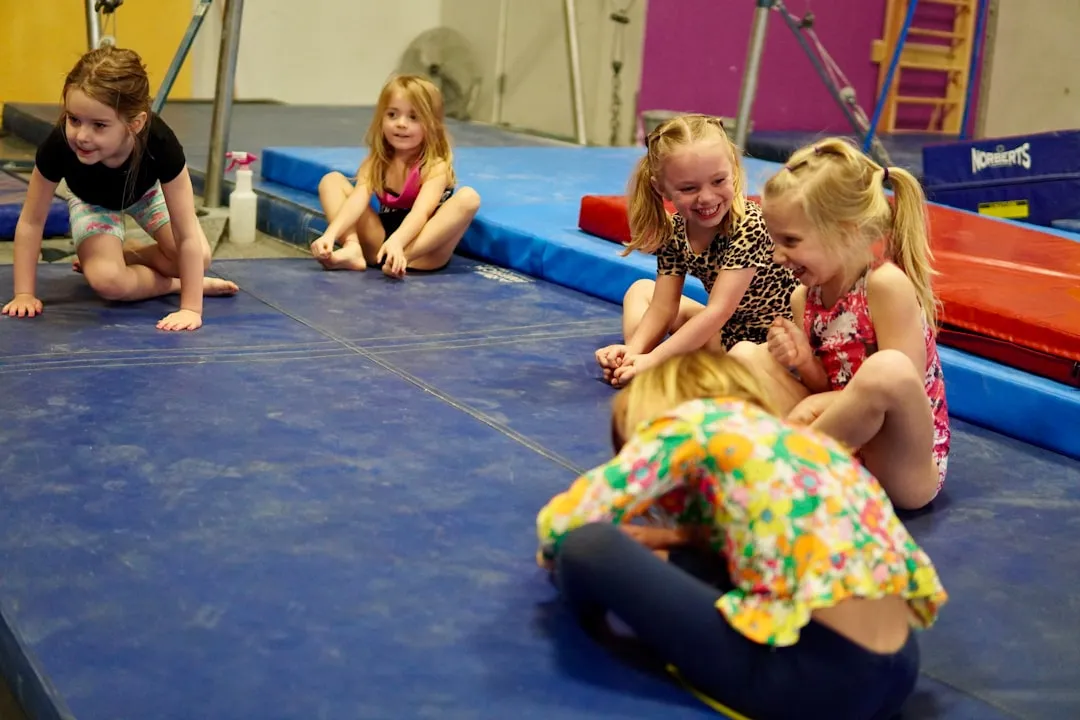
Why Cheer Team Bonding Exercises Are the Foundation of Every Great Squad
Cheer team bonding exercises are structured activities designed to build trust, improve communication, and strengthen the relationships that make a squad perform as one. Here are the most effective types to get you started:
See the platform in action.
Free for up to 25 members, or try Core or Growth free for 30 days. A card is required; Free is never charged, and a trial bills when it ends unless you cancel.