Why Employee Appreciation and Engagement Define Your Company's Future
Employee appreciation and engagement are the two most powerful levers you have for building a team that stays, performs, and genuinely cares about your company's success.

Why Employee Appreciation and Engagement Define Your Company's Future
Employee appreciation and engagement are the two most powerful levers you have for building a team that stays, performs, and genuinely cares about your company's success.
Here's the quick answer if you need it fast:
| What It Is | Why It Matters | What It Drives |
|---|---|---|
| Recognizing employees' contributions, efforts, and achievements — formally and informally | Employees who feel valued are more productive, more loyal, and more innovative | Retention, discretionary effort, innovation, revenue growth |
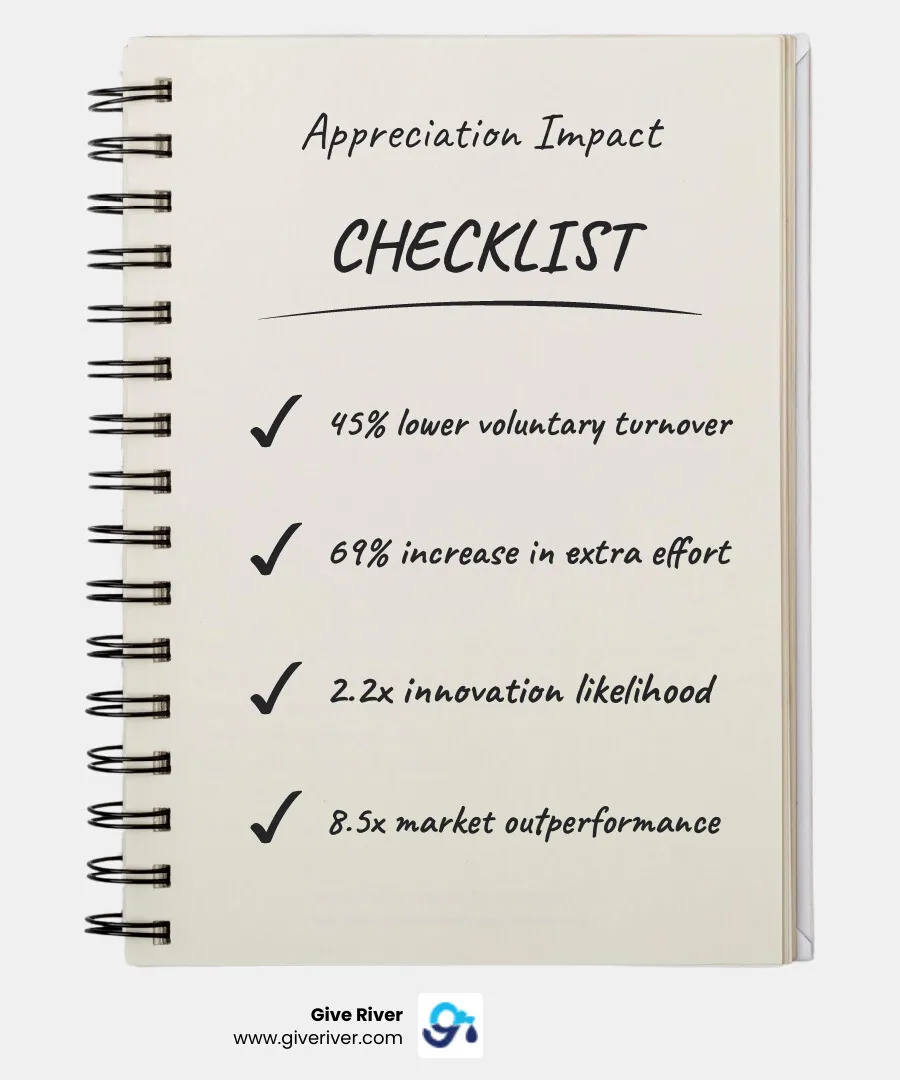
| Both monetary and non-monetary appreciation | A genuine "thank you" from leadership increases the likelihood of extra effort by 69% | 45% lower voluntary turnover over two years |
| Top-down and peer-to-peer recognition | Only 1 in 4 employees currently feel appreciated | 2.2x greater likelihood of driving innovation |
| Timely, specific, and personalized acknowledgment | Unrecognized employees are 2x more likely to quit | Fortune 100 companies with strong recognition outperform the market by 8.5x |
The numbers tell a clear story, but they don't capture the full weight of what's happening inside your organization right now. While 70% of employees say their leaders demonstrate that people matter to the company's success, nearly 1 in 4 still feel underappreciated. That gap — between intent and impact — is exactly where engagement breaks down, turnover spikes, and your best people start quietly looking elsewhere.
Recognition isn't a "nice to have" anymore. It's a strategic imperative. When employees feel seen and valued, they're not just happier — they're 2.6x more likely to view promotions as fair, 2.2x more likely to innovate, and significantly more likely to bring their full effort to work every day.
And here's what most leaders miss: building that culture of appreciation doesn't require a massive budget. It requires intention.
I'm Meghan Calhoun, Co-Founder of Give River and a workplace wellness expert who spent over two decades leading high-performing teams in some of the most emotionally demanding environments imaginable — from Fortune 100 sales floors to working daily alongside grieving families. That lived experience, combined with the science of human fulfillment, shapes everything I know about employee appreciation and engagement and why getting it right changes everything for your team.
Essential employee appreciation and engagement terms:
The Science of Employee Appreciation and Engagement
To understand why a simple "thank you" can transform a workplace, we have to look under the hood—specifically, at the human brain. When we receive recognition, our brain's reward system lights up.
Neurobiology tells us that recognition stimulates the hypothalamus, the part of the brain that regulates stress. It also triggers a release of dopamine, the "feel-good" neurotransmitter associated with motivation and reward. This isn't just "fluff"; it's a physiological response that reduces cortisol (the stress hormone) and builds a sense of psychological safety.
According to the American Psychological Association, recognition is one of the five key components of a healthy workplace. When this biological reward loop is activated, productivity doesn't just nudge upward—it leaps. Companies with strong recognition cultures see 50% higher productivity and a staggering 45% lower voluntary turnover after two years.
If you want to dive deeper into these mechanics, check out our ultimate guide to boosting employee engagement.
Why Recognition is the Ultimate Driver of Employee Appreciation and Engagement
We often think of work as a transactional exchange of time for money. However, humans are wired for more. Employees are 7x more likely to stay when they say their work is meaningful and 2x more likely when they are proud of where they work.
Recognition bridges the gap between "just doing a job" and finding purpose. When everyone in an organization has an equal chance at getting a "gold star," they are 56% more likely to give extra effort. This is the power of "discretionary effort"—the work people choose to do because they feel valued, not because they have to.
Intrinsic motivators include:
- Validation: Feeling that your unique skills are seen.
- Belonging: Knowing you are a vital part of the tribe.
- Autonomy: Being recognized for taking initiative.
- Fairness: Seeing that hard work leads to visible appreciation.
For more on how to apply these drivers, see our employee recognition strategies.
Impact on Business Outcomes: Revenue and Innovation
If the "human" side doesn't convince the board, the balance sheet will. The Fortune 100 Best Companies to Work For outperform the market by 8.5 times. It’s not a coincidence; it’s a direct result of employee appreciation and engagement.
These top-tier companies experience 5x greater revenue per employee. Why? Because recognized employees are 2.2x more likely to drive innovation. They aren't afraid to suggest new ideas because they know their contributions are valued. When employees feel appreciated, they stop playing it safe and start playing to win.
To see how this translates into specific accolades, explore our ultimate guide to employee performance awards.
Building a Rockstar Culture: Practical Strategies and Frameworks
Creating a culture of recognition isn't about one-off pizza parties. It’s about building a system where appreciation is the default setting.
The most effective recognition follows four rules:
- Specific: Don’t just say "good job." Say, "I loved how you handled that client objection in the meeting; it showed real empathy."
- Timely: Recognition loses its power if it's delivered six months late. Aim for a 7-day window.
- Personalized: Some people love a public shout-out; others prefer a quiet sticky note on their desk.
- Inclusive: Ensure everyone—from the intern to the senior VP—has a chance to be recognized.
Discover more about setting up these frameworks in our guide to recognition programs for employees.
Effective Strategies for Employee Appreciation and Engagement
You don't need a million-dollar budget to make someone feel like a rockstar. In fact, 37% of employees say more personal recognition would encourage them to produce better work.
Here are some low-cost, high-impact ideas:
- The Gift of Time: Surprising a team with a "Summer Friday" or a random Tuesday afternoon off.
- Public Kudos: A dedicated Slack channel for shout-outs or a "Wall of Fame."
- Small Wins: Celebrating the "win" (not just the "Big Win") to reinforce daily progress.
- Experiential Rewards: A team hike, a catered lunch, or a "team trophy" that rotates weekly.
- Handwritten Notes: In a digital world, a physical card from a leader is often kept for years.
For a massive list of inspiration, check out our easy employee recognition ideas guide.
Peer-to-Peer vs. Leadership Recognition
While a "thank you" from a manager ignites a 69% increase in the likelihood of extra effort, peer-to-peer recognition is the secret sauce for scalability.
Peer recognition builds "social capital." It’s authentic because it comes from the people who actually see the daily grind. While platforms like Bonusly or Kudos have made this easier by democratizing the process through point-based rewards, Give River differentiates itself by moving beyond transactional exchanges. We believe in going beyond just "points" to integrate wellness and growth into the recognition experience.
When peers recognize each other, it reinforces the company's values without needing a top-down mandate. It creates a self-sustaining ecosystem of gratitude. Learn more about the tools that facilitate this in our review of peer-to-peer recognition software.
Overcoming Common Challenges in Recognition Programs
Even the best-intentioned programs can hit snags. The most common challenges include:
- Perceived Favoritism: If the same three people always get the awards, the rest of the team checks out. Solution: Use clear, objective criteria and encourage peer nominations.
- Infrequency: Recognition that only happens once a year feels like a chore. Solution: Integrate it into weekly 1-on-1s.
- Manual Scaling: As a company grows, it’s hard for one HR person to track everything. Solution: Leverage employee incentive solutions to automate milestones.
Measuring Success and ROI
You can't manage what you don't measure. To see if your employee appreciation and engagement efforts are working, look at:
- Retention Metrics: Are people staying longer?
- The Work Environment Survey (WES): Use this to gauge qualitative sentiment.
- Productivity Tracking: Is the revenue per employee increasing?
- Participation Rates: Are employees actually using your recognition tools?
For a deeper dive into the data, use an employee engagement tracker.
Integrating Recognition into Daily Workflows
Recognition shouldn't be an "extra" thing you do; it should be part of how you do things. Tie recognition directly to your company values. If "Scrappy" is a value, celebrate the person who fixed a bug with a creative workaround.
Don't forget the milestones. Work anniversary awards are a prime opportunity to reflect on an employee's journey and growth, rather than just marking another year on the calendar.
Conclusion
At the end of the day, employee appreciation and engagement are about seeing the human being behind the job title. Unlike traditional platforms that focus on simple point-based rewards, Give River ensures people feel appreciated for their "whole selves" through our unique 5G Method:
- Gratitude: Building a culture of constant, authentic "thank yous."
- Gamification: Making growth and recognition fun and engaging.
- Growth: Providing professional and personal development content.
- Guided: Offering a roadmap for leaders to support their teams.
- Generosity: Connecting workplace wins to community impact.
By integrating these five pillars, we help you move beyond simple engagement to true employee fulfillment. Ready to transform your workplace? Explore our corporate wellness platforms and start building your rockstar team today.
More from this category.
The 5 Best Employee Engagement Platforms in 2026, Compared
Give River, Culture Amp, WorkTango, Engagedly, and Kudos compared from each vendor's own site: pricing, gamification, learning, surveys, and who each one fits.

Employee Engagement Software for Companies With 50–200 Employees (2026)
What a 50–200 person company needs from engagement software, what six platforms cost at that size, who each fits, and how fast you can launch.
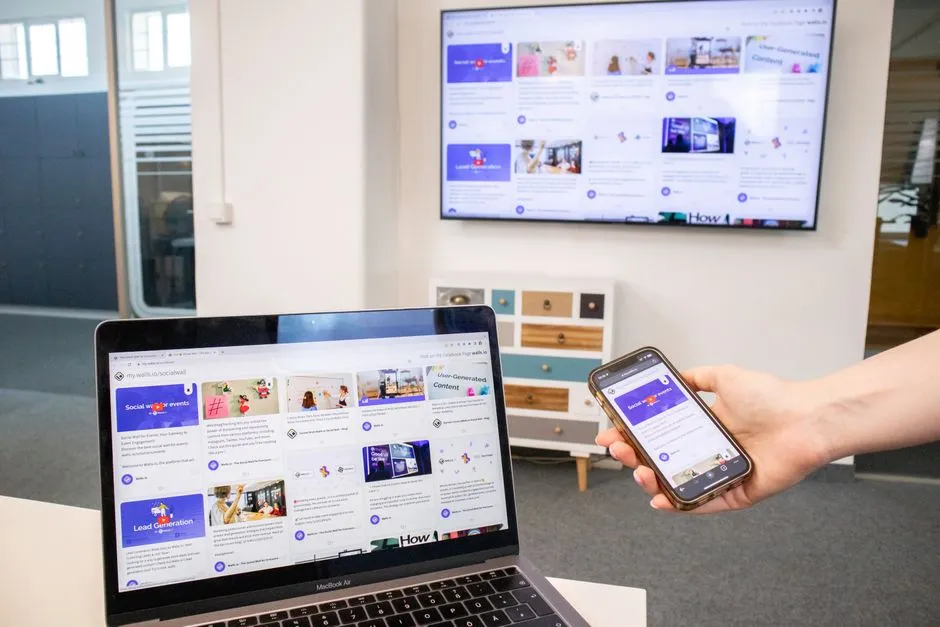
What Is a Digital Engagement Platform? (And Why It Matters Right Now)
Understanding the digital engagement platform definition starts with a simple idea: it's a technology framework that centralizes how an organization communicates with, supports, and motivates its people — employees or customers — across…
See the platform in action.
Free for up to 25 members, or try Core or Growth free for 30 days. A card is required; Free is never charged, and a trial bills when it ends unless you cancel.