Why Most Engagement Strategies Are Falling Short
Boosting employee engagement is one of the most critical challenges facing leaders today—and yet, most strategies are failing. Here's what you need to know:

Why Most Engagement Strategies Are Falling Short
Boosting employee engagement is one of the most critical challenges facing leaders today—and yet, most strategies are failing. Here's what you need to know:
Quick Answer: To Boost Employee Engagement:
- Secure executive ownership - Treat engagement as a core business priority, not just an HR initiative
- Empower managers - They drive 70% of team engagement through coaching, recognition, and genuine care
- Focus on growth + recognition - Combine meaningful development opportunities with timely, authentic appreciation
- Measure what matters - Track actionable metrics like recognition frequency and behavioral shifts, not just annual satisfaction scores
- Build systems of accountability - Create routines and rituals that reinforce engagement at every level
- Keep it human - Use technology to support connection, not replace it
The numbers tell a sobering story. According to Gallup's research, 85% of employees are not engaged at work, and actively disengaged employees cost organizations between $483 to $605 billion per year. Despite these staggering costs, only 22% of companies know what's driving their employee disengagement.
Why do so many engagement strategies fail? The research reveals three critical mistakes:
Lack of executive ownership - When engagement is siloed in HR or treated as a checkbox exercise rather than a strategic business priority, it never gains the momentum needed to create real change.
Overcomplicated strategies - Organizations drift away from addressing core employee needs (trust, belonging, purpose) and instead implement complex programs that create more noise than impact.
Action gaps - Teams overuse pulse surveys and collect endless feedback, but fail to consistently act on what they learn, breeding cynicism and eroding trust.
But here's the encouraging truth: highly engaged businesses achieve 59% less turnover and see a 23% increase in profitability. The organizations getting these results aren't doing anything magical—they're treating engagement as a comprehensive strategy that touches every aspect of the employee experience, from leadership alignment to daily recognition rituals.
This isn't about free snacks or occasional team-building events. It's about fundamentally reimagining how your organization supports, develops, and connects with the humans who drive your success.
I'm Meghan Calhoun, Co-Founder of Give River. After two decades in high-pressure roles and experiencing burnout firsthand, I've dedicated my career to boosting employee engagement. I help organizations move beyond surface-level programs to create cultures where people genuinely thrive. In this guide, we'll explore a holistic framework addressing the real drivers of engagement—from leadership accountability to purpose-driven work—so you can build a team that shows up energized and invested in your mission.
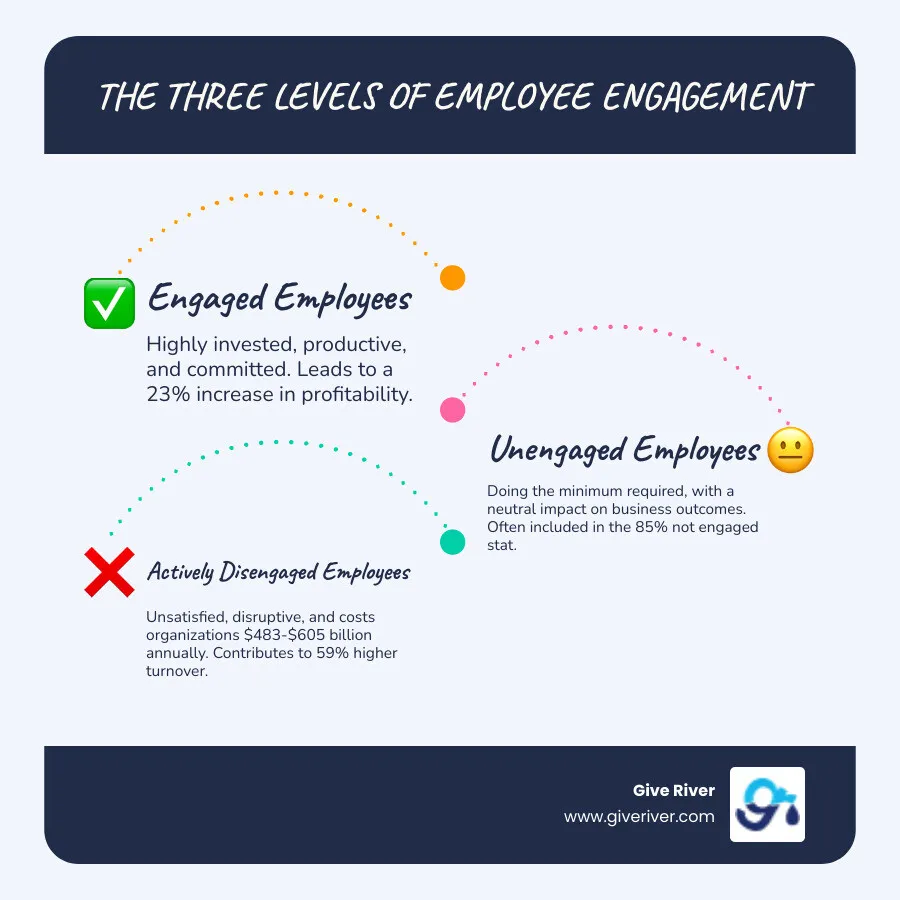
Basic boosting employee engagement terms:
A Holistic Framework for Boosting Employee Engagement
Employee engagement is the psychological investment an employee has in their job and organization, driving them to apply discretionary effort. It's more than happiness; it's a deep connection to one's work. Engaged employees are more motivated, productive, and loyal. Highly engaged teams are 21% more productive, while disengagement often stems from a lack of purpose, poor management, and insufficient recognition.
To foster engagement, we must adopt a holistic framework integrated into the employee lifecycle. This means defining engagement for our organization, understanding it from our employees' perspectives, and creating a culture where people feel seen, heard, and valued.
Foundation: Building a Culture of Trust and Purpose
A thriving culture is the bedrock of engagement, creating a safe space for employees to innovate and collaborate. Our research shows 77% of employees agree a strong culture helps them do their best work. Building this culture requires intentional effort and, critically, executive ownership.
Executive ownership means treating engagement as a core business priority, not just an HR initiative. When leaders model and prioritize engagement, its importance permeates the organization. Without this top-level commitment, strategies fail, perceived as mere checkboxes. Leaders must be personally invested and communicate that engagement is a shared responsibility.
A strong, inclusive culture fosters belonging, a powerful engagement driver. Employees with a strong sense of belonging report 56% higher job performance and a 167% higher organizational promoter score. We build this through inclusive communication, DEI training, diverse hiring, and equitable policies, creating a winning workplace culture where everyone feels valued.
Aligning individual roles with the company mission is central to this foundation. Employees who see how their work contributes to the bigger picture are more motivated and loyal, creating a purpose-driven workplace. We must clearly communicate our mission, recognize mission-aligned work, and connect every role to that purpose to avoid poor morale and turnover.
Clear internal communication is essential for trust. While 80% of leaders believe their messages are clear, only 50% of employees agree. We must choose the right workplace communication tools, tailor messages, and stay consistent to ensure they resonate.

The Manager's Playbook: Empowering Leaders to Drive Engagement
Managers are the linchpin of engagement, accounting for 70% of the variance in team engagement. The adage, "people don’t leave bad jobs; they leave bad managers," highlights a crucial point: to boost engagement, we must empower our managers.
However, many managers aren't equipped with the right skills; less than half (44%) receive appropriate management training. A robust manager development program is vital to equip leaders with empathy, clarity, and accountability. They need training on how to lead your team through crisis, give feedback, and foster a supportive environment.
One of the most effective ways managers drive engagement is by genuinely caring for their employees. When employees believe their managers care, it builds trust. Doubling the ratio of employees who feel cared for can lead to a 46% reduction in safety incidents and a 41% reduction in absenteeism. This "fifth element of engagement" emphasizes the human connection.
Selecting the right managers is also critical. We should choose individuals for their talent in managing people, not just technical skills. Once selected, we must coach them and hold them accountable for their team's engagement, weaving it into their performance expectations.
The Gallup Q12 questions offer a powerful framework for guiding management. The Q12 survey simplifies employee needs into four levels: clarity, resources, positive relationships, and growth. When met sequentially, these needs create a thriving workplace. Managers can use these insights to re-engage employees in their work and career. More information about leadership development can help equip your managers.
Growth & Recognition: Fueling Motivation and Loyalty
Beyond management, professional development and recognition are powerful forces for boosting employee engagement. Employees crave growth, with 84% saying learning adds purpose to their work. Investing in career growth is a critical retention strategy. We can implement mentorship programs, leadership tracks, and cross-functional training. Offering financial assistance or time off for education also makes a difference. Explore our career development programs to see how we can support your team's growth.
Equally important is recognition. Employees who receive meaningful recognition are 45% less likely to leave. Recognition programs should be authentic, personalized, equitable, and embedded in the culture. This means moving beyond generic awards to frequent, specific appreciation. Creative recognition like eCards can be a fresh way to acknowledge achievements. While platforms like Bonusly and Kudos are popular for their social recognition features, they often focus primarily on rewards. Give River differentiates itself by embedding recognition within a broader, holistic framework that also includes guided career growth and corporate generosity, creating a more comprehensive system for employee fulfillment.
Gratitude, when expressed genuinely, creates a positive feedback loop that reinforces desired behaviors and strengthens connections. Our unique 5G Method at Give River emphasizes gratitude as a core component of a thriving workplace.
Gamification also plays a significant role in fueling motivation. Incorporating game-like elements into work can make the employee experience more enjoyable and rewarding. This could involve points, badges, or leaderboards that encourage participation. The benefits of gamification in the workplace include increased motivation, learning, and engagement.
Well-being & Generosity: A Human-Centered Approach to Boosting Employee Engagement
Prioritizing employee well-being is a strategic business decision. Employees who feel their employer cares about their well-being are 69% less likely to search for a new job, 71% less likely to report high burnout, and 3x more likely to be engaged. A comprehensive workplace wellness program can include mental health support, flexible work, and time off encouragement. Promoting work-life balance is crucial.
Beyond individual well-being, a culture of generosity and community impact can profoundly improve engagement. Corporate giving and volunteer programs let employees connect their work with a larger purpose. This aligns with the "Generosity" pillar of Give River's 5G Method.
Corporate social responsibility (CSR) initiatives, like matching gift programs or volunteer grants, are powerful tools. Workplace giving programs boost morale and loyalty, with 84% of employers finding volunteerism effective for engagement. When employees join community impact initiatives, they feel a stronger connection to their organization. Understanding what is corporate social responsibility and why it is important helps integrate these programs effectively.
Measurement & Action: How to Sustainably Boost Employee Engagement
"What gets measured gets managed" is true, but we must measure what matters. Many strategies falter by using misleading metrics like "percent favorable" scores from annual surveys. These can create blind spots and disconnect engagement from business performance.
To sustainably boost employee engagement, we need systems of accountability and KPIs that provide actionable insights. This involves tracking relevant metrics within managers' control that predict core psychological needs. An employee engagement tracker can help monitor progress.
Regular, targeted feedback via employee pulse survey platforms is invaluable. However, the critical step is closing the "action gap" between collecting feedback and acting on it. Overusing surveys without follow-through breeds cynicism. Employees must see their input leads to tangible changes.
We must leverage data-driven insights to refine our strategies. This means analyzing turnover, absenteeism, and performance metrics. Tracking these KPIs helps assess the effectiveness of our initiatives and make informed adjustments, which is linked to improved employee engagement and retention.
Here's a comparison of misleading vs. meaningful engagement metrics:
| Misleading Metrics | Meaningful Metrics |
|---|---|
| Annual satisfaction score (single, static number) | Pulse survey trends (frequent, dynamic snapshots of sentiment) |
| "Percent favorable" scores (low bar, hides issues) | Recognition frequency per employee (reveals active appreciation culture) |
| Overall survey participation rate (activity, not impact) | Behavioral shifts (e.g., increased participation in growth programs, idea submissions) |
| Generic feedback categories (lacks specificity) | Manager-specific engagement scores (direct accountability and actionable insights) |
| Exit interview data (reactive, too late) | eNPS (Employee Net Promoter Score) trends (predictive of loyalty and advocacy) |
Conclusion: From Engagement to Fulfillment
Boosting employee engagement is not a destination; it's a continuous journey. It's about moving beyond superficial strategies to cultivate genuine employee fulfillment—a deeper, more sustainable state where individuals thrive, find purpose, and feel deeply connected to their work and colleagues. This shift requires a holistic, human-centered approach that touches every aspect of the employee experience.
We've explored how a strong foundation of trust and purpose, empowered managers, robust growth and recognition programs, and a commitment to well-being and generosity all contribute to this goal. By embracing a strategic mindset and measuring what truly matters, we can build workplaces where our people don't just show up, but show up energized, invested, and ready to contribute their best.
At Give River, we believe in this comprehensive approach. Our unique 5G Method—Guided, Gamified, Gratitude, Growth, and Generosity—is designed to integrate these essential elements into a powerful platform that boosts employee fulfillment and productivity. We help organizations build happier, healthier, high-performing teams with winning workplace cultures.
Are you ready to transform your workplace from merely engaged to truly fulfilled? Discover how to build a high-performing team with our employee rewards solutions and cultivate a culture where everyone can thrive.
More from this category.

What Is a Digital Engagement Platform? (And Why It Matters Right Now)
Understanding the digital engagement platform definition starts with a simple idea: it's a technology framework that centralizes how an organization communicates with, supports, and motivates its people — employees or customers — across…

Understanding Gamification in the Workplace
Employee disengagement is a significant concern for many organizations today, impacting productivity and morale. Employee engagement through gamification offers an innovative solution by changing mundane tasks into exciting experiences. By…

Why Most Managers Are Flying Blind on Team Engagement
The best employee engagement tools for managers in 2025 include:
See the platform in action.
30-day free trial. No credit card. River Guide included on Core and Growth.