45 Easy Employee Recognition Ideas to Boost Morale and Engagement
Easy employee recognition ideas are practical, low-effort strategies that meaningfully acknowledge employees' contributions and achievements. The business case is compelling: employees in a strong recognition culture are 3.7x more likely…

45 Easy Employee Recognition Ideas to Boost Morale and Engagement
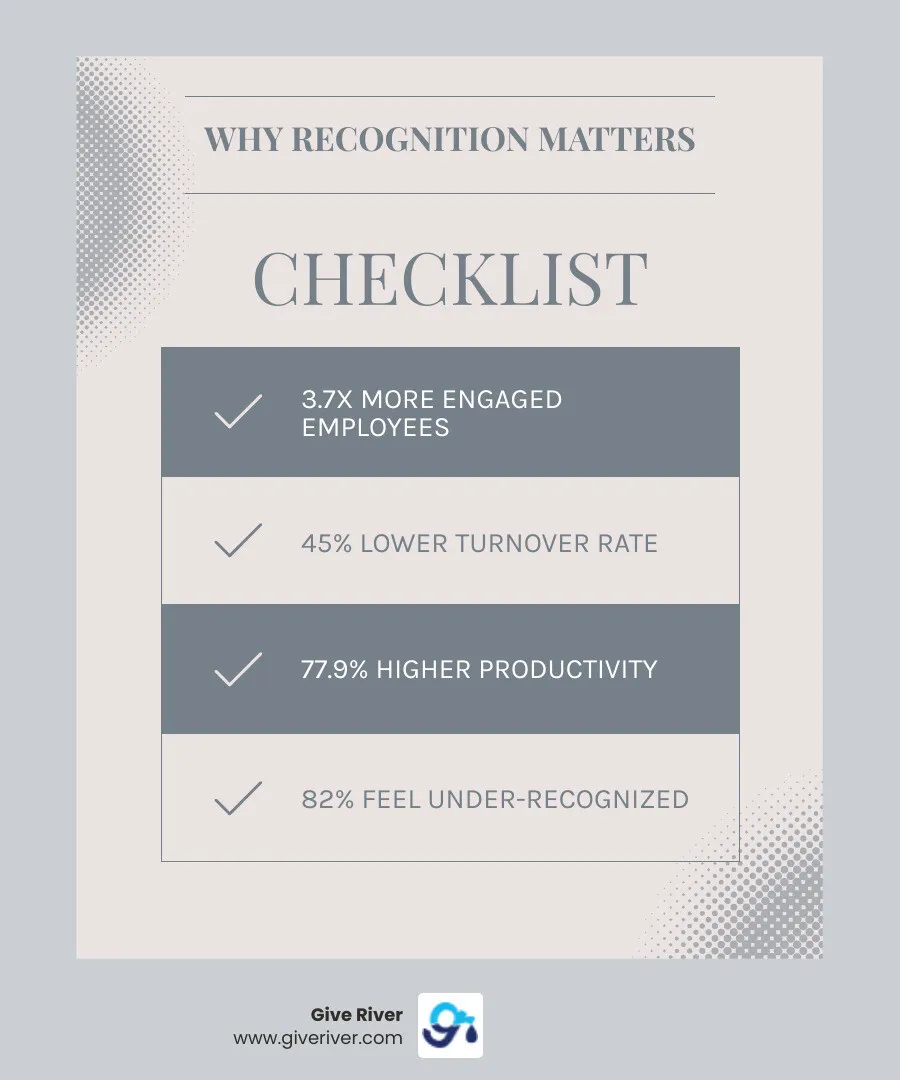
Easy employee recognition ideas are practical, low-effort strategies that meaningfully acknowledge employees' contributions and achievements. The business case is compelling: employees in a strong recognition culture are 3.7x more likely to be engaged, and well-recognized employees are 45% less likely to leave within two years. In fact, 77.9% of employees report they would be more productive with more frequent recognition.
Yet, a staggering 82% of employees don't feel they receive appropriate recognition, representing a huge opportunity for companies. The problem isn't a lack of value for teams, but recognition efforts that feel formulaic. Unlike the empty "It is your birthday." banner from The Office, what works is recognition that's timely, specific, personal, and tied to company values.
The good news is that meaningful recognition doesn't require expensive programs. While platforms like Bonusly and Kudos offer structured tools, many impactful strategies cost little to nothing. It's the sincerity and personal alignment that matter most.
So what exactly counts as employee recognition? At its core, recognition is any intentional action that says, "I see your effort and impact." It can be as simple as a genuine thank-you in a one-on-one, or as formal as a company-wide award tied to strategic goals. Research from sources like Gallup) consistently shows that when recognition is frequent and authentic, it strengthens trust in leadership, deepens commitment, and even reduces burnout.
Recognition also shapes your overall culture. When appreciation is visible and consistent, it signals what "good" looks like in your organization and encourages others to model those behaviors. Teams collaborate more, share ideas more freely, and feel safer taking smart risks—because they know effort, not just outcomes, will be valued.
I'm Meghan Calhoun, Co-Founder of Give River. After two decades in high-pressure roles and experiencing burnout, I learned that sustainable performance stems from integrating gratitude and purpose into daily work. This article shares 45 practical strategies to build a culture where employees feel genuinely valued.
Know your easy employee recognition ideas terms:
Employee recognition is a strategic tool that directly impacts engagement, performance, and retention. When employees feel appreciated, they are more likely to stay, grow, and feel a sense of belonging. Let's explore some effective and easy employee recognition ideas that can transform your workplace.
Easy Employee Recognition Ideas on a Budget (No-Cost & Low-Cost)
You do not need a large budget to create meaningful moments of appreciation. In fact, many of the most memorable gestures are simple and personal.
- Verbal praise: Offer specific, timely praise in one-on-ones or casual conversations. Instead of "Nice job," try "Your clear communication kept this project on track under a tight deadline."
- Handwritten notes: A brief, handwritten thank-you can be saved and revisited, making it surprisingly powerful in a digital-first world.
- Public praise in meetings: Start all-hands or team meetings with 2–3 shout-outs that tie accomplishments to your values.
- Social media shout-outs: With permission, recognize employees on LinkedIn or your company’s channels to spotlight their impact.
- A rotating team trophy: Pass a fun, symbolic item (like a small statue or mascot) each week to someone who exemplified a value.
- LinkedIn recommendations: Write detailed recommendations for employees who have gone above and beyond, supporting both recognition and career growth.
- Thoughtful sticky notes: Leave short notes on laptops or desks acknowledging something specific they did well.
To deepen the impact of these ideas, consider the science behind gratitude. Our article on The Power of Gratitude in the Workplace: Recognition Matters More Than You Think explores how simple thank-yous can improve well-being, psychological safety, and collaboration.
For more budget-friendly inspiration, explore these Staff Appreciation Ideas that layer small gestures into your everyday workflow.
Personalized & Creative Ways to Show Appreciation
Personalization shows employees you see them as whole people, not just roles.
- Experiential rewards: Offer experiences instead of items—like a cooking class, museum pass, or local event that aligns with their interests.
- Personalized gift baskets: Curate a small bundle of items connected to their hobbies (favorite snacks, books, or wellness items).
- Professional development opportunities: Sponsor a course, conference, or certification that supports their career goals. Our guide on Professional Development for Employees dives into options.
- Mentorship programs: Pair employees with mentors to support growth and signal long-term investment in their success.
- Funny work awards: Lighten the mood with creative superlatives ("Spreadsheet Sorcerer," "Client Whisperer"). Use our list of Funny Work Awards to get started.
- Celebrating personal milestones: Recognize birthdays, new babies, graduations, and other life events in ways that respect personal preferences.
- Wellness days: Offer mental health or wellness days where employees can fully unplug without guilt.
- Sabbaticals: For long-tenured team members, consider extended breaks to recharge and pursue personal projects.
Research on gift-giving, such as the scientific research on the psychology of gift-giving, shows that thoughtful, recipient-focused gifts are more meaningful than expensive but generic ones. Use this insight to design rewards that genuinely resonate.
Fostering Peer-to-Peer and Team Recognition
Recognition is most powerful when it does not just flow top-down from leaders. Peer-to-peer systems make appreciation part of everyday teamwork.
- Peer recognition platforms: Tools like Bonusly and Kudos are popular choices that allow employees to send each other public shout-outs, often tied to points or rewards. Give River provides this core functionality but differentiates itself with its unique 5G Method, which adds integrated wellness content, growth journeys, gamified challenges, and community impact. This turns recognition into a broader experience of fulfillment, going beyond a simple points system.
- Digital "wall of fame": Display recent shout-outs or success stories on office screens or intranet homepages.
- Team-building activities: Use collaborative experiences to strengthen bonds and create shared wins. Our Team Building Activities Ideas article offers ready-made plans.
- Team lunches or coffee breaks: Celebrate milestones with relaxed, off-task time where people can connect as humans.
- Volunteer days: Organize service days where teams give back together, aligning recognition with purpose and generosity.
- Project bonuses: When a big initiative succeeds, recognize the entire project team—not just visible leaders.
- Cross-departmental shout-outs: Encourage teams to recognize partners in other departments who helped them succeed.
For more ways to encourage peer appreciation, see Peer-to-Peer Recognition Activities. These ideas help you build a culture where colleagues notice and celebrate each other’s contributions.
Effective and Easy Employee Recognition Ideas for Remote and Frontline Employees
Hybrid and distributed teams need intentional recognition so that no one feels invisible.
- Virtual celebrations: Host short, focused celebrations on video calls to recognize launches, anniversaries, or big wins. Include a few minutes for personal stories.
- Digital gift cards: Send flexible e-gift cards that employees can use in their location and time zone.
- Curated care packages: Mail small care packs with snacks, wellness items, or company swag to remote or frontline workers.
- Flexible schedules: Recognize extra effort by offering schedule flexibility, early finishes, or choice shifts when possible.
- Home office stipends: Provide stipends for ergonomic chairs, better lighting, or productivity tools.
- Virtual team building: Use online games, shared playlists, or short connection prompts. Our guide to Virtual Team Building Activities for the Workplace offers free, easy options.
- Food delivery vouchers: Send meal credits so remote or frontline employees can enjoy lunch on the company while they join a virtual celebration.
- Public recognition in virtual meetings: Build a habit of ending virtual standups or huddles with 1–2 shout-outs.
If you want a scalable, trackable way to reward distributed teams, explore a Digital Rewards Platform approach. When integrated with recognition, guidance, and gamification—as Give River does—it becomes a powerful driver of connection across locations.
Formal vs. Informal Recognition for Every Occasion
Both formal and informal recognition have a place in a healthy culture. Informal gestures create everyday momentum, while formal programs mark key moments and milestones.
| Type of Recognition | When to Use | Examples | Typical Impact |
|---|---|---|---|
| Formal | Major milestones, company-wide achievements, long-term performance | Employee of the Month programs, service awards, work anniversaries, structured Employee Appreciation Day events, formal performance-based bonuses | Signals what the organization values at a strategic level; builds loyalty; creates memorable career moments |
| Informal | Day-to-day wins, effort during sprints, learning from failure, collaboration and support | Spontaneous thank-yous, quick shout-outs in Slack or Teams, small spot bonuses, surprise coffee or snacks, values-based recognition cards | Keeps motivation high between big milestones; reinforces behaviors in real time; supports psychological safety |
Consider mixing both approaches for maximum impact:
- Employee of the Month programs: Highlight not just output, but behaviors that embody your values.
- Service awards and work anniversaries: Recognize tenure with meaningful gestures and messages that reflect the person’s journey. Our Work Anniversary Awards article offers practical ideas.
- Employee achievement awards: Create awards for innovation, customer impact, mentorship, or culture-building. See Employee Achievement Awards for examples.
- Spot bonuses and spontaneous rewards: Offer small, timely rewards when someone goes above and beyond, rather than waiting for annual reviews.
- Balancing public vs. private recognition: Ask employees how they like to be recognized. Some love the spotlight; others prefer a private note.
By thoughtfully combining formal and informal recognition, you ensure that appreciation feels both consistent and meaningful across every stage of the employee experience.
Building a Culture of Appreciation That Lasts
Creating a culture where appreciation is woven into the fabric of daily work goes beyond implementing a few easy employee recognition ideas; it requires intentional effort and consistency.
One common mistake is treating recognition as a one-off event, like a single Employee Appreciation Day, rather than an ongoing process. While Employee Appreciation Day is a great springboard, true impact comes from consistent, daily recognition. Another pitfall is creating unhealthy competition by only rewarding one employee at a time, or overlooking specific contributions in favor of vague praise. Recognition should be specific, timely, and genuine.
To tie recognition to company values and culture, explicitly link recognized behaviors to your organization's core principles. For example, if "collaboration" is a value, recognize a team member who exceptionally fostered cross-functional teamwork. This reinforces desired behaviors and helps Enhance Workplace Culture.
Building a supportive environment means fostering psychological safety where employees feel comfortable taking risks and expressing ideas. Recognition plays a huge role here, as it validates efforts and builds confidence. When employees feel appreciated, they are 70% more likely to say their leaders demonstrate that employees are important to the company's success. This contributes to Building a Supportive Environment where everyone can thrive. Consistency in appreciation is paramount; sporadic recognition loses its impact. Make it a regular rhythm, not just an annual event.
Modern recognition platforms can help you sustain that rhythm. While solutions like Bonusly and Kudos focus primarily on peer-to-peer rewards and points, which is a great starting point, Give River is designed differently. It builds on the concept of recognition by integrating it with wellness content, professional growth paths, gamified challenges, and opportunities to support causes employees care about. This holistic approach, which sets it apart from more straightforward rewards platforms, turns simple shout-outs into a powerful engine for fulfillment and performance.
How to Measure and Sustain Your Recognition Program
To ensure your recognition efforts are truly effective, we must measure their impact and iterate based on feedback.
- Program Measurement: Track key metrics such as employee engagement scores, turnover rates (well-recognized employees are 45% less likely to have left after two years), and productivity levels. Use tools like an Employee Pulse Survey Platform to gather regular feedback.
- Employee Feedback: Regularly ask employees what types of recognition they prefer and what they find most meaningful. This ensures your program remains relevant and impactful.
- ROI of Recognition: Quantify the return on investment (ROI) of your recognition program by linking it to reduced absenteeism, improved performance, and higher retention. Understanding the ROI helps justify continued investment.
- Gamification: Integrate game-like elements into your recognition program, such as points, leaderboards, or badges, to boost engagement and participation. Be intentional about what you reward so that gamification reinforces learning, collaboration, and well-being instead of unhealthy competition.
- Community Impact: Incorporate opportunities for employees to give back to the community, perhaps by donating their recognition points to charity. This aligns with our belief in generosity and purpose-driven work, and taps into the growing desire employees have to work for organizations that contribute to something bigger than profit.
At Give River, we believe in a holistic approach to employee fulfillment. Our unique 5G Method integrates Recognition, Guidance, Growth (personal wellness and professional development content), Gamification, and Generosity (community impact) to create a comprehensive employee experience. This ensures that recognition is not just a standalone act but part of a larger ecosystem that nurtures happier, healthier, high-performing teams.
By implementing these easy employee recognition ideas and integrating them into a thoughtful, consistent program, you can transform your workplace culture, boost engagement, and retain your most valuable asset: your people. To explore how Give River can help you build a thriving culture of appreciation, visit our recognition platform and book a demo today.
More from this category.

The Impact of Employee Recognition on Workplace Success
Ever notice how a simple "thank you" can transform your entire day? Now imagine that feeling multiplied across your entire organization. That's the power behind the best employee recognition programs – they're not just nice-to-have perks,…

Why Recognition Feels Broken in Today's Workplace
Picture this: your whole department gets the same canned "thank-you" email. It lands with a thud. Connected recognition exists to replace that hollow gesture with a system that consistently spotlights real contributions.

From "Nice-to-Have" to Non-Negotiable: Why Your Business Needs Recognition Software
The business case for corporate recognition software goes far beyond warm feelings. When employees feel genuinely valued, every corner of your organization benefits\u0014from productivity metrics that impress the CFO to…
See the platform in action.
30-day free trial. No credit card. River Guide included on Core and Growth.