Why Your Compensation and Reward System Is the Key to Open uping Employee Potential
A compensation and reward system is the complete framework organizations use to provide both financial and non-financial value to employees in exchange for their work. Here's what makes an effective system:

A compensation and reward system is the complete framework organizations use to provide both financial and non-financial value to employees in exchange for their work. Here's what makes an effective system:
Core Components:
- Compensation (Transactional): Base salary, bonuses, benefits, retirement plans—the tangible, expected payments for work performed
- Rewards (Motivational): Recognition, growth opportunities, autonomy, purpose—the discretionary incentives that inspire excellence
- Total Rewards Strategy: Integration of both elements with wellness, career development, and meaningful work to create holistic employee value
Key Statistics:
- 58% of HR professionals identify compensation and benefits as the most critical factors influencing employee experience
- 78% of workers demonstrate increased drive and performance when their efforts are rewarded
- 55% of employees actually prefer non-financial rewards over monetary ones
Here's the reality most organizations face: you're paying people fairly, offering competitive benefits, yet turnover remains high and engagement stays frustratingly low. The problem isn't that your compensation is wrong—it's that compensation alone isn't enough.
Labor is supplied because most of us must work to live. Indeed, it is called "work" in part because without compensation, the overwhelming majority of workers would not otherwise perform the tasks. But once employees reach competitive salary levels, the motivational power of money often wears off. What keeps people engaged, productive, and loyal is something deeper: fulfillment.
The disconnect is costing businesses dearly. Lost productivity drains $1.8 trillion from U.S. businesses annually, while replacing a single employee costs between one to two times their annual salary. Meanwhile, 85% of employees in wellness programs intend to stay in their jobs, and organizations offering flexible hours (valued by 95% of respondents) see dramatically better retention.
The most successful organizations aren't choosing between fair compensation and meaningful rewards—they're strategically combining both. They understand that compensation provides security and allows employees to focus on work without financial worry, while rewards tap into the human need for recognition, growth, and purpose.
I'm Meghan Calhoun, Co-Founder of Give River, and I've spent over two decades driving results in high-pressure environments—from television to advertising sales to working with grieving families in one of the most emotionally demanding roles imaginable. Those experiences taught me that traditional approaches to compensation and reward systems were fundamentally incomplete, which led me to develop the 5G Method that powers our employee growth platform today.
In this guide, you'll find how to build a compensation and reward system that goes beyond transactional payments to create genuine fulfillment, reduce turnover, and build the kind of workplace culture where people actually want to show up on Monday morning.
Compensation and reward system vocab explained:
Building a High-Performance compensation and reward system

When we talk about a high-performance compensation and reward system, we're not just discussing how much money we pay our team. We're delving into a strategic framework designed to attract, motivate, and retain top talent. It's about understanding the subtle, yet profound, differences between what compensation offers and what rewards inspire. Compensation provides the transactional fulfillment - the expected exchange for work. Rewards, on the other hand, are the motivational incentives, the discretionary prizes that acknowledge exceptional effort and build loyalty. They address the fundamental human needs for security and recognition, working in tandem to create a truly engaged workforce. While platforms like Bonusly and Kudos focus heavily on facilitating these recognition-based rewards, Give River differentiates itself by connecting these moments to a broader ecosystem of growth and purpose.
The Fundamental Difference: Transactional vs. Motivational
At the heart of any effective compensation and reward system lies a clear understanding of the distinct roles compensation and rewards play. Compensation is largely transactional. It's the tangible payment, the base salary, hourly wages, or fixed bonuses that we provide in exchange for an employee's time, skills, and effort. It fulfills their security needs, ensuring they can cover their living expenses and plan for the future. It's consistent, regular, and expected.
Rewards, however, are primarily motivational. They are given in recognition of an employee's contributions, achievements, or behaviors that align with organizational goals. Rewards can be tangible (like a performance bonus or a gift) or intangible (like public recognition or a promotion). They are often spontaneous or performance-based, making them discretionary and unexpected. This distinction matters immensely because while compensation provides a baseline of satisfaction, it's rewards that truly drive effort and engagement. Research shows that 78% of workers work harder and with more drive when their efforts are being rewarded, highlighting the powerful impact of appreciation.
If you'd like a neutral overview of how incentives and compensation influence performance, the Wikipedia page on Incentive is a helpful starting point.
Direct and Indirect Components of a compensation and reward system
Let's break down the components that contribute to an employee's overall remuneration within a compensation and reward system.
Direct Compensation: This is the straightforward, tangible payment employees receive for their work. It includes:
- Base Pay: Their fixed salary or hourly wages.
- Variable Pay: Performance bonuses, commissions, profit-sharing, or merit increases.
- Equity: Stock options or company shares, often used to align employee interests with long-term business success, especially at executive levels.
Indirect Compensation (Benefits): These are the non-monetary, non-equity offerings that improve an employee's financial and personal security, often with significant perceived value. They are crucial for attracting and retaining talent.
- Health and Wellness Benefits: Health insurance (a factor for 88% of job seekers), dental, vision, mental health support, and wellness programs.
- Financial Security Benefits: Retirement and pension plans (a priority for 93% of employees), life insurance, disability insurance, and financial literacy programs.
- Time Off: Paid time off (PTO), sick leave, parental leave, and holidays.
- Lifestyle Benefits: Flexible working hours (preferred by 95% of respondents over remote work, with 84% of enterprise employees desiring some flexibility), remote work options, commuter benefits, and professional development opportunities.
This blend of direct and indirect compensation creates a comprehensive financial package. As economic research consistently shows, compensation and its form are crucial drivers of worker effort and productivity. We understand that employees are motivated by the expectation of these tangible and intangible returns for their labor, as detailed in Scientific research on compensation and incentives in the workplace. Our goal is to ensure this indirect remuneration is not only competitive but also deeply valued by our team.
Maximizing Motivation with Intrinsic and Extrinsic Rewards
Beyond the direct and indirect compensation, the true power of a compensation and reward system lies in its ability to harness both intrinsic and extrinsic rewards to maximize employee motivation.
Intrinsic Rewards: These are internal, psychological rewards that come from the work itself and the satisfaction derived from it. They tap into an employee's inner drive and sense of purpose.
- Personal Growth: Opportunities for learning new skills, professional development, and career advancement.
- Autonomy: The freedom to make decisions, control one's work, and take ownership of projects.
- Recognition and Appreciation: Feeling valued and acknowledged for contributions, leading to increased self-esteem and job satisfaction.
- Job Satisfaction: A sense of accomplishment, pride in one's work, and feeling that one's efforts make a meaningful difference.
Extrinsic Rewards: These are external, tangible incentives provided by the organization in response to performance or achievement.
- Performance Bonuses: Financial incentives tied directly to individual or team performance.
- Promotions: Advancement in career status and responsibility.
- Awards and Gifts: Non-monetary items that symbolize recognition, such as a certificate, a special device, or even company swag.
- Performance-tied Benefits: Additional perks or benefits earned through superior performance.
While monetary compensation provides a sense of security, we've found that non-monetary rewards often have a more profound and lasting impact. A striking 55% of employees actually prefer non-financial awards over monetary-based counterparts. This aligns with the insight that once employees are paid competitively, money is not always the main factor driving job selection or performance. People are often motivated more by the work they do and the environment in which they work. By strategically combining these, we can foster a culture where employees feel both secure and deeply appreciated, driving them to go above and beyond.
Our Give River platform, for instance, is designed to facilitate both intrinsic and extrinsic rewards. Through Gamification, we tap into the intrinsic desire for achievement and mastery. Our Gratitude features ensure that recognition is frequent, visible, and tied to company values, fostering a sense of appreciation that fuels intrinsic motivation.
Strategic Implementation and Long-Term Organizational Impact
Implementing an effective compensation and reward system isn't just about handing out paychecks and occasional bonuses; it's a strategic endeavor that fundamentally shapes our organizational success. It's about creating a comprehensive Total Rewards program that encapsulates our entire Employee Value Proposition. When done right, this strategy becomes a powerful engine for reduced employee turnover, increased productivity, and a vibrant company culture. In fact, 58% of HR professionals agree that compensation and benefits are the most important factors influencing the employee experience, underscoring their critical role in attracting and retaining talent.
Designing a Holistic Total Rewards Strategy
To truly open up employee potential, we advocate for a holistic Total Rewards strategy. This goes beyond traditional compensation and benefits to encompass everything that an employee values in their relationship with our organization. The WorldatWork Total Rewards model identifies five key strategic elements:
- Compensation: Both fixed and variable pay.
- Benefits: Health, welfare, income protection, retirement, and time off.
- Well-being: Support for physical, emotional, financial, and environmental factors.
- Careers: Opportunities for advancement and skill development.
- Recognition: Formal and informal validation of contributions.
Integrating these elements creates a powerful employee value proposition. Consider the impact of:
- Wellness Programs: These aren't just perks; they're investments. Over 85% of employees in wellness programs intend to stay in their jobs, demonstrating a clear link to retention.
- Career Development: Providing pathways for growth and learning signals that we invest in our people's future.
- Flexible Work Options: Valued by 95% of respondents over remote work, flexibility empowers employees to balance work and life, fostering trust and loyalty.
A well-designed strategy considers both external influences (like the economy, labor market, and technology) and internal factors (organizational strategy, culture, and leadership). It ensures that our offerings are competitive, relevant, and aligned with our business goals. For more in-depth information on how we approach these comprehensive strategies, you can explore More info about employee rewards services.
Avoiding Pitfalls in Your compensation and reward system
Even with the best intentions, organizations can stumble when designing and implementing a compensation and reward system. We've identified several common pitfalls that can undermine even the most generous efforts:
- Overemphasizing Compensation: Believing that money alone will solve all motivational issues. While crucial for security, a well-paid but unmotivated workforce is a real possibility if rewards are ignored.
- Inconsistent or Unclear Systems: Implementing reward systems without transparent criteria can foster feelings of favoritism or unfairness, eroding trust and engagement.
- Ignoring Employee Preferences: A one-size-fits-all approach rarely works. What motivates one employee might not motivate another. Failing to consider individual needs and desires can render rewards ineffective.
- Pay Secrecy: While often practiced, pay secrecy can lead to perceived inequity. Employees, in the absence of actual knowledge, tend to overestimate coworker pay, causing dissatisfaction even when performance-based pay is fair. This also eliminates money as a meaningful form of feedback, hindering motivation. Scientific research on the psychological impact of reward systems and pay secrecy highlights these critical issues.
- Lack of Legal Compliance and Bias Mitigation: Failing to ensure that compensation and reward practices are free from bias (e.g., gender, race) and compliant with all relevant labor laws can lead to significant legal and reputational damage. Regular pay equity analyses are crucial.
To avoid these pitfalls, we must prioritize transparency, gather employee feedback through surveys and direct conversations, and tailor our reward strategies. Robust feedback loops are essential to continuously refine and adapt our systems, ensuring they remain effective and fair.
Sustainable Success through the Give River 5G Method
The long-term benefits for an organization that successfully balances compensation and reward strategies are profound and far-reaching. We're talking about a virtuous cycle of reduced employee turnover, dramatically increased productivity, and a thriving company culture that attracts and retains the best talent. These aren't just abstract concepts; they translate directly to the bottom line. Lost productivity costs U.S. businesses $1.8 trillion annually, and replacing a single employee can cost between one to two times their annual salary. Investing in a robust compensation and reward system is, therefore, an investment in our financial health.
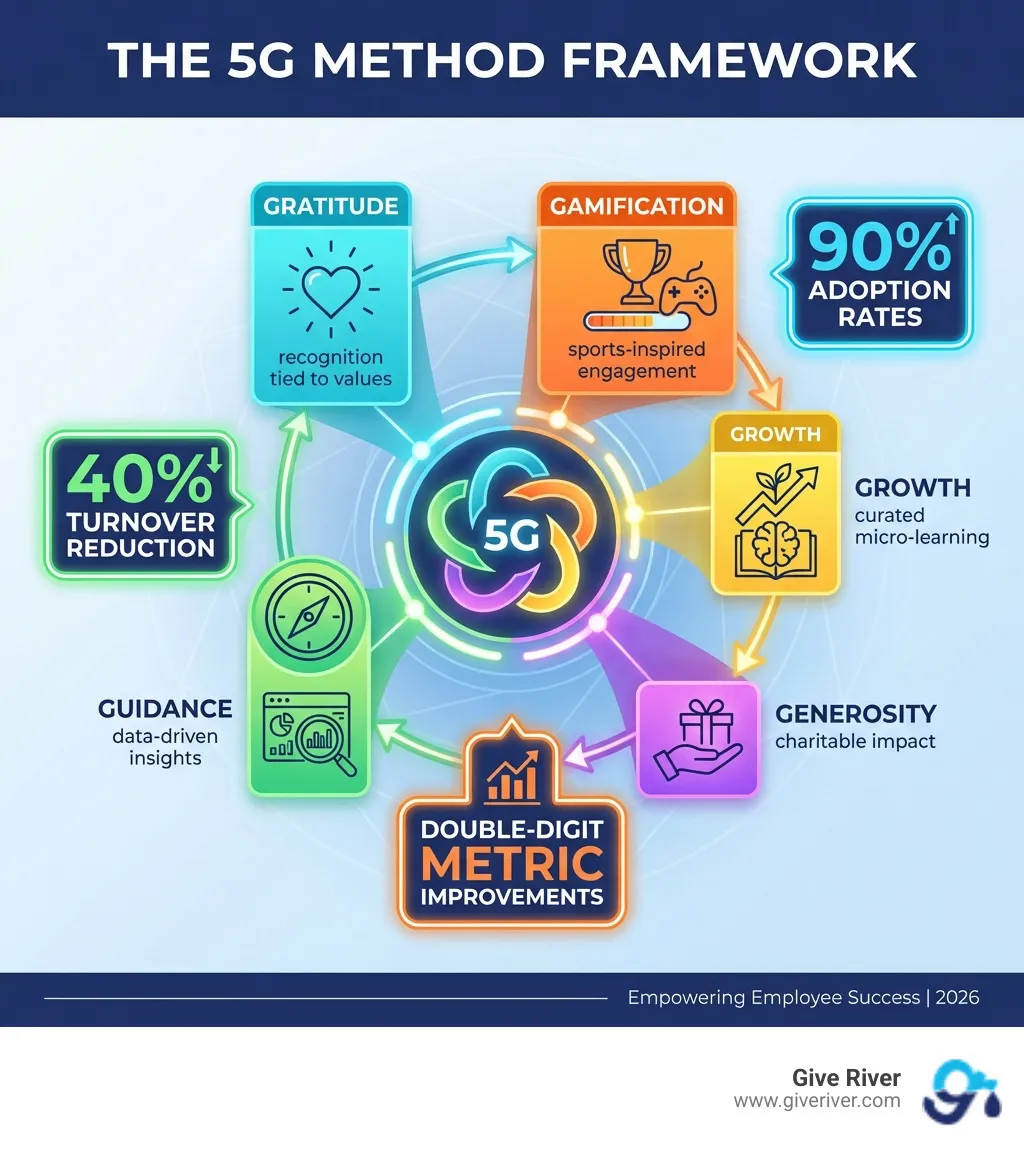
At Give River, our 5G Method is specifically designed to cultivate this sustainable success by integrating recognition, wellness, and growth tools into a holistic employee experience. Unlike competitors like Bonusly or Kudos, which primarily serve as recognition tools, Give River provides a multi-dimensional approach:
- Gratitude (Recognition): Our platform makes it easy to give and receive meaningful, values-aligned recognition, ensuring employees feel seen and appreciated for their contributions. This taps directly into the human need for acknowledgment, fostering intrinsic motivation.
- Gamification: We transform everyday tasks and achievements into engaging, game-like experiences. This boosts participation, drives consistent effort, and makes work more enjoyable, directly impacting productivity.
- Growth (Professional Development): We provide curated content and pathways for continuous learning and skill development, empowering employees to advance their careers and feel a sense of progression.
- Generosity (Community Impact): Our platform enables employees to contribute to causes they care about, fostering a sense of purpose and connection to something larger than themselves. This aligns with the increasing desire for meaningful work.
- Guidance (Data-Driven Insights): We provide leaders with actionable data on employee engagement, recognition trends, and areas for improvement, allowing for continuous optimization of the reward strategy.
By balancing competitive compensation with a dynamic and personalized reward system driven by our 5G Method, we're not just offering jobs; we're offering careers that are fulfilling, engaging, and deeply rewarding. This creates an environment where employees are not only less likely to leave but are also inspired to perform at their best, leading to greater innovation, collaboration, and overall organizational success.
More from this category.

Best Employee Recognition Software for Nonprofits (2026)
What nonprofits need from recognition software, what six platforms charge mission-driven teams, and how to get a grant-funded Season of Give River for free.

Employee Recognition Software Pricing in 2026: What 6 Platforms Charge
What Give River, Bonusly, Motivosity, Nectar, Awardco, and Workhuman charge in 2026, from their own sites: pricing models, minimums, fees, and contract terms.

How to Improve Employee Recognition Across Multiple Locations
Six practical ways to make recognition reach every site and shift, what to look for in a platform, and how a 25-location nonprofit did it.
See the platform in action.
Free for up to 25 members, or try Core or Growth free for 30 days. A card is required; Free is never charged, and a trial bills when it ends unless you cancel.