A Step-by-Step Framework for Measuring CSR Impact
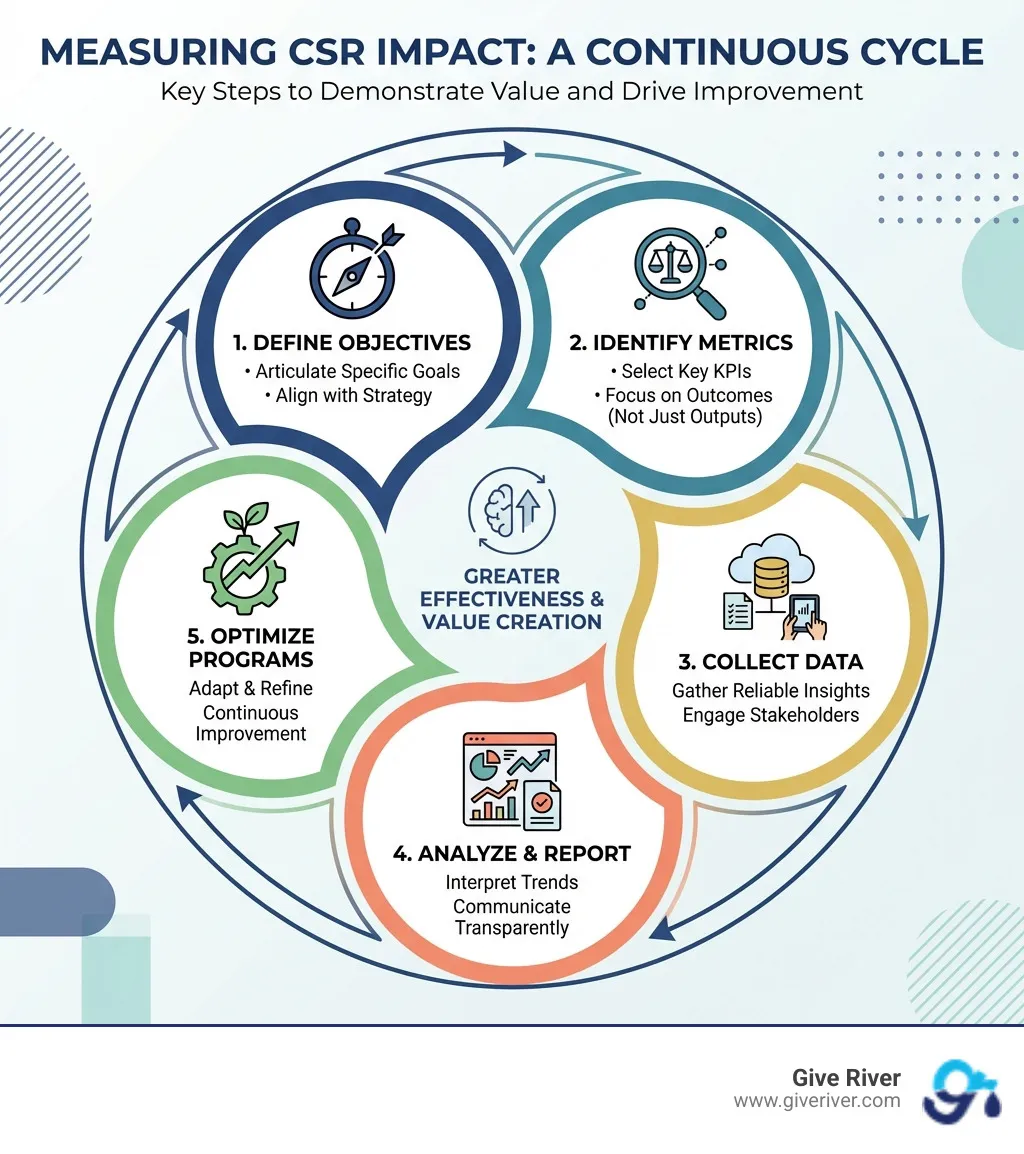
When it comes to Measuring CSR impact, organizations must move beyond simple activity tracking to truly understand their contributions. Here’s a quick overview of the essential steps:

A Step-by-Step Framework for Measuring CSR Impact
When it comes to Measuring CSR impact, organizations must move beyond simple activity tracking to truly understand their contributions. Here’s a quick overview of the essential steps:
- Define Clear Objectives: Align specific, measurable CSR goals with your company's values and business strategy.
- Shift to Outcomes: Focus on the actual changes your programs create (outcomes), not just the activities (outputs).
- Select Key Metrics: Identify relevant social, environmental, economic, and governance KPIs.
- Collect Reliable Data: Implement robust data collection methods, leveraging technology and stakeholder insights.
- Analyze and Interpret: Systematically analyze data to identify trends, successes, and areas for improvement.
- Report Transparently: Communicate findings clearly and honestly to all stakeholders.
- Optimize Programs: Use impact results to continuously refine your CSR initiatives.
In today's landscape, proving the impact of corporate social responsibility (CSR) programs is a critical mandate. Leaders are increasingly demanding tangible evidence of how these initiatives create real value, with as many as 89% being asked to show how their impact is measured. The days of counting hours volunteered or dollars donated—often called "vanity metrics"—are fading. Stakeholders want to see verified outcomes and understand what real change has been achieved.
I'm Meghan Calhoun, Co-Founder of Give River. My experience building high-performing teams has given me a deep understanding of the intricacies of Measuring CSR impact and proving its value. This guide will walk you through a practical framework to move beyond good intentions and demonstrate the true, measurable value of your social footprint.
Measuring CSR impact terms explained:
Step 1: Shifting from Vanity Metrics to Verified Outcomes
Why is Measuring CSR impact so crucial? It's about accountability and strategic value. CSR impact assessment is a continuous system that gathers decision-ready evidence while programs are running. Without it, well-intentioned programs risk losing support and failing to achieve their full potential.
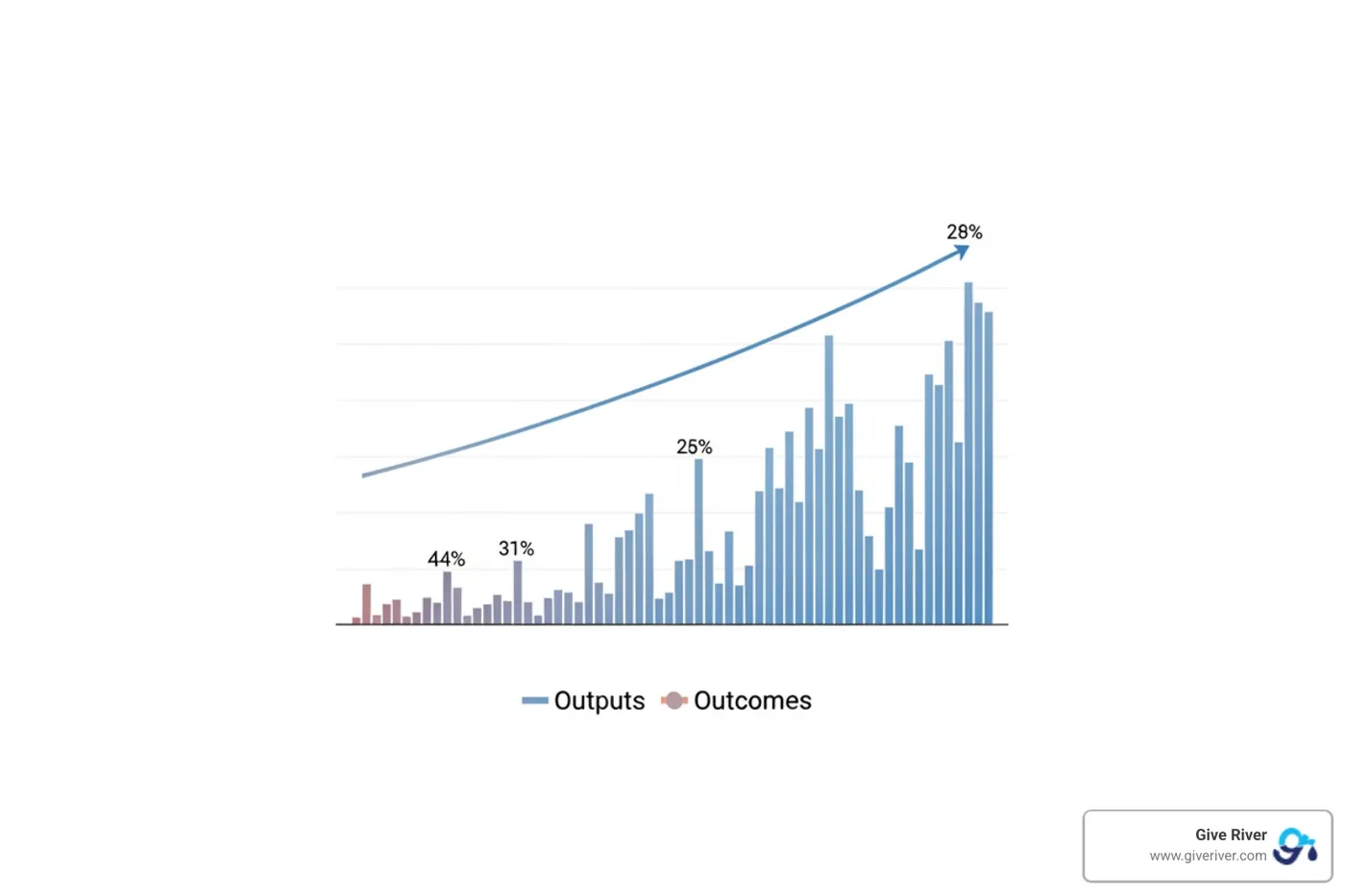
The landscape has moved beyond celebrating "vanity metrics" like hours volunteered or dollars donated. These outputs don't tell the full story. Traditional systems often fail to answer the tougher questions from boards and CFOs: who benefited, by how much, and what should we change? This is a key challenge, as 47% of executives, despite believing in CSR's positive impact, find initiatives hard to advance due to low perceived value. This is where the shift from outputs to outcomes becomes paramount.
Let’s illustrate the difference:
| CSR Output (What we did) | CSR Outcome (What changed as a result) |
|---|---|
| 1,000 trees planted | 10 tons of CO2 sequestered annually, improved local air quality |
| 50 employees volunteered for a day | Improved employee morale and team cohesion, $5,000 saved by local nonprofit |
| $10,000 donated to a food bank | 5,000 meals provided to families in need, reduced food insecurity in a community |
| 100 youths mentored in a program | Improved educational performance for 70% of participants, increased access to higher education for 20% |
The "so what?" question is critical. It forces us to look beyond the immediate action to its real-world effects. For example, if we organized a mentorship program (output), we must ask: "And then what?" Did mentees gain new skills (outcome)? Did their confidence improve? These are the verified outcomes that demonstrate impact. Understanding What is Corporate Social Responsibility? at its core helps anchor our measurement efforts in meaningful change.
Step 2: Designing Your Impact Assessment Framework
Once we understand the difference between outputs and outcomes, the next step in Measuring CSR impact is designing a robust impact assessment framework. This framework is a roadmap from intentions to verifiable results.
A strong framework includes clear objectives, stakeholder identification, a distinction between outputs and outcomes, specific metrics (KPIs), a data collection strategy, and a plan for evaluation and reporting. Your objectives should be tied to company values or global standards like the Sustainable Development Goals (SDGs).
Common methodologies help structure this process:
- Logic Model: This framework visually connects your program's inputs (resources), activities, outputs (direct results), outcomes (changes), and impacts (long-term societal changes). It ensures a logical flow from investment to benefit.
- Theory of Change: This planning tool maps backward from long-term goals to identify the necessary preconditions and interventions. It articulates the assumptions behind your initiatives, making them explicit and testable.
Aligning CSR objectives with broader business strategy, as seen in Strategic CSR Examples, ensures your efforts contribute to both social good and organizational success. By defining success before you start, you lay the groundwork for effective Measuring CSR impact.

Step 3: Choosing the Right Methodologies and Metrics for Measuring CSR Impact
With a framework in place, the next step in Measuring CSR impact is selecting methodologies and metrics. Your metrics should cover a comprehensive range of impacts:
- Social Metrics: Measure impact on people. Examples: employee giving participation, volunteer engagement rates, number of beneficiaries served, and employee satisfaction.
- Environmental Metrics: Track your ecological footprint. Examples: greenhouse gas (GHG) emissions reduced, waste diverted from landfills, and water conserved.
- Economic Metrics: Assess financial benefits. Examples: jobs created, cost savings from sustainable practices, and Social Return on Investment (SROI).
- Governance Metrics: Focus on ethical practices. Examples: adherence to CSR regulations and beneficiary satisfaction scores.
Specific methodologies offer deeper insights:
- Social Return on Investment (SROI): This framework places a monetary value on social and environmental outcomes, helping you understand the value created for each dollar invested.
- Sustainable Development Goals (SDGs): Aligning with the UN's 17 SDGs helps you contribute to global goals and communicate your impact in a widely recognized language.
For employee volunteering, key metrics could include participation rates, total hours, first-time volunteerism, and feedback from nonprofit partners. Effective Measuring CSR impact blends quantitative data (numbers) with qualitative data (stories). For a deeper scientific understanding of socio-economic impact measurement, frameworks like the Social & Human Capital Protocol provide comprehensive guidance. You can find more examples of initiatives in CSR Initiatives Examples.
Step 4: Leveraging Technology for Data Collection and Analysis
Collecting and analyzing data for Measuring CSR impact can be daunting. Historically, manual methods like spreadsheets led to data silos, inconsistent collection, and delayed insights. This is where technology becomes an essential partner.
Specialized CSR software streamlines the entire process by offering:
- Centralized Data Management: A single hub for all CSR data, from volunteering to grantmaking.
- Automated Data Collection: Tools for online surveys, integrated tracking, and API connections.
- Real-Time Monitoring: Dashboards that provide immediate insights for mid-cycle adjustments.
- Standardized Reporting: Templates aligned with various frameworks, including ESG.
By standardizing inputs, these platforms ensure cleaner, more reliable data. In fact, organizations using clean-at-source CSR data can cut manual reporting prep time by 80%. Platforms like Give River excel here, particularly with our "Generosity" pillar, which tracks charitable giving and volunteering. While other platforms like Bonusly or Kudos focus more broadly on recognition, our integrated approach weaves community impact into employee engagement, providing robust data for Measuring CSR impact. Effective HR Data Reporting is also crucial, as much of CSR impact relates to employee engagement. Leveraging technology moves you from reactive reporting to proactive, data-driven decision-making.
From Data to Decisions: Reporting and Optimizing Your CSR Strategy
Step 5: Communicating Your Impact Story to Stakeholders
Collecting data is only half the battle; the real magic happens when we effectively communicate our impact story. Reporting is about building trust, demonstrating value, and inspiring continued engagement.
Tailor your message to different audiences:
- Executives: They need concise summaries showing ROI, alignment with business goals, and contribution to company reputation.
- Investors: They require robust, verifiable ESG (Environmental, Social, Governance) data that demonstrates responsible practices and long-term value.
- Employees: They want to see the tangible results of their efforts and feel proud of their company's impact. Engaging stories and photos resonate strongly, especially when Building a Better Community.
- Nonprofit Partners: They need to see how your support helps them achieve their missions. Sharing data collaboratively fosters strong relationships.
The key is blending credible statistics with compelling stories. Quantitative data provides scale, while qualitative narratives bring the impact to life. Transparency is paramount—report both successes and challenges to build credibility and long-term trust.
Step 6: Integrating CSR Impact Measurement into Your Business Strategy
The final step in Measuring CSR impact is closing the loop: using your findings to drive strategic decisions and continuously optimize programs. This transforms CSR from a standalone activity into a core component of your business strategy.
Impact data can be used to:
- Justify Investments: Robust data provides the evidence needed to justify continued or increased investment in CSR.
- Drive Innovation: Assessments can uncover unmet needs and spark innovation in program design and partnerships.
- Build Trust: Transparently sharing your impact builds trust with customers, employees, and investors, strengthening brand loyalty.
- Connect to ESG Reporting: CSR impact data forms the backbone of your ESG disclosures, meeting investor demands and regulatory requirements.
Executive buy-in is critical. When leadership champions impact measurement, it signals that CSR is a strategic priority. To start or refine your journey:
- Start Small: Pick one or two key programs and begin measuring. Iterate as you learn.
- Leverage Technology: CSR platforms can significantly streamline the process.
- Foster a Culture of Learning: Encourage teams to use data for continuous improvement.
At Give River, we understand the power of a Purpose-Driven Workplace. Our 5G Method's "Generosity" pillar helps companies integrate charitable giving and volunteering into their culture. By tracking the collective impact, we enable organizations to measure their social footprint with confidence, boosting employee fulfillment and providing invaluable data for Measuring CSR impact.
Measuring CSR impact is about creating a virtuous cycle where doing good leads to proving good, which in turn inspires more good.
Ready to amplify your company's positive influence? Learn how to manage your company's charitable impact and join us in building happier, healthier, high-performing teams.
More from this category.

Recognition Software With Charitable Giving (2026): 6 Platforms Compared
Most recognition platforms let employees donate their rewards. Six compared on donations, company match, causes, and volunteering, from each vendor's own site.
Why Community Involvement Grants Matter for Your Organization's Impact
Community involvement grants provide essential funding to help organizations—from nonprofits and schools to businesses—create meaningful change. These grants can feel overwhelming to steer, but they offer a powerful way to address critical…

Why Getting Involved Matters: More Than Just Giving Back
Community involvement ideas span from food drives and tutoring to charity runs and park clean-ups. Whether you prefer hands-on projects, skill-based opportunities, donation drives, or corporate volunteer programs, there are countless ways…
See the platform in action.
30-day free trial. No credit card. River Guide included on Core and Growth.