Why Building a Better Community Matters Now More Than Ever
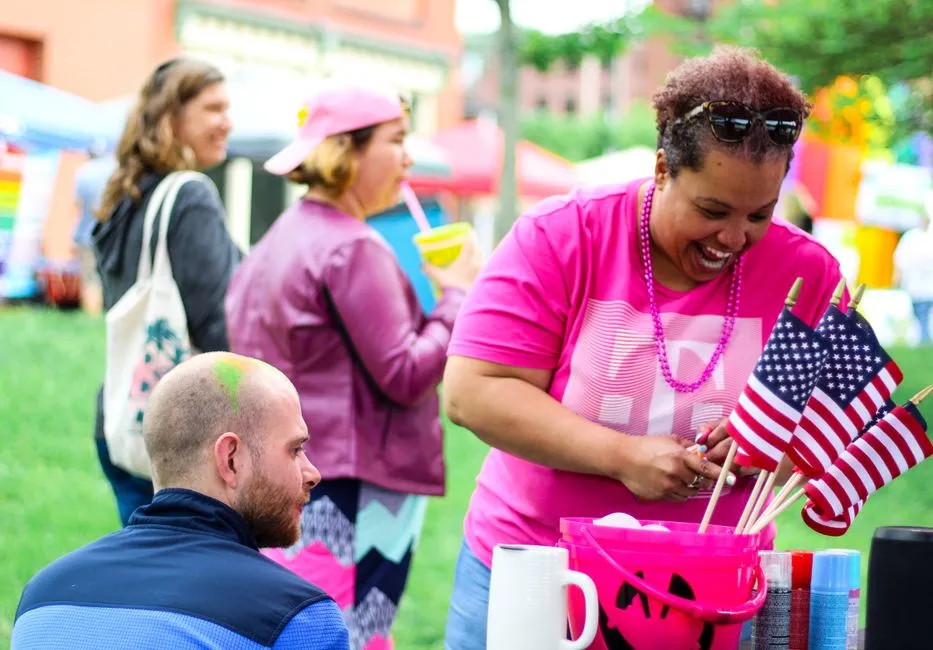
Building a better community starts by addressing a modern paradox: we're more digitally connected yet socially isolated than ever. Social disconnection has become a crisis, leading to widespread loneliness and declining civic engagement.
Why Building a Better Community Matters Now More Than Ever
Building a better community starts by addressing a modern paradox: we're more digitally connected yet socially isolated than ever. Social disconnection has become a crisis, leading to widespread loneliness and declining civic engagement.
Quick Answer: How to Build a Better Community
- Foster Trust First - Build relationships through consistent, authentic interactions before expecting collective action
- Focus on Assets, Not Deficits - Identify and leverage existing community strengths, skills, and resources
- Create Regular Touchpoints - Host simple gatherings like block parties, skill swaps, or community gardens
- Design for Connection - Prioritize walkable spaces, front porches, and public gathering areas
- Engage All Groups - Actively include renters, seniors, youth, and diverse populations
- Measure What Matters - Track belonging, participation rates, and genuine relationship formation
Research confirms that community is essential, not just a nice-to-have. Strong social ties lead to reduced crime, better mental health, and greater resilience. When neighbors know each other, neighborhoods become safer and more supportive.
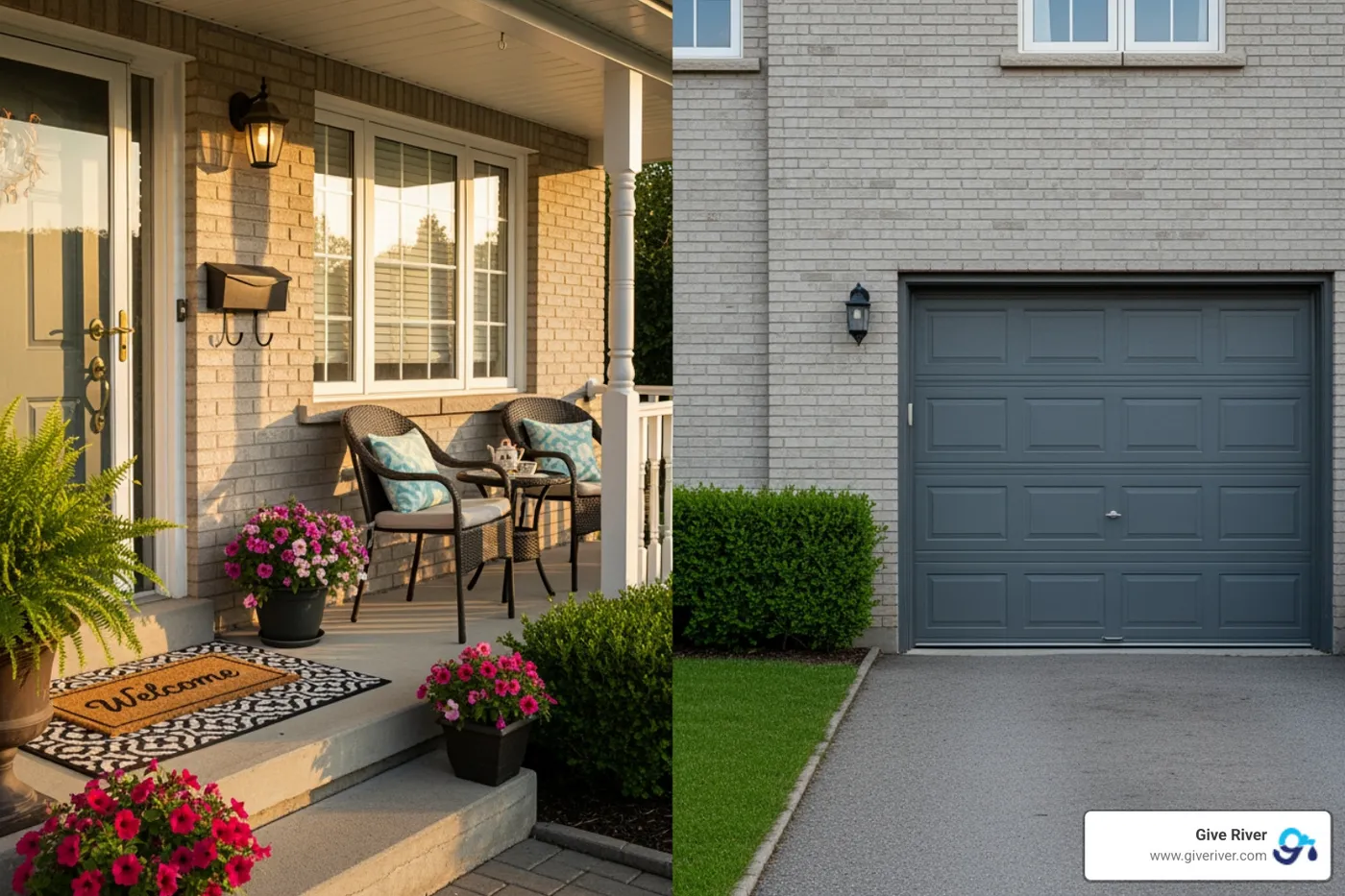
Modern life often hinders connection. Privacy fences have replaced front porches, and garage doors have become our main entrances, eliminating casual sidewalk chats. We've been conditioned to distrust strangers, forcing us to intentionally rebuild what once came naturally: knowing our neighbors.
The good news is that community building is simple. It requires intentionality, visibility, and consistency—not massive budgets. Small actions, like drinking coffee on your front porch or organizing a clothing swap, create the social fabric that turns isolation into connection.
I'm Meghan Calhoun, Co-Founder of Give River. I've seen how connection transforms performance, from sales teams to workplaces. The principles are the same for neighborhoods and organizations: trust, recognition, shared purpose, and investing in one another.
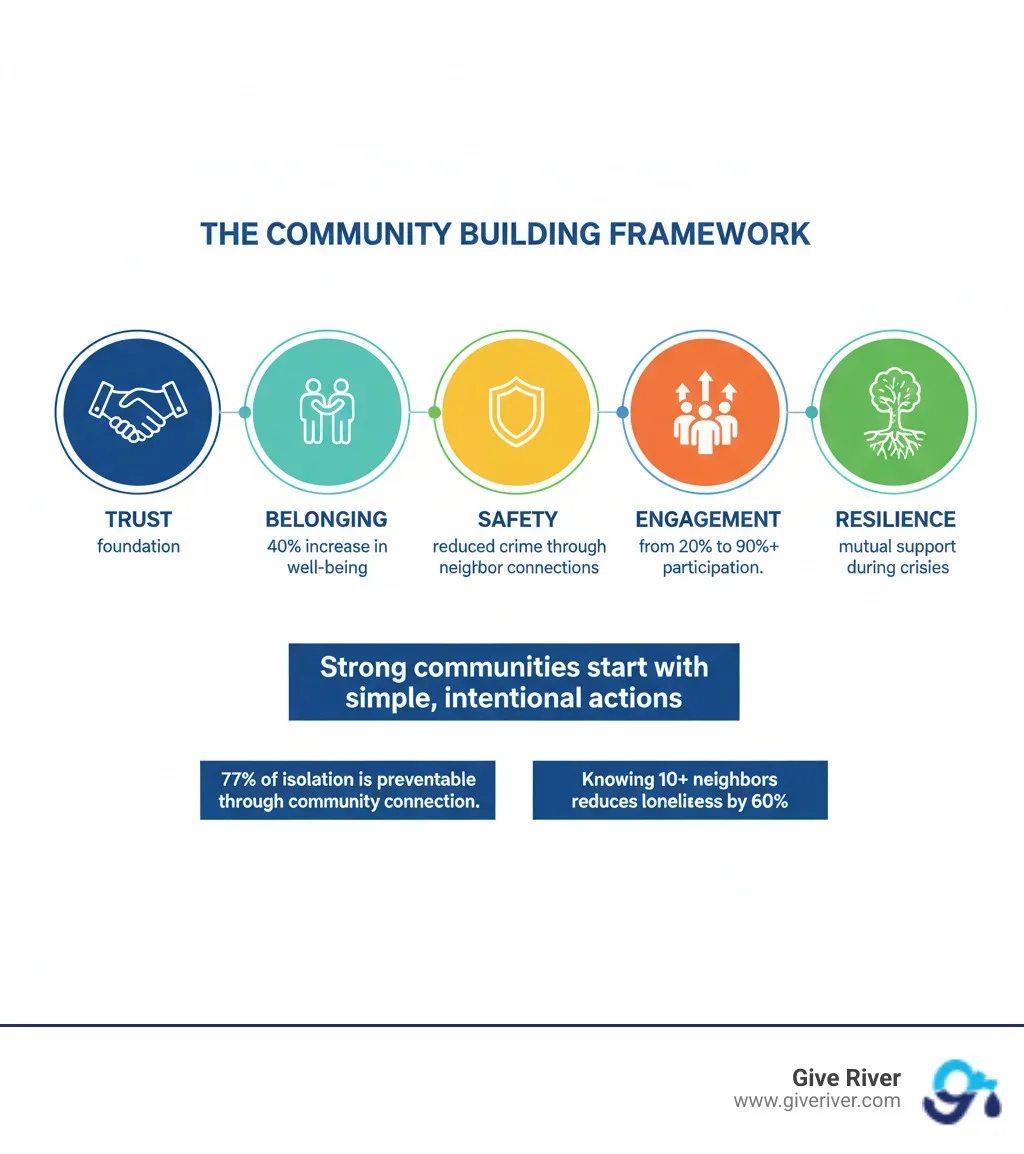
Infographic displaying: "The Community Building Framework" with five interconnected circles representing Trust (foundation), Belonging (40% increase in well-being), Safety (reduced crime through neighbor connections), Engagement (from 20% to 90%+ participation), and Resilience (mutual support during crises). Center text: "Strong communities start with simple, intentional actions." Bottom stats: "77% of isolation is preventable through community connection" and "Knowing 10+ neighbors reduces loneliness by 60%."
The Blueprint for Building a Better Community
In a disconnected world, building a better community offers a vital safety net where individuals feel supported and valued. At Give River, we see these principles apply to both vibrant neighborhoods and thriving workplaces. This blueprint will guide you through the essentials.
The Foundation: Core Principles of Connection
At the heart of any strong community lie a few fundamental principles. The bedrock is trust, earned through consistent, authentic interactions. It starts with individuals and extends to the group, guided by accessible leaders. Hand-in-hand with trust are clear communication and a shared vision, which provide direction and unite members toward common goals.
These principles foster mutual support and resilience. A connected community acts as a safety net during challenges, boosting collective well-being. The resulting sense of belonging is a powerful benefit, making members feel valued and more likely to stay involved long-term. A strong member community benefits not only its members but also the organization or neighborhood as a whole.
To learn more about how intentional efforts can foster these foundational principles, explore our insights on Community Impact Initiatives.
Overcoming Modern Barriers to Connection
Modern society presents several barriers to community. Isolating urban design is a major one; the shift from front porches to garage-centric homes discourages the casual interactions that build relationships. Privacy fences and back patios create seclusion, but front porches and walkable streets invite connection.
Other problems include a pervasive fear of strangers, often fueled by media, which makes us view neighbors with suspicion. The paradox of digital disconnection means we may have hundreds of online friends but know few neighbors by name. Finally, a lack of civic participation reduces opportunities to come together for a shared purpose, weakening the social fabric.
Practical Steps for Building a Better Community as an Individual
Building community starts with simple, individual actions. Here are some practical steps:
- Do Your Own Yard Work: Being visible in your front yard makes you approachable for casual chats.
- Activate Your Front Yard: Use a porch, bench, or fire pit as a natural gathering spot.
- Leave the Car at Home: Walking or biking allows for spontaneous interactions.
- Pick Up Trash: This simple act shows you care and can spark conversations.
- Introduce Yourself: A basic greeting goes a long way in building connections.
- Share Your Tools: Lending a tool is a classic act of neighborliness that builds trust.
- Host a Block Party: Bring people together with a shared event; ask for help to foster ownership.
- Host a Clothing or Toy Swap: A fun, sustainable way to connect with others.
- Host a Skill Swap: Encourage people to share their talents, from baking to guitar lessons.
- Join or Start a Repair Café: Combat throw-away culture by fixing items together.
- Start a Food Sharing Club: Gather people for meals or organize a meal train for a neighbor in need.
- Start a Book or Movie Club: Foster deeper connections through shared interests and discussions.
- Grow an Urban Garden: Community gardens are fantastic for connecting people and sharing knowledge.
- Invite Apartment Dwellers: Ensure inclusivity by reaching out to all residents, not just homeowners.
- Chip In and Help: Small acts of kindness—like checking on a neighbor or dog-sitting—build strong bonds.
These small actions create visible opportunities for connection. For more ideas, visit our page on Community Involvement Programs.
The Role of Organizations in Fostering Community
Organizations, from local businesses to large corporations, are pivotal in building a better community.
Local businesses can strengthen ties by:
- Hosting events like fun runs or charity carnivals.
- Sponsoring local teams and school programs.
- Creating inclusive spaces like a coffee shop or bookstore that serve as informal hubs.
- Running charity drives that align with their business.
Nonprofit organizations provide essential services and create structured opportunities for engagement, often by identifying and leveraging existing local strengths.
Corporate Social Responsibility (CSR) initiatives allow larger companies to contribute through workplace giving, employee volunteer programs, and strategic partnerships with local nonprofits.
At Give River, we believe in extending generosity beyond company walls. While platforms like Bonusly or Kudos focus on internal employee recognition, Give River uniquely channels that spirit into the wider community. We empower organizations to make a tangible difference through organized giving and volunteering, strengthening external ties while enriching employee fulfillment.
Leveraging technology is also crucial. Digital platforms can connect people, facilitate coordination, and make community building more accessible and effective. Find more strategies on our page about Community Building Activities on Zoom.
Designing for Connection and Inclusivity
The physical environment profoundly impacts our ability to connect. Thoughtful urban design is a powerful tool for building a better community.
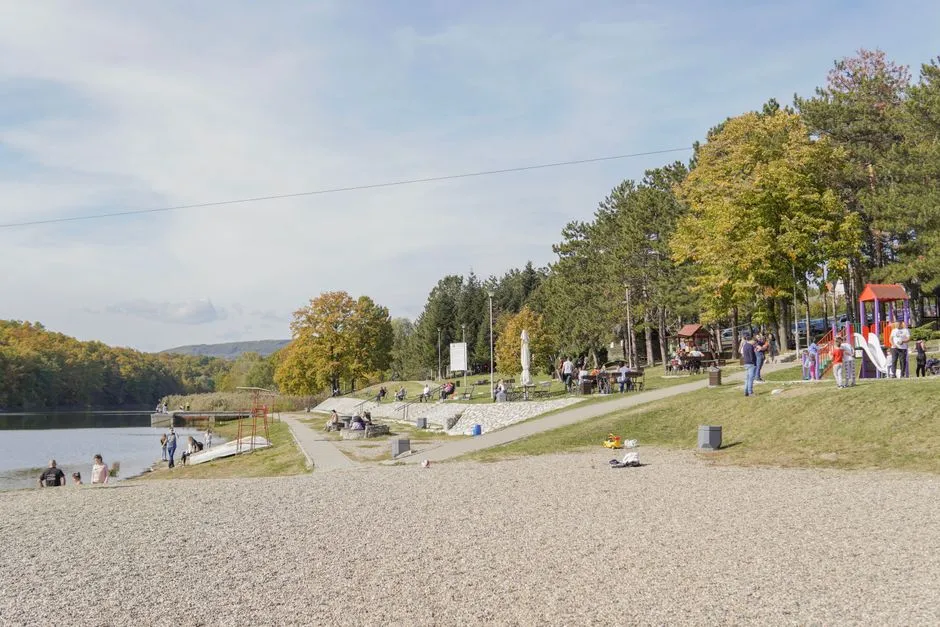
Public spaces like parks, plazas, and libraries are essential for spontaneous interaction. Walkable neighborhoods where people can easily bike or stroll encourage casual encounters. As mentioned, front porches are transitional spaces that bridge the private and public, inviting connection.
An Asset-Based Community Development (ABCD) approach focuses on leveraging a community's existing strengths—like resident skills and local institutions—rather than focusing on deficits. This empowers residents to build from within.
Involving diverse groups is non-negotiable. A truly strong community actively engages renters, creates intergenerational activities, and fosters inclusivity across different socio-economic and cultural backgrounds. By intentionally designing our spaces and engagement strategies, we create environments where everyone feels welcome. For more on strategic community giving, see our Charitable Impact Strategies.
Measuring Success in Building a Better Community
How do we know if our efforts are working? Measuring impact is crucial for improvement.
It starts with community feedback through surveys, focus groups, or informal conversations. Participation rates at events and volunteer activities offer a quantitative measure, but the quality of engagement matters, too.
A key, though less tangible, metric is the sense of belonging. This can be assessed through surveys asking about feelings of connection and safety. Celebrating milestones and recognizing contributions reinforce positive behaviors and show that efforts are valued, much like we champion gratitude in the workplace at Give River. Finally, storytelling—sharing anecdotes and testimonials—paints a vivid picture of success that numbers alone cannot capture. To understand more about the impact of recognition, read our article on The Power of Gratitude in the Workplace: Recognition Matters More Than You Think.
From Blueprint to Reality: Your Role in Crafting Community
We've explored the blueprint for building a better community, from its core principles to practical steps. What's clear is that community isn't static; it's built through continuous, intentional actions from everyone.
The journey starts with individual actions—a friendly wave, a neighborhood clean-up—that build social infrastructure. But organizational support from businesses and nonprofits is also crucial for fostering connection. The benefits are immense: a stronger safety net, improved well-being, reduced loneliness, and a deep sense of belonging. In a disconnected world, community is essential for our collective health.
Even technology can be a powerful ally. Used thoughtfully, digital platforms can bridge distances and make building a better community more accessible by helping organize events, share resources, and coordinate participation seamlessly.
At Give River, we believe in empowering organizations to make a tangible difference. While platforms like Bonusly or Kudos excel at fostering gratitude within a workplace, Give River uniquely extends that spirit of generosity into the wider community. We help companies integrate corporate social responsibility, allowing employees to connect their contributions to meaningful causes. This approach deepens employee fulfillment by building a better community, both inside and out.
Your role in crafting community is invaluable. Let's move beyond isolation and build a future where everyone feels connected, supported, and truly at home.
More from this category.
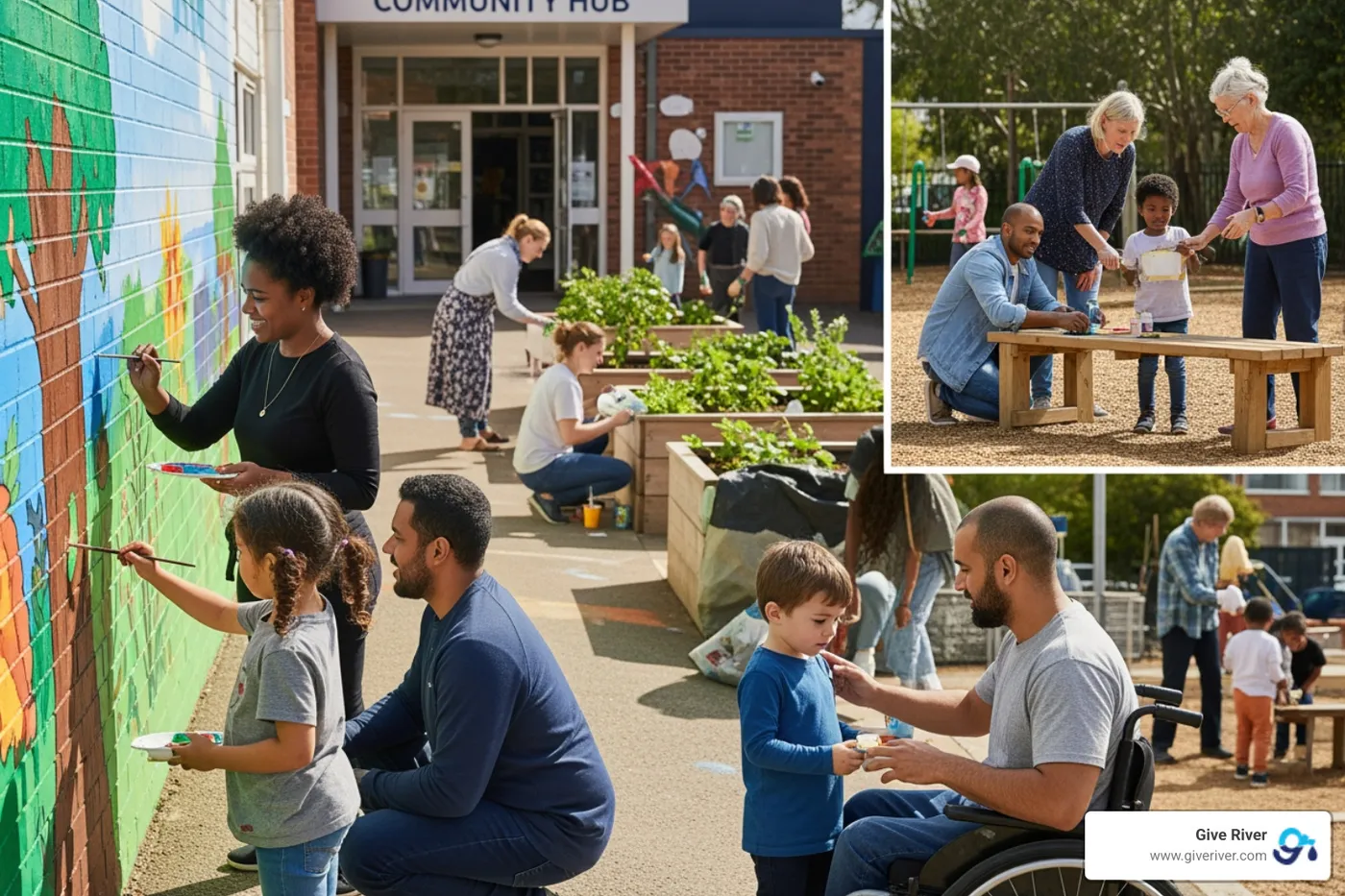
Why Community Involvement Grants Matter for Your Organization's Impact
Community involvement grants provide essential funding to help organizations—from nonprofits and schools to businesses—create meaningful change. These grants can feel overwhelming to steer, but they offer a powerful way to address critical…
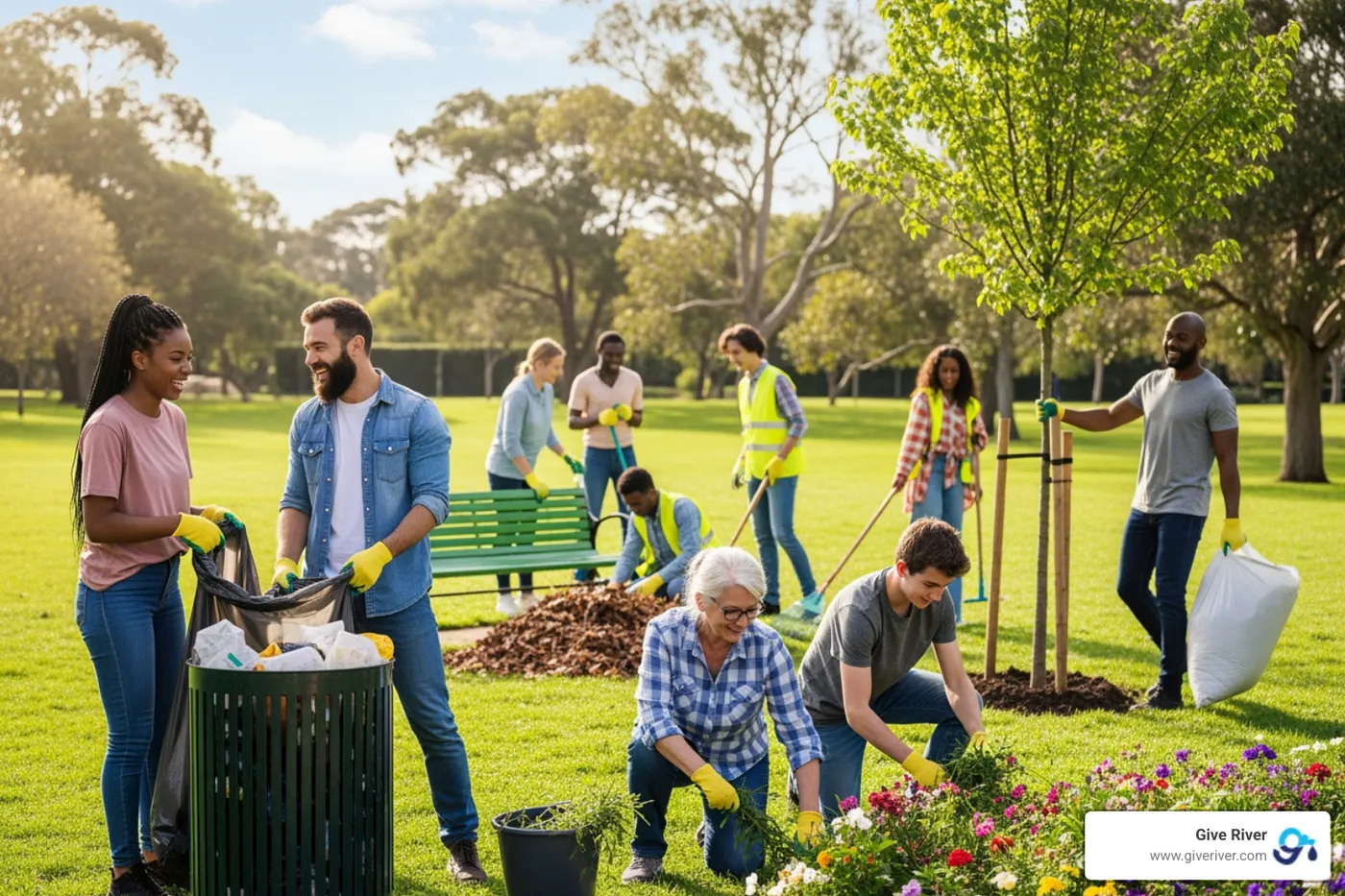
Why Getting Involved Matters: More Than Just Giving Back
Community involvement ideas span from food drives and tutoring to charity runs and park clean-ups. Whether you prefer hands-on projects, skill-based opportunities, donation drives, or corporate volunteer programs, there are countless ways…
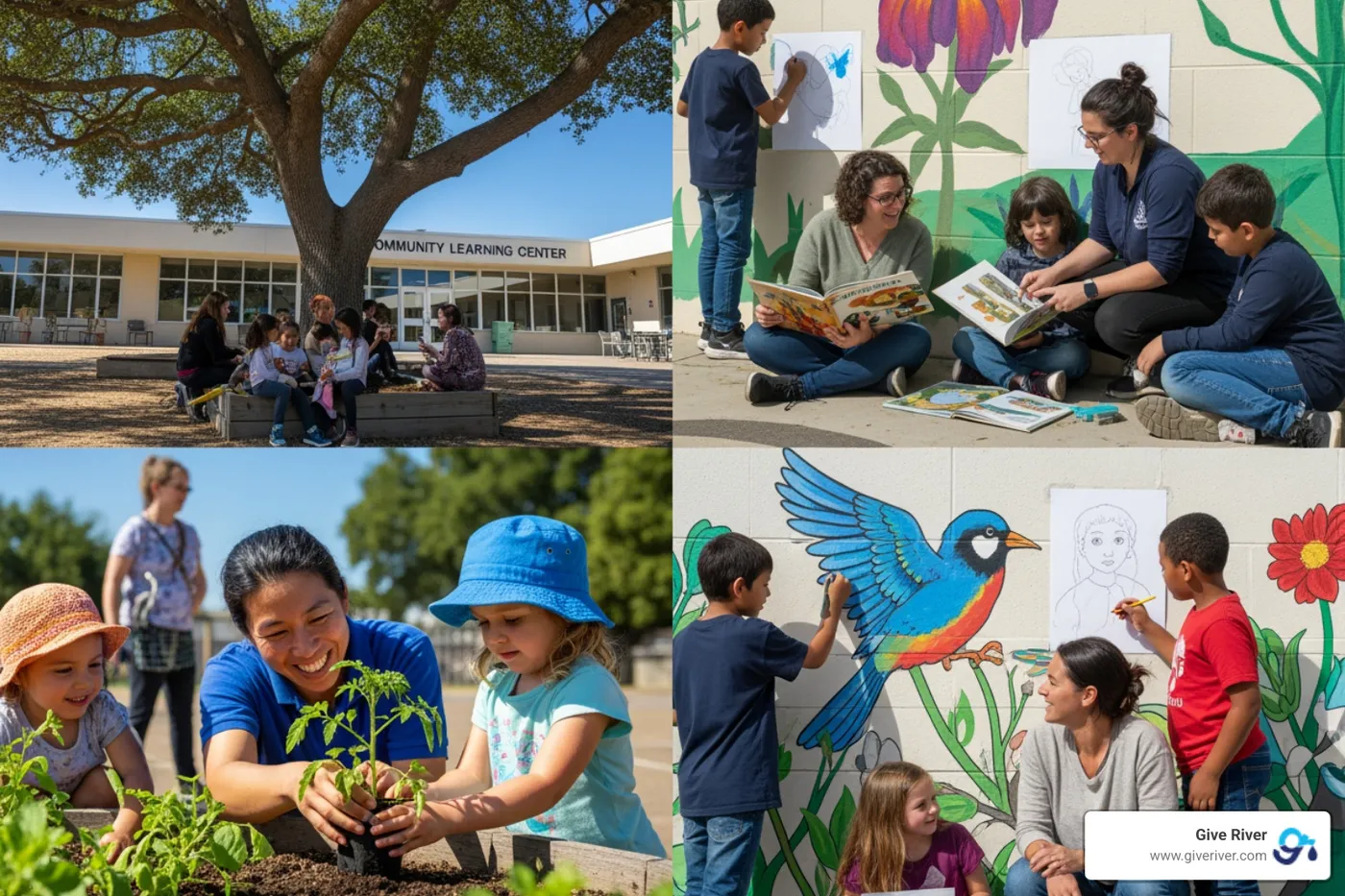
Why Community Involvement Programs in Schools Matter
Community involvement programs in schools are collaborative relationships between educational institutions and local stakeholders like families, businesses, and non-profits. They are crucial for creating a supportive ecosystem that…
See the platform in action.
30-day free trial. No credit card. River Guide included on Core and Growth.