Why Most Recognition Efforts Are Falling Short
Employee reward and recognition programs are critical, yet most are failing. According to Gallup, only one in three U.S. workers received recognition in the past week. Worse, employees who feel unappreciated are twice as likely to quit…

Why Most Recognition Efforts Are Falling Short
Employee reward and recognition programs are critical, yet most are failing. According to Gallup, only one in three U.S. workers received recognition in the past week. Worse, employees who feel unappreciated are twice as likely to quit within a year.
Quick Answer: What Makes Employee Rewards and Recognition Effective?
The most successful programs share these essential elements:
- Frequent recognition - Weekly recognition makes employees 2.6x more likely to be productive
- Specific praise - Call out exact behaviors and their impact, not generic "great job" statements
- Peer-to-peer appreciation - Companies with peer recognition are 37% more likely to see business results
- Alignment with values - 96% of high-performing programs tie recognition to company values
- Meaningful rewards - Offer choice in rewards (points, experiences, growth opportunities)
- Timely feedback - Recognition loses power when delayed
- Mix of monetary and non-monetary - Social recognition can comprise 60-70% of total recognition and still drive results
This disconnect is costly. With intent to leave at a 10-year high, traditional "good job" approaches are not enough. Employees want to feel valued, supported, and connected to meaningful work. The challenge isn't if you should have a program, but how to design one that employees use—as most platforms see only 20-30% adoption.
I'm Meghan Calhoun, co-founder of Give River. My experience has taught me that effective employee reward and recognition demands an integrated approach combining gratitude, growth, and purpose.
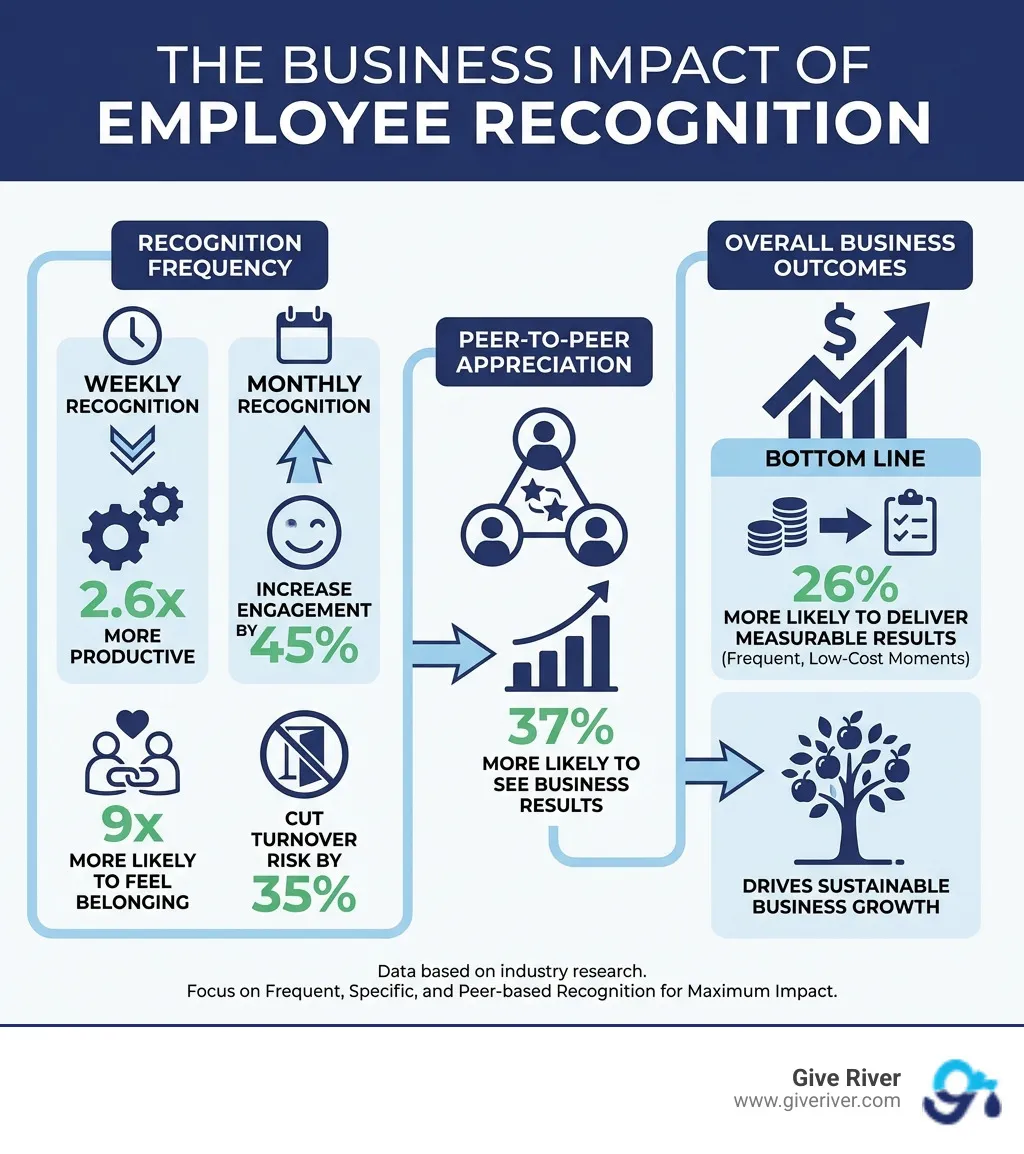
This infographic shows the impact of recognition frequency: weekly recognition makes employees 2.6x more productive and 9x more likely to feel belonging. Monthly recognition cuts turnover risk by 35%. Peer recognition programs are 37% more likely to see positive business outcomes.
employee engagement and retention employee health and wellness
The Ultimate Guide to Building an Effective Employee Reward and Recognition Program
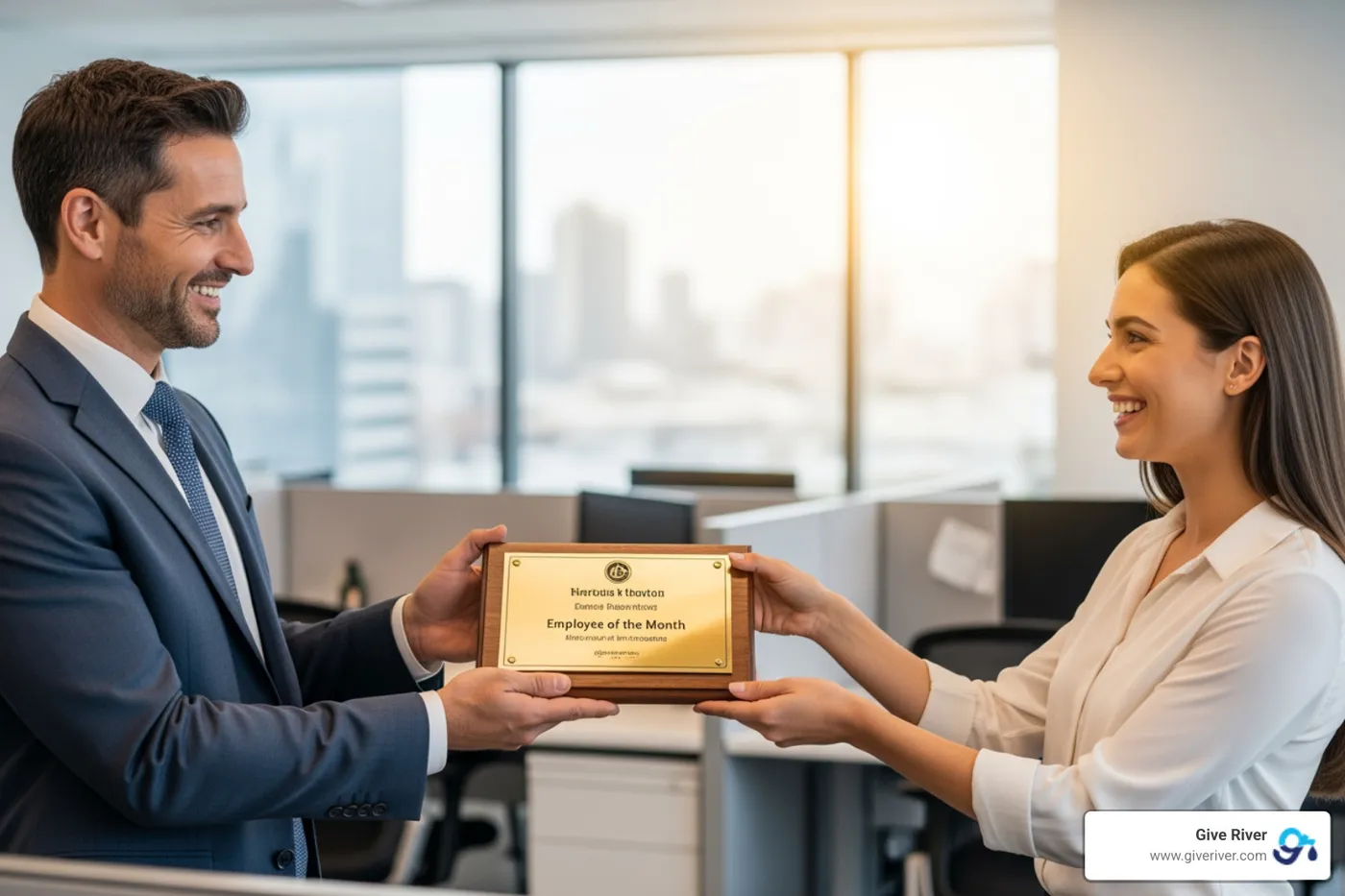
At Give River, we've seen how a well-crafted employee reward and recognition program can transform a workplace. It moves beyond superficial perks to create a vibrant culture where individuals feel seen, valued, and motivated. This isn't just about making employees feel good; it's about driving tangible business results like employee engagement and retention and a winning workplace culture.
For broader context on the business impact of recognition, Gallup's research on engagement and recognition practices is a useful external reference point: Gallup employee recognition insights.
The 'What' and 'Why': Understanding the Power of Appreciation
An employee reward and recognition program is a structured way to acknowledge your team's contributions. While often used together, "rewards" and "recognition" have distinct roles:
- Employee Recognition is the intangible acknowledgment of effort and achievement. It's about making employees feel seen and valued through praise, a public shout-out, or a heartfelt "thank you." This emotional connection is incredibly powerful, as we explore in The Power of Gratitude in the Workplace: Recognition Matters More Than You Think.
- Employee Rewards are tangible benefits given for performance or loyalty. These can be monetary (bonuses, gift cards) or non-monetary (extra time off, experiences) and serve as a concrete incentive.
Why are these programs a strategic imperative?
- Increased Engagement: Regularly recognized employees are significantly more engaged, committed, and invested in their work.
- Boosted Motivation: Acknowledgment validates hard work and inspires high performance. It's a key tool for staff motivation techniques.
- Improved Retention: Regular manager recognition can cut turnover risk by 35%, and employees at companies with strong programs plan to stay four years longer.
- Stronger Culture: Recognition reinforces company values and desired behaviors, fostering a positive and supportive environment.
- Higher Productivity: When recognition is weekly, employees are 2.6 times more likely to be their most productive selves.
Key Components of a High-Impact Program
An effective program requires thoughtful design. Here are the key components that differentiate a successful program from a "nice try":
- Alignment with Company Values: Tie recognition to your organization's mission. 96% of high-performing programs do this to reinforce desired behaviors.
- Frequency and Timeliness: Immediate praise is powerful. Aim for frequent recognition (weekly or monthly) to keep motivation high.
- Specificity and Authenticity: Go beyond "great job." Explain what the employee did and why it mattered to make recognition feel genuine.
- Multi-directional Recognition: Empower everyone to give praise. Peer-to-peer recognition software complete guide boosts business results by 37%, and recognition from managers and leaders is highly memorable.
- Personalization and Choice: Offer rewards that are meaningful to individuals, such as points redeemable for gift cards or experiences.
- Simplicity and Accessibility: Recognition should be easy to give and receive. While platforms like Bonusly and Kudos offer basic peer-to-peer recognition, Give River provides a more comprehensive solution. It integrates seamlessly into workflows like Slack and Teams but also adds layers of gamification and connects recognition directly to growth, wellness, and company values, which basic systems often lack.
- Clear Budget and Criteria: Establish a fair budget and clear guidelines for recognition to ensure fairness and prevent perceived favoritism.
- Training and Education: Teach managers and employees how to give effective, authentic recognition.
- Measurement and Feedback: Continuously measure usage and impact, and gather employee feedback to refine your program. Learn more in our employee recognition action plan complete guide.
Focusing on these components helps avoid common pitfalls like low usage or misalignment with company goals.
30+ Creative Ideas for Employee Rewards and Recognition
Creativity and thoughtfulness go a long way. Here are some of our best company rewards & recognition ideas, categorized by the principles of Gratitude, Growth, and Generosity from our 5G Method.
Ideas for Gratitude (Recognition & Appreciation):
- Personalized Thank-You Notes: A handwritten note from a manager or CEO.
- Public Shout-Outs: Acknowledgment in team meetings or on Slack/Teams.
- Employee Spotlights: Features in company newsletters or on a "Wall of Fame."
- Milestone Celebrations: Thoughtful recognition for work anniversaries and birthdays.
- Peer-to-Peer Recognition Platform: A system for colleagues to easily praise each other.
- "Kudos" Board: A physical or virtual space for appreciation notes.
- "Caught in the Act" Awards: Spot recognition for demonstrating company values.
- Team Appreciation Lunch: A surprise meal to celebrate a project completion.
- "Day in the Life" Feature: A blog or social media post about an employee's role.
- LinkedIn Recommendations: A public endorsement from a manager.
- Nomination Programs: "Innovator of the Month" or "Team Player of the Quarter" awards.
Ideas for Growth (Development & Wellness):
- Professional Development: Sponsoring courses, workshops, or certifications.
- Mentorship Programs: Pairing employees with senior leaders for guidance.
- Books/Subscriptions: Gifting industry books or subscriptions to learning platforms.
- Wellness Rewards: Gift cards for spas, gyms, or meditation apps. See more workplace wellness program ideas.
- Flexible Work Options: Granting extra remote work days or flexible hours.
- Skill-Based Challenges: Gamified contests to develop new skills.
- "Day Out with an Expert": Shadowing a leader in a different department.
- Project Choice: Allowing top performers to choose their next project.
- Upgraded Equipment: Ergonomic chairs or noise-canceling headphones.
Ideas for Generosity (Impact & Experiences):
- Charitable Donations: A donation to a charity of the employee's choice.
- Volunteer Time Off (VTO): Paid time off to volunteer for a cause.
- Team Building Experiences: Fun off-site events like escape rooms or outings.
- "Experience" Vouchers: Gift cards for cooking classes or concert tickets.
- Company Swag: High-quality, desirable branded merchandise.
- "Treat Yourself" Fund: A small budget for employees to spend on anything.
- Extended Breaks/PTO: An extra day off or a long weekend.
- Personalized Gifts: A thoughtful gift reflecting an employee's hobbies.
- Meal Delivery Vouchers: A convenient reward for remote or busy employees.
- "Boss for a Day": A lighthearted reward to experience leadership.
- "Bring Your Pet to Work" Day: A fun perk for pet owners.
- Custom Company incentive ideas for employees.

Remember to tailor rewards to individual preferences and gather feedback to ensure your program remains impactful.
Leveraging Technology and Measuring Success
Technology is essential for a modern employee reward and recognition program. A robust platform streamlines processes, boosts engagement, and provides crucial data.
How Technology Improves Recognition:
- Instant Recognition: Employee recognition platforms enable real-time praise through integrations with tools like Slack and Teams.
- Social Features: Social feeds, leaderboards, and badges make recognition public and engaging.
- Personalization: Technology allows for personalized reward catalogs, so employees can choose what's meaningful to them.
- Scalability: Platforms connect global and distributed teams, ensuring everyone is included.
- Simplified Administration: Automate budget tracking, reward distribution, and compliance.
Measuring the ROI of Your Programs:
To secure buy-in and improve your program, track these key metrics:
- Program Adoption: Monitor the percentage of employees giving and receiving recognition.
- Engagement Scores: Look for improvements in survey results related to feeling valued.
- Retention Rates: Track turnover, especially among high performers.
- Productivity Metrics: Correlate recognition frequency with team productivity.
- Culture Metrics: Use an employee pulse survey platform to measure changes in belonging and psychological safety.
- Participation: Monitor recognition frequency from managers and peers.
Using HR data reporting within your platform provides the insights needed to refine your strategy and prove its impact.
Future-Proofing Your Strategy: Trends in Employee Rewards and Recognition
To keep your strategy effective, accept these emerging trends in employee reward and recognition:
- Personalization at Scale: Use technology to offer highly personalized rewards and recognition experiences that cater to individual preferences.
- Integrating Wellness: Link recognition to well-being by offering wellness-related rewards. According to scientific research on the benefits of workplace wellness, these programs are a strategic imperative for preventing burnout. For a widely referenced framework, see the CDC's model for workplace health promotion.
- Gamification for Engagement: Use leaderboards, badges, and points to make recognition fun and interactive. This is a core part of Give River's platform and a key to gamification in the workplace.
- Community Impact (Generosity): Tap into the desire for purpose-driven work by integrating charitable giving and volunteering opportunities into your rewards program.
- AI in Recognition: Leverage AI to analyze data, suggest recognition opportunities, and personalize rewards, making your program smarter and more proactive as HR technology trends evolve.
- Focus on "Total Rewards": View recognition as part of a holistic package that includes career development, wellness, benefits, and a positive work environment.
Embracing these trends will help you create a program that is adaptable and fosters a culture of continuous appreciation.
Conclusion: From Appreciation to Change
Effective employee reward and recognition is not about simple gestures; it's a strategic initiative that drives engagement, motivation, and retention. A superficial approach is no longer enough for employees who crave fulfillment.
The key is a holistic approach that integrates gratitude, growth, and generosity—the core of Give River's 5G Method. When recognition is frequent, specific, and purposeful, it transforms workplaces.
By implementing the components and ideas in this guide, you can build a program that celebrates your employees and fuels your organization's success.
Ready to build a vibrant, appreciative, and high-performing culture? Explore how our integrated platform can transform your employee reward and recognition strategy.
Learn more about how comprehensive platforms can support your team's well-being and recognition efforts: /blog/corporate-wellness-platforms
More from this category.
Best Employee Recognition Software for Nonprofits (2026)
What nonprofits need from recognition software, what six platforms charge mission-driven teams, and how to get a grant-funded Season of Give River for free.

Employee Recognition Software Pricing in 2026: What 6 Platforms Charge
What Give River, Bonusly, Motivosity, Nectar, Awardco, and Workhuman charge in 2026, from their own sites: pricing models, minimums, fees, and contract terms.

How to Improve Employee Recognition Across Multiple Locations
Six practical ways to make recognition reach every site and shift, what to look for in a platform, and how a 25-location nonprofit did it.
See the platform in action.
30-day free trial. No credit card. River Guide included on Core and Growth.