Building a Thriving Culture, One 'Thank You' at a Time
Peer to peer recognition software empowers employees to acknowledge and celebrate each other's contributions through digital platforms that streamline appreciation, boost engagement, and strengthen workplace culture. Here are the top…

Building a Thriving Culture, One 'Thank You' at a Time
Peer to peer recognition software empowers employees to acknowledge and celebrate each other's contributions through digital platforms that streamline appreciation, boost engagement, and strengthen workplace culture. Here are the top considerations when evaluating these solutions:
Key Features to Look For:
- Social recognition feeds for public appreciation
- Points-based reward systems with diverse redemption options
- Integration with communication tools (Slack, Microsoft Teams)
- Mobile accessibility for on-the-go recognition
- Analytics dashboards to track engagement and culture trends
- Automated milestone celebrations (birthdays, work anniversaries)
Top-Rated Platforms:
- Bonusly - Known for its simple, social approach to recognition
- Kudos - Offers comprehensive analytics and culture insights
- Nectar - Features strong automation and customization options
- Motivosity - Supports global teams across 238 countries
- Awardco - Partners with Amazon for extensive reward options
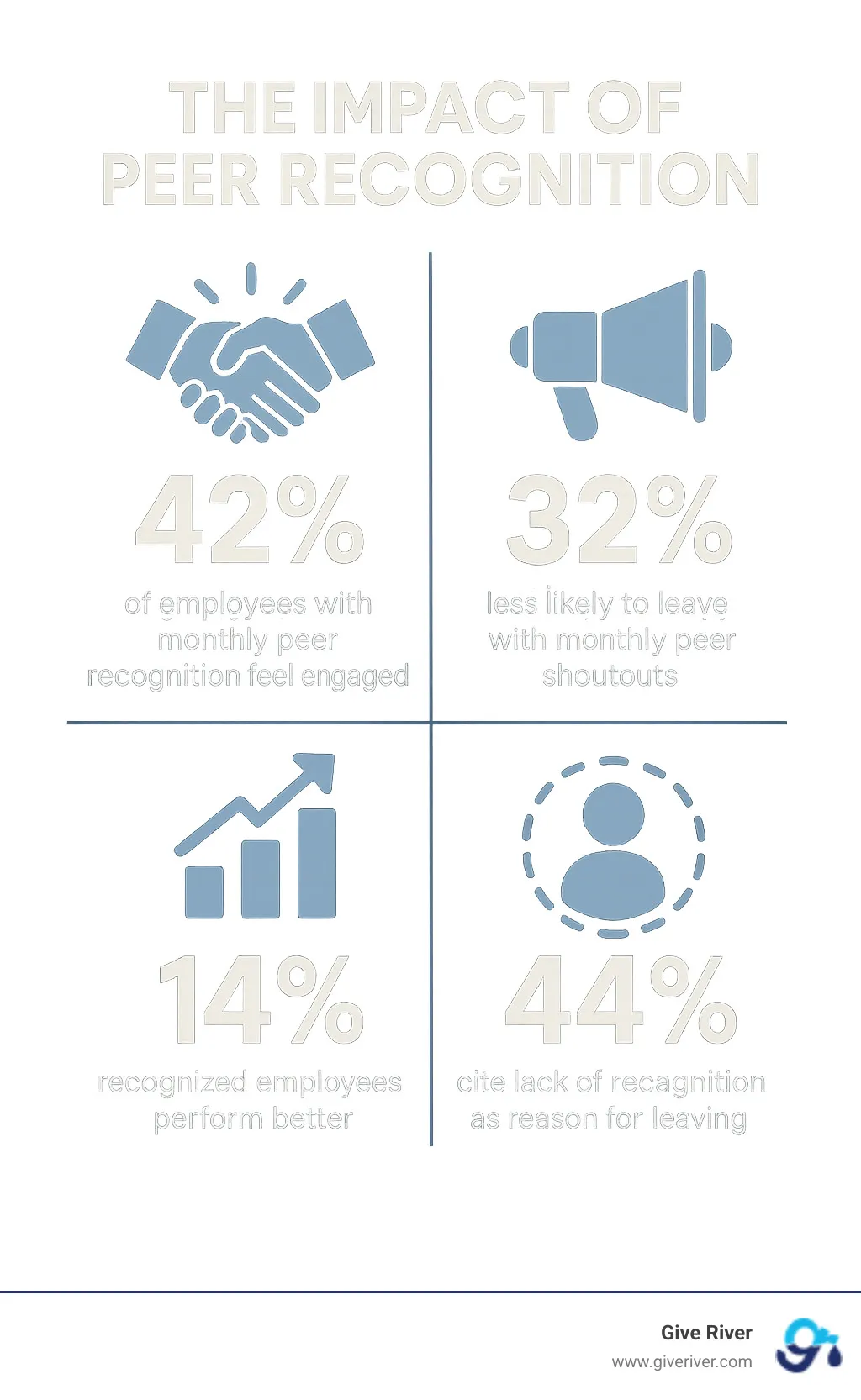
The numbers tell a compelling story about why this matters. Research shows that 42% of employees who get monthly peer recognition say they feel engaged at work, while 32% of employees wouldn't consider leaving their company in the next year if they received at least one shoutout from a peer each month. Even more striking, recognized employees perform up to 14% better than their unrecognized counterparts.
Yet 44% of employees have cited lack of recognition as the reason they quit or disengaged - a costly oversight when you consider that replacing an employee can cost 50-200% of their annual salary.
The shift from traditional top-down recognition to peer-driven appreciation represents more than just a technological upgrade. It's about creating workplaces where employees feel genuinely valued by the people they work alongside every day. When a colleague takes time to acknowledge your contribution to a project or celebrate your problem-solving skills, it creates a ripple effect that strengthens team bonds and reinforces positive behaviors.
I'm Meghan Calhoun, and over my two decades in high-pressure workplace environments - from television hosting to advertising sales - I've witnessed how meaningful recognition transforms team dynamics and individual fulfillment. This experience led me to co-found Give River, where we've developed innovative approaches to peer to peer recognition software that go beyond simple appreciation to create cultures of genuine connection and shared success.
Peer to peer recognition software vocab explained:
The Power of Peer Recognition: What It Is and Why It Matters
Picture this: Sarah from accounting takes a moment to acknowledge how Jake from marketing helped her understand the new campaign metrics. Jake lights up, feeling genuinely appreciated by someone who truly understands the work. That's peer to peer recognition software in action – colleagues acknowledging and celebrating each other's contributions through digital platforms that make appreciation seamless and meaningful.
Unlike traditional top-down recognition that flows solely from managers to employees, peer recognition creates something far more powerful: a workplace where everyone becomes a culture builder, not just a culture consumer. When recognition comes from the people who work alongside you every day – those who witness your problem-solving skills, your willingness to help, your creative solutions – it carries a different weight entirely.
This shift transforms your workplace into a vibrant community built on mutual respect and genuine appreciation. Peer recognition strengthens relationships among team members in ways that formal performance reviews simply can't match. It builds trust naturally, encourages collaboration organically, and creates a supportive environment where everyone feels truly seen and valued.
While platforms like Bonusly focus primarily on social recognition feeds and Kudos emphasizes analytics-driven insights, the most transformative solutions go beyond simple appreciation to create holistic employee experiences. The impact goes straight to the heart of what makes work meaningful. When peers recognize each other, it reinforces your organization's core values in real-time and directly impacts employee fulfillment. At Give River, we've seen The Power of Gratitude in the Workplace and how it transforms entire workplace cultures through genuine, peer-driven appreciation.
The Psychology Behind Peer Recognition
There's fascinating science behind why peer recognition creates such powerful workplace change. When a colleague offers genuine appreciation, it triggers something remarkable in our brains – the release of oxytocin, often called the "love hormone." This isn't just a feel-good moment; it's a powerful neurochemical response that creates bonding, motivation, and reinforces positive behaviors.
Peer recognition also taps into our deepest psychological needs at work. According to self-determination theory, we all have three fundamental needs that must be satisfied for true fulfillment. Autonomy – feeling control over our work and decisions – gets validated when peers recognize our initiative and independent thinking. Competence – our need to feel effective and capable – receives direct affirmation when colleagues praise our skills and contributions. Social affiliation – our desire to feel connected and belong – strengthens naturally through peer appreciation.
The research backs this up powerfully. Scientific research on the impact of social rewards on motivation shows that social recognition activates the same reward centers in our brain as monetary rewards, but with longer-lasting effects. Even more compelling: 34% of employees say they feel more like themselves at work when they're recognized by their peers.
This profound impact on individual identity and belonging reveals why peer recognition resonates so deeply. When someone who truly understands your work takes time to acknowledge your contribution, it validates not just what you do, but who you are as a professional.
The Tangible Benefits: Boosting Engagement, Retention, and Performance
The psychological benefits of peer recognition translate into measurable business results that every leader should pay attention to. When employees feel genuinely appreciated by their colleagues, the change touches every aspect of workplace performance.
Improved morale creates a positive atmosphere where people actually enjoy coming to work. Increased productivity follows naturally – recognized employees perform up to 14% better than their unrecognized counterparts. The motivation boost from peer appreciation drives people to consistently deliver their best work.
Lower turnover might be the most compelling benefit. Here's a striking statistic: 32% of employees wouldn't consider leaving their company in the next year if they received at least one shoutout from a peer each month. One organization using Nectar saw their turnover rate drop dramatically from around 25% to less than 7% after implementing robust peer recognition.
Improved collaboration emerges as stronger relationships naturally lead to better teamwork and cross-functional cooperation. When people feel valued by their peers, they're more willing to share knowledge, offer help, and work together toward common goals.
The engagement numbers tell an equally compelling story. 42% of employees who get monthly peer recognition say they feel engaged at work. Even when manager recognition falls short, employees receiving regular peer recognition are 38% more likely to feel productive than those who aren't recognized at all.
These data-driven benefits highlight why investing in peer to peer recognition software isn't just nice-to-have – it's a strategic business imperative that directly impacts your bottom line. For deeper insights into how these programs can transform your workforce, explore our comprehensive guide on Employee Rewards and Recognition Software.
How to Choose the Right Peer to Peer Recognition Software for Your Team
Comparing Top Platforms: Features, Pricing, and What Makes Them Unique
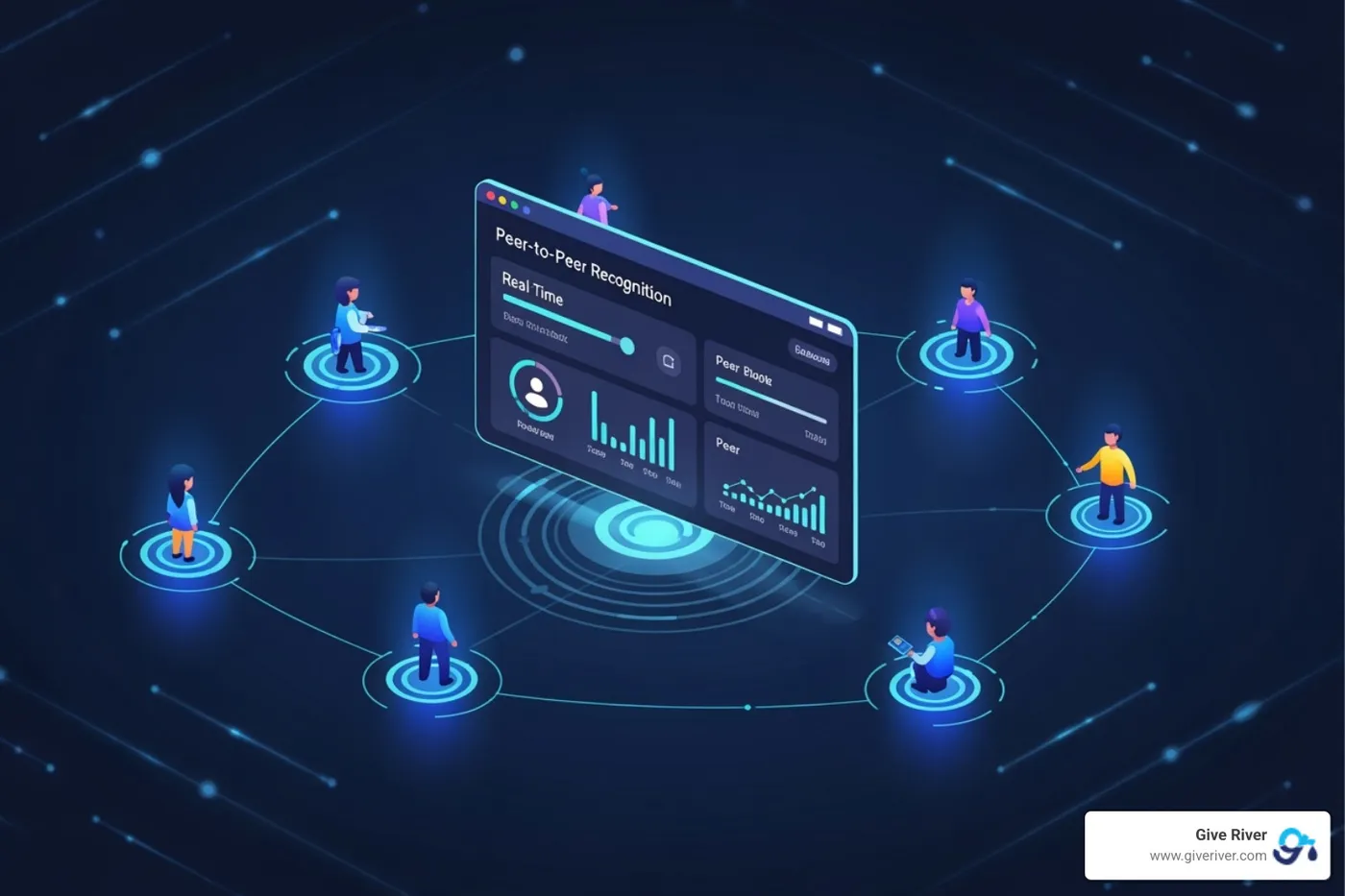
Choosing peer to peer recognition software can feel like picking a restaurant: some options focus on atmosphere, others on data-rich menus, and a few impress with endless specials. The goal is to match the platform to your culture, budget, and tech stack.
Most organizations prioritize one of three things:
- Effortless, social-media-style recognition
- Robust analytics that surface culture insights
- Diverse reward marketplaces that excite a global team
Whatever your focus, the market now offers something for everyone. For a deeper comparison, explore our review of Employee Recognition Software Companies.
A Look at Leading Solutions
- Bonusly – Social, frequent micro-recognition that adds up to meaningful rewards.
- Kudos – Blends recognition with people analytics for data-driven HR teams.
- Nectar – Automates birthdays, anniversaries, and wellness challenges, helping one client cut turnover from 25 % to under 7 %.
- Awardco – Partners with Amazon Business, giving employees millions of reward choices without mark-ups.
- Motivosity – Serves 238 countries with a global marketplace of 500 million reward options.
- Achievers – Backs its platform with proprietary research on what fuels engagement.
- Guusto – Simple to roll out and donates clean water with every gift.
Give River’s 5G Method—Gratitude, Guidance, Growth, Gamification, and Generosity—braids recognition with wellness, learning, and social impact. Learn more in our Top Employee Recognition Solution.
Understanding Costs and Current Trends
Most tools follow a per-user, per-month model:
- Free tiers for very small teams
- Basic plans: $2–$5 for core features
- Professional plans: $5–$10 for analytics and integrations
- Enterprise: $10–$20+ for custom support
Remember to budget for reward redemptions and implementation. Our Employee Recognition Platform Vendor guide breaks down the numbers.
Two trends to watch:
- AI-assisted recognition suggesting timely shout-outs and refining reports.
- Experiential rewards—from local classes to weekend getaways—now preferred over swag. For inspiration, see Workplace Rewards Ideas.
These innovations align with Give River’s holistic vision: weaving gratitude, wellness, and growth into every workday.
Frequently Asked Questions about Peer Recognition Platforms

When organizations consider implementing peer to peer recognition software, certain questions come up time and again. Having helped countless teams steer this journey, I've found that addressing these common concerns upfront can make the difference between a successful rollout and a well-intentioned program that never quite takes off.
What's the difference between recognition and rewards?
This distinction is crucial, and honestly, it's one of the most important concepts to get right before implementing any recognition program. Recognition is the heartfelt acknowledgment of someone's efforts, contributions, or behaviors. It's that moment when you publicly thank Sarah for staying late to help with the presentation, or when you celebrate Marcus for his creative problem-solving approach. Recognition emphasizes intrinsic value - it's about seeing people as whole individuals and affirming their worth to the team.
Rewards, on the other hand, are the tangible or monetary items that often accompany recognition. Think gift cards, company swag, extra time off, or even cash bonuses. Rewards focus on specific achievements and provide measurable incentives for continued excellence.
Here's the key insight: both elements are crucial for a comprehensive appreciation strategy, but they serve different purposes. Recognition feeds the soul and builds genuine connection, while rewards provide concrete motivation and show the company's investment in celebrating success. When you combine meaningful recognition with thoughtful rewards, you create a powerful cycle that drives both engagement and performance. For a deeper dive into this balance, explore our guide on Employee Rewards and Recognition Platform.
How do you encourage employees to actually use the software?
Ah, the million-dollar question! I've seen too many companies invest in beautiful recognition platforms only to watch them become digital ghost towns. The secret lies in making recognition feel natural, rewarding, and genuinely valuable to your team.
Leadership modeling is absolutely non-negotiable. When your CEO starts publicly celebrating team wins and your managers regularly highlight individual contributions, it sends a clear message that this matters. Employees follow what they see, not what they're told to do.
Gamification and friendly competition can work wonders for engagement. People are naturally drawn to earning badges, climbing leaderboards, and participating in recognition challenges. It taps into our competitive spirit while keeping things light and fun. The Benefits of Gamification in the Workplace are well-documented, and when done thoughtfully, can dramatically boost participation.
The most successful implementations make recognition part of daily workflows through integrations with tools like Slack or Microsoft Teams. When giving a shout-out is as easy as sending a message in a channel your team already uses, adoption happens naturally. No one wants another app to remember - they want recognition to flow seamlessly through their existing work rhythms.
Don't forget to communicate the "why" behind the program clearly and consistently. Help employees understand how recognition benefits them personally - stronger relationships, increased visibility, and a more positive work environment. When people see the personal value, they're much more likely to participate actively.
Can peer recognition work for remote or hybrid teams?
Not only can peer to peer recognition software work for distributed teams - it's often more essential for them than for traditional office environments. The digital nature of these platforms actually makes them ideal for connecting people across time zones and geographic boundaries.
One of the biggest advantages is how these platforms overcome proximity bias. In traditional offices, the "hallway heroes" - those who happen to sit near leadership or are naturally more visible - often receive disproportionate recognition. Digital platforms level the playing field, ensuring that your star performer in Portland gets just as much appreciation as the one in your headquarters.
For remote workers who might feel isolated or disconnected from their team, seeing colleagues recognize each other's efforts helps build that crucial sense of community. It fosters inclusion by creating shared experiences and celebrations that transcend physical location. As one HR director told me, "Even with everyone working from home, it felt like we were all still part of the same team when we saw those shout-outs come through."
The key is choosing a platform that's mobile-friendly and integrates well with your remote communication tools. When appreciation can travel across continents as easily as it travels across cubicles, you create a truly connected team culture. Learn more about how an Online Recognition Platform can bridge geographical gaps and strengthen your distributed team.
Conclusion: Invest in Your People, Transform Your Culture
Regular peer recognition delivers real business impact—employees perform up to 14 % better, are 32 % less likely to leave, and 42 % more likely to feel engaged. Behind the numbers lies a culture where everyone, not just managers, helps shape the employee experience.
The right peer to peer recognition software removes the bottleneck of top-down praise and turns everyday moments into culture-building opportunities. When a colleague’s effort is visible, celebrated, and rewarded, motivation becomes contagious.
Selecting a platform is therefore a strategic decision. Look for a solution that reinforces your values, integrates with the tools your team already uses, and scales as you grow. If you want to go beyond simple shout-outs, Give River’s Recognition Platform Solutions combine gratitude with wellness resources, growth content, gamification, and community impact—the full 5G Method.
Invest in your people and you’ll see the payoff in retention, productivity, and an environment where employees don’t just work—they thrive.
More from this category.
Best Employee Recognition Software for Nonprofits (2026)
What nonprofits need from recognition software, what six platforms charge mission-driven teams, and how to get a grant-funded Season of Give River for free.

Employee Recognition Software Pricing in 2026: What 6 Platforms Charge
What Give River, Bonusly, Motivosity, Nectar, Awardco, and Workhuman charge in 2026, from their own sites: pricing models, minimums, fees, and contract terms.

How to Improve Employee Recognition Across Multiple Locations
Six practical ways to make recognition reach every site and shift, what to look for in a platform, and how a 25-location nonprofit did it.
See the platform in action.
Free for up to 25 members, or try Core or Growth free for 30 days. A card is required; Free is never charged, and a trial bills when it ends unless you cancel.