Why Workplace Culture Importance Can't Be Ignored (And What It Really Means)
Workplace culture importance comes down to this: the shared values, behaviors, and beliefs that define how people work together directly determine whether your employees stay, thrive, and perform — or disengage, burn out, and leave.

Why Workplace Culture Importance Can't Be Ignored (And What It Really Means)
Workplace culture importance comes down to this: the shared values, behaviors, and beliefs that define how people work together directly determine whether your employees stay, thrive, and perform — or disengage, burn out, and leave.
Here's a quick summary of why it matters:
- Employee retention: Companies with strong cultures have a turnover rate of just 13.9%, compared to industry averages that are dramatically higher
- Financial performance: Organizations with engaged employees perform 21% better financially
- Productivity: A highly engaged workforce generates 17% higher productivity and 41% lower absenteeism
- Recruitment: 40% of job seekers rank company culture as a top priority when choosing where to work
- Cost of neglect: A toxic workplace culture costs organizations a staggering $223 billion over five years
Think of workplace culture as the social operating system of your organization. It's not the values poster on the wall or the perks in the employee handbook. It's the invisible force that shapes every interaction, decision, and daily experience your people have at work.
And it runs whether you're intentional about it or not.
The average American adult will spend roughly 90,000 hours — one-third of their entire life — at work. That's not a trivial amount of time to spend in an environment that drains rather than energizes. When culture is healthy, people show up as their best selves. When it's broken, the damage ripples outward: into productivity, health, relationships, and your bottom line.
I'm Meghan Calhoun, co-founder of Give River and a two-decade veteran of high-pressure sales and leadership environments where workplace culture importance was something I learned — often the hard way. Having nearly burned out myself while leading high-performing teams, I built Give River specifically to help organizations like yours create cultures where people genuinely thrive, not just survive.
In this guide, we'll walk you through exactly what makes a workplace culture strong, how to measure it, and how to build one that drives real results — for your people and your business.
Workplace culture importance vocab to learn:
The Strategic workplace culture importance for Business Growth
When we talk about workplace culture importance, we aren't just discussing "feel-good" perks like bean bags or free snacks. We are talking about a strategic business asset. When market disruptions are the norm, your culture is the bedrock of your organizational resilience. It is the only thing your competitors cannot easily replicate.
Research consistently shows that a Winning Workplace Culture serves as a powerful engine for growth. It influences how your team handles failure, how they treat customers, and how quickly they innovate. If your culture is stagnant or fearful, your business growth will reflect that. Conversely, a thriving environment acts as a magnet for high-tier talent and a catalyst for financial success.
Boosting Financial Returns and Productivity
The numbers don't lie: culture is a profit center. Organizations that prioritize a healthy social operating system see a direct impact on their bottom line. According to Gallup, companies with a highly engaged workforce experience 17% higher productivity and a massive 41% reduction in absenteeism. When people feel connected to their work and their colleagues, they simply show up more—both physically and mentally.
Furthermore, 94% of executives and 88% of employees believe a distinct corporate culture is vital to business success. This isn't just a hunch; companies with engaged employees perform 21% better financially than those without. At Give River, we see this every day. When you move beyond basic Company Culture Engagement and focus on true fulfillment, you unlock discretionary effort that no amount of micromanagement could ever produce.
Enhancing Retention and Recruitment
The recruitment landscape has changed. Generation Z employees, who currently stay at companies for an average of only 11 months, are looking for more than a paycheck. They are looking for alignment. In fact, 40% of job seekers consider company culture a top priority when choosing an employer. If your culture "stinks," you won't just struggle to keep people; you'll struggle to get them through the door in the first place.
A strong organizational culture results in a turnover rate of just 13.9%. Compare that to the high costs of recruitment, onboarding, and lost institutional knowledge, and the workplace culture importance becomes a cost-saving necessity. By focusing on how to Enhance Workplace Culture, you create a brand reputation that does the recruiting for you through positive word-of-mouth and high employee net promoter scores.
How to Cultivate and Measure a Thriving Environment
Building a great culture requires intentionality. It's about moving from "accidental culture" to "designed culture." This starts with psychological safety—the belief that one can speak up with ideas, questions, or mistakes without fear of punishment. When teams feel safe, they collaborate better and innovate faster.
A sense of belonging is equally critical. When employees feel they truly belong, research indicates a 56% increase in job performance and a 50% reduction in turnover risk. Scientific research on culture and job satisfaction even suggests that organizational culture is the primary predictor of leadership behavior and overall employee happiness.
Defining the Core workplace culture importance for Employee Well-being
We cannot separate workplace culture importance from the physical and mental health of our teams. A toxic environment is literally making people sick, contributing to burnout and chronic stress. On the flip side, a supportive culture can lead to a 75% decrease in sick days.
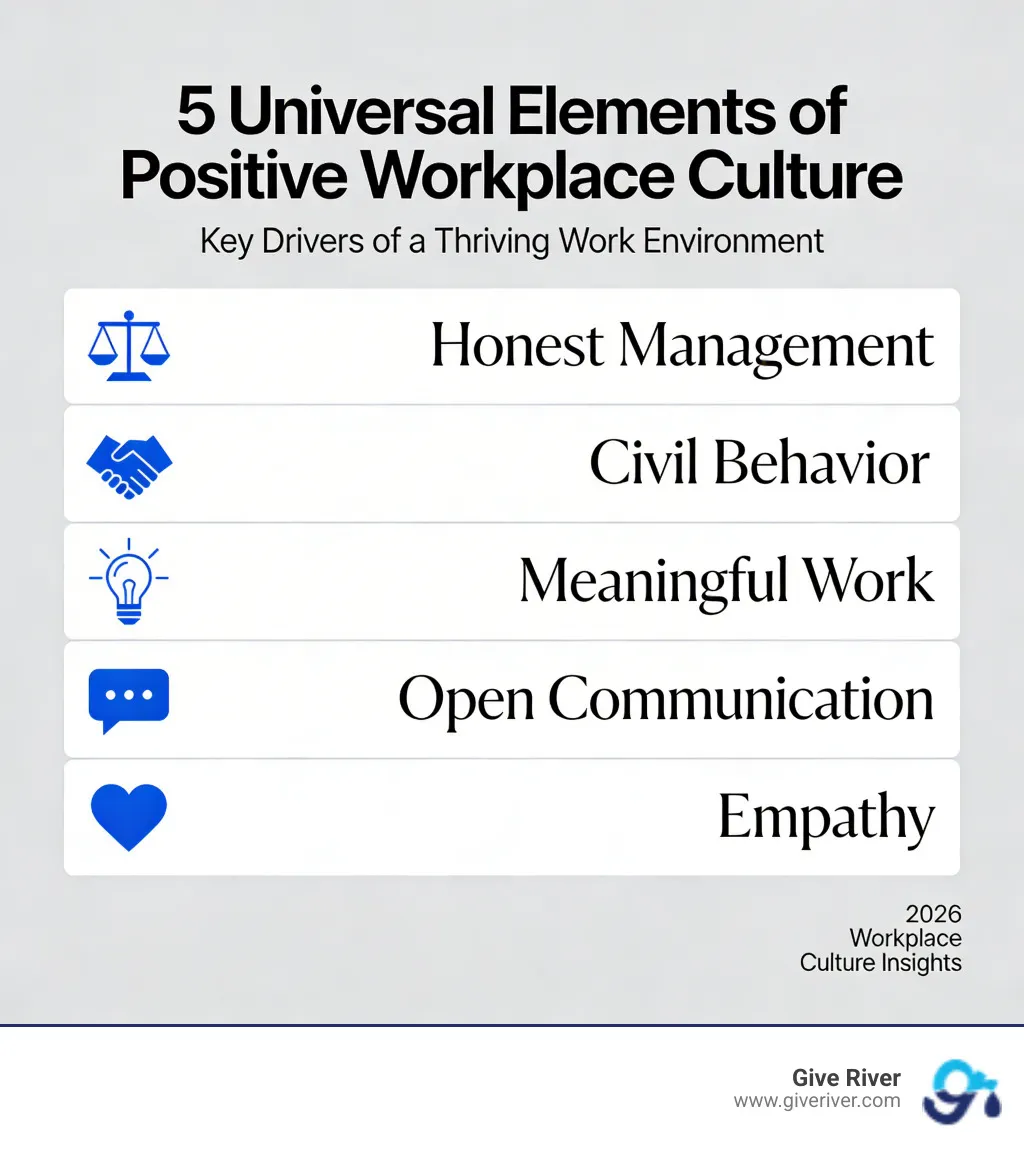
To build a truly healthy environment, focus on these five elements:
- Honest Management: Leaders who are transparent and keep their word.
- Civil Behavior: A zero-tolerance policy for "brilliant jerks" and a focus on fair treatment.
- Meaningful Work: Helping employees see the "why" behind their daily tasks.
- Open Communication: Creating channels for candid, two-way feedback.
- Empathy: Recognizing that employees are human beings with lives outside of work.
By Building a Supportive Environment, you aren't just being "nice"—you are protecting your most valuable assets.
The Role of Leadership in Sustaining workplace culture importance
Culture starts at the top, but it lives in the middle. While executives set the vision, managers are the ones who breathe life into it every day. Leaders must model the values they want to see. If you value "work-life balance" but send emails at 11 PM, your team will follow your actions, not your words.
In the employee engagement space, platforms like Bonusly or Kudos focus heavily on peer-to-peer recognition, which is a great start for morale. However, Give River differentiates itself by moving beyond transactional rewards. While those platforms are effective for "shout-outs," we believe true Workplace Culture requires a holistic approach that integrates professional growth and personal wellness directly into the social fabric. Leaders who prioritize this depth build trust that sustains the organization through even the toughest market cycles.
Actionable Steps to Identify and Improve Your Culture
How do you know if your culture needs a refresh? Look for the red flags. If your "fun" culture relies on cynical humor, or if people are afraid to ask questions in meetings, you have a problem.
Use the table below to evaluate your current state:
| Feature | Positive Culture | Toxic Culture |
|---|---|---|
| Communication | Transparent and two-way | Siloed and "need-to-know" |
| Accountability | Shared and supportive | Blame-shifting and fear-based |
| Growth | Mentorship and learning | Stagnation and gatekeeping |
| Recognition | Frequent and meaningful | Rare or purely transactional |
| Feedback | Constructive and regular | Only happens during crises |
To improve, focus on the "Three Pillars of Motivation":
- Autonomy: Give people the "what" and the "why," then let them figure out the "how."
- Mastery: Provide the tools and time for people to get better at their craft.
- Purpose: Connect individual tasks to the larger mission of the company.
Finally, stop using generic surveys. To truly measure workplace culture importance, use custom surveys that link directly to your unique business processes and brand promises. Ask probing questions like, "Do you feel safe taking a calculated risk here?" or "Does your manager take an interest in your career goals?"
Conclusion: Investing in Your Social Operating System
The workplace culture importance is no longer up for debate. It is the difference between a high-performing team and a revolving door of disengaged workers. A toxic culture is a $223 billion mistake that no company can afford to make.
While platforms like Bonusly or Kudos offer valuable recognition tools, Give River provides a more comprehensive social operating system. Our unique 5G Method—Guided, Gamified, Gratitude, Growth, and Generosity—is designed to transform your workplace into a hub of fulfillment. We integrate wellness, professional development, and community impact to ensure your culture doesn't just "not stink," but actually thrives.
Ready to stop guessing and start growing? Explore our Guidance features to see how we can help you build a culture that your employees—and your bottom line—will love.
More from this category.

Why Building a Strong Volunteer Culture Is Critical for Your Organization's Success
Creating a volunteer culture goes beyond filling positions; it's about cultivating an environment where volunteers feel valued, connected to your mission, and empowered to make a meaningful impact.

Why Workplace Aspiration Is the Missing Link in Employee Engagement
Knowing how to empower the aspiration in the workplace is one of the most high-leverage things a leader or HR professional can do in 2026 — and most organizations are still getting it wrong.

Why Top Companies Are Embracing Mindfulness
Mindfulness in workplace settings has evolved from a wellness trend to a business imperative. In today's demanding work environment, where 83% of American workers suffer from work-related stress and workplace stress costs businesses over…
See the platform in action.
30-day free trial. No credit card. River Guide included on Core and Growth.