Why Your L&D Toolkit Defines Your 2026 Workforce
Learning and development (L&D) tools are digital platforms that help organizations create, deliver, and optimize employee training. Companies with strong training programs see 218% higher income per employee and can reduce turnover by 40%…
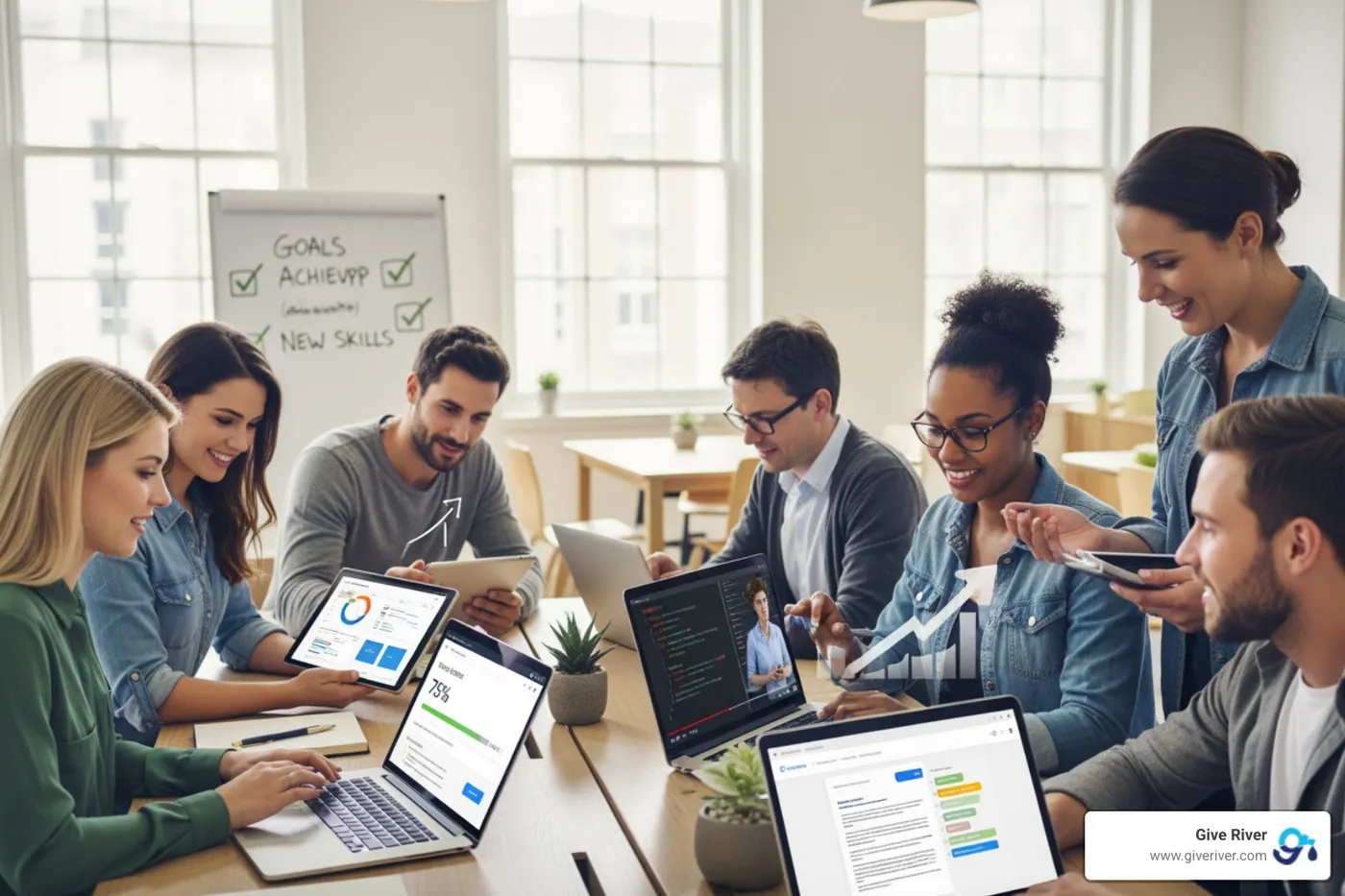
Learning and development (L&D) tools are digital platforms that help organizations create, deliver, and optimize employee training. Companies with strong training programs see 218% higher income per employee and can reduce turnover by 40% or more. These tools are essential for closing skills gaps and improving job performance.
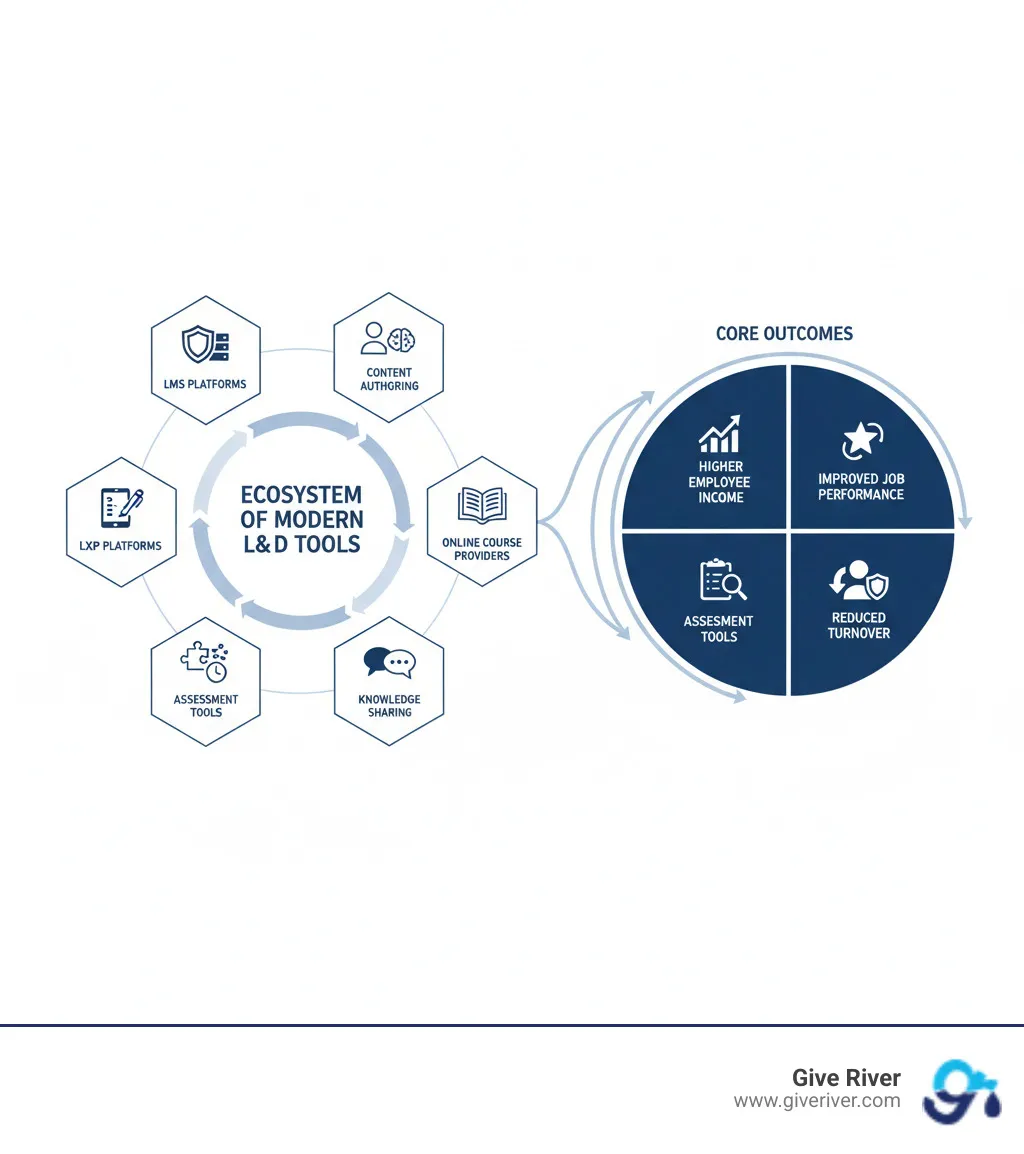
Key Categories of L&D Tools:
- Learning Management Systems (LMS) - Centralized platforms for managing training.
- Learning Experience Platforms (LXP) - Personalized, AI-driven learning.
- Content Authoring Tools - Software for creating interactive materials.
- Online Course Providers - Ready-made course libraries.
- Microlearning Platforms - Bite-sized learning modules.
- Knowledge Sharing Tools - Platforms for peer-to-peer learning.
- Assessment Tools - Systems for measuring skill gaps.
Your 2026 workforce won't look like your 2023 workforce—and that's a strategic advantage. The eLearning industry has grown 900% since 2000, and organizations investing in training are seeing clear returns. The challenge is cutting through the noise. With 49% of professionals agreeing that aligning L&D with business goals is essential, many still face low adoption rates and scattered resources. Your competitors are already using AI-powered personalization and immersive learning to make development feel effortless.
I'm Meghan Calhoun, Co-Founder of Give River. After two decades building high-performing teams at Fortune 100s and startups, I became obsessed with what drives sustainable L&D. That journey led me to co-found Give River, where we integrate learning with recognition, gamification, and purpose to create development experiences people actually want to engage with.
Navigating the Landscape of Modern Learning and Development Tools
The right learning and development tools are not just about delivering content; they're about fostering a dynamic environment where employees feel empowered to grow. This proactive approach is a strategic imperative that directly impacts your bottom line.
Understanding the Core: Training vs. Development & Key Tool Categories
It's crucial to distinguish between training and development. They serve distinct, yet complementary, purposes.
- Training is about the "here and now," equipping employees with specific skills for their current roles, like compliance or software onboarding.
- Development is the "long game," helping employees grow beyond their current roles by building broader competencies and leadership qualities for future advancement.
Effective L&D tools support both. The landscape of these tools is vast, designed to cater to diverse needs. The primary categories, from administrative systems like the LMS to user-centric platforms like the LXP, form the backbone of modern corporate learning. The LMS market alone is valued at over $20 billion, highlighting its central role. At Give River, we help organizations close immediate skills gaps and cultivate continuous Professional Development for Employees.
Building Your Learning Foundation: Choosing the Right Platform
Your core L&D infrastructure often comes down to a Learning Management System (LMS), a Learning Experience Platform (LXP), or a hybrid. This choice defines your learning culture.
An LMS excels at structured, compliance-driven learning, acting as a digital classroom to control curriculum and track progress. An LXP, by contrast, is learner-centric, using AI to recommend content and foster self-directed, social learning. It's less about "pushing" content and more about "pulling" learners in with relevant experiences.
Here's a quick comparison:
| Feature | Learning Management System (LMS) | Learning Experience Platform (LXP) |
|---|---|---|
| Primary Focus | Administration, compliance, structured learning | User experience, personalization, continuous learning |
| Content Delivery | Assigned courses, mandatory training | Recommended content, self-directed exploration |
| Content Source | Primarily internal, curated by L&D | Internal & external, user-generated, AI-curated |
| Personalization | Limited (e.g., by role) | High (AI-driven, skill-based) |
| Social Learning | Limited (e.g., discussion forums) | High (peer-to-peer, communities) |
| Role in Organization | Centralized control, formal tracking | Empowering learners, fostering engagement |
Selecting the right platform for Enterprise Learning and Development can be overwhelming. While platforms like Bonusly and Kudos are excellent for recognition, they often operate separately from L&D. Give River is different by design, integrating learning into a broader employee experience so that development is genuinely valued and rewarded. Your choice depends on your goals: an LMS for structure, an LXP for engagement, or a modern hybrid for the best of both worlds.
Essential Add-ons: Specialized Learning and Development Tools
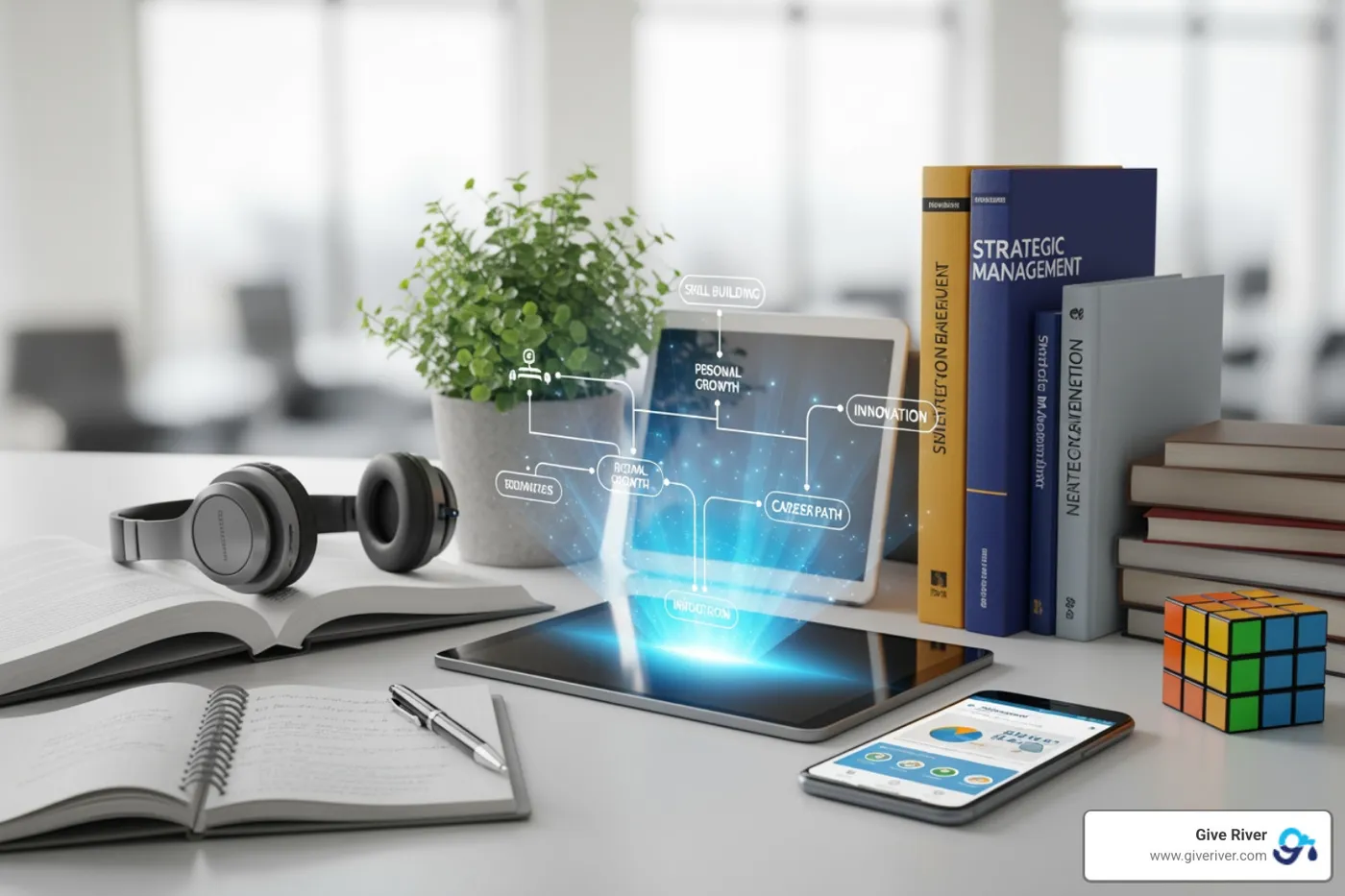
- Video Training Software: Tools like Loom or AI-powered platforms like Synthesia are essential for creating engaging tutorials and demonstrations. Look for features like in-video quizzes and analytics to boost engagement.
- Assessment Tools: To know if learning is happening, use tools that offer skill validation through simulations or scenario-based tests. Platforms like iMocha use AI to pinpoint knowledge gaps and measure training impact.
- Microlearning Platforms: These platforms deliver bite-sized, focused learning modules perfect for busy employees. They offer just-in-time learning and performance support, which is key for Micro Learning for Training Employees.
- Knowledge Sharing and Collaboration Tools: Platforms like Slack or Notion serve as powerful knowledge hubs. They facilitate peer-to-peer learning and reduce the time employees spend searching for information, fostering a culture of shared wisdom and promoting Professional Growth Tools.
The Future is Now: AI, Automation, and Emerging L&D Trends
Technology, especially AI, is reshaping L&D into an era of hyper-personalized and immersive experiences.
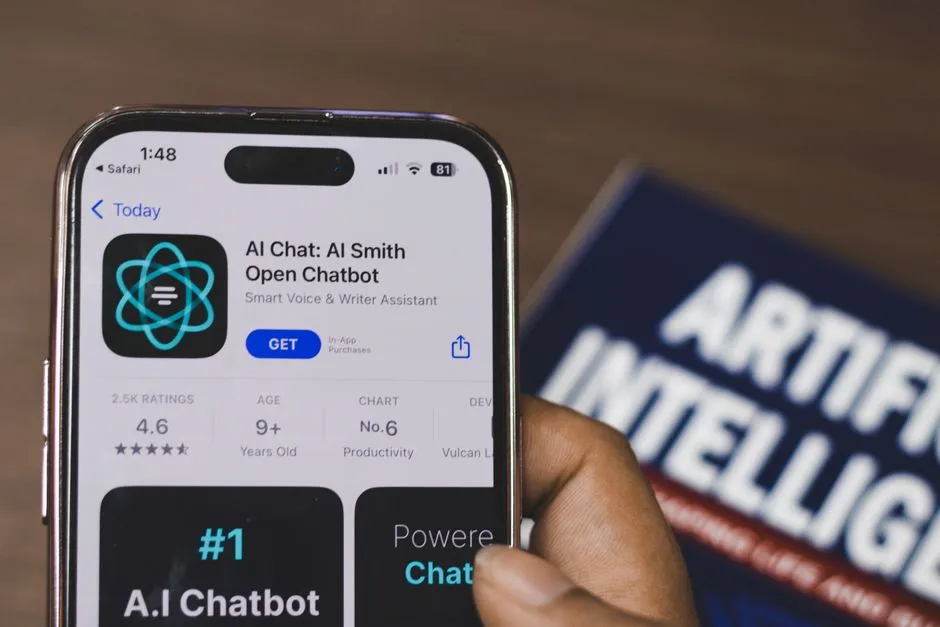
- AI-Powered Personalization: AI algorithms analyze learner data to deliver custom content recommendations, making learning feel like a guided journey rather than a chore.
- AI and Automation in Content Creation: AI can now draft materials, generate quizzes, and create video courses with AI avatars, freeing L&D teams to focus on strategy and engagement.
- Hybrid and Blended Learning Models: The future of work is flexible, and learning must be too. These models combine virtual convenience with in-person interaction, and the right tools facilitate a seamless blend.
- Immersive Learning (VR/AR): Virtual and augmented reality offer powerful, hands-on learning experiences for high-stakes scenarios, such as practicing complex procedures in a safe, simulated environment.
These trends point to a future where learning is proactive, not reactive. At Give River, we accept these advancements, leveraging AI Tools for Learning and Development to create impactful learning journeys.
Best Practices for Selecting and Measuring Your L&D Tools
Choosing the right tools is a strategic undertaking. To ensure your investment yields results, follow a structured approach.
Conduct a Thorough Needs Assessment: Before looking at any tool, assess your organization's specific skill gaps, business goals, and employee learning preferences.
Define Clear Goals and Success Metrics: Move beyond completion rates. Measure learner engagement, performance improvement, skills acquisition, and business impact (KPIs, ROI).
Evaluate Options Thoughtfully: Request demos and prioritize user experience, integration capabilities, and scalability. Weigh the total cost of ownership against the potential value.
Plan a Thoughtful Implementation Strategy: Secure stakeholder buy-in, run a pilot program, and provide training. Communicate to employees how the new tools will benefit their Career Development Programs.
Continuously Measure and Iterate: Use your tools' analytics to monitor effectiveness. Stay agile, gather feedback, and refine your strategy accordingly.
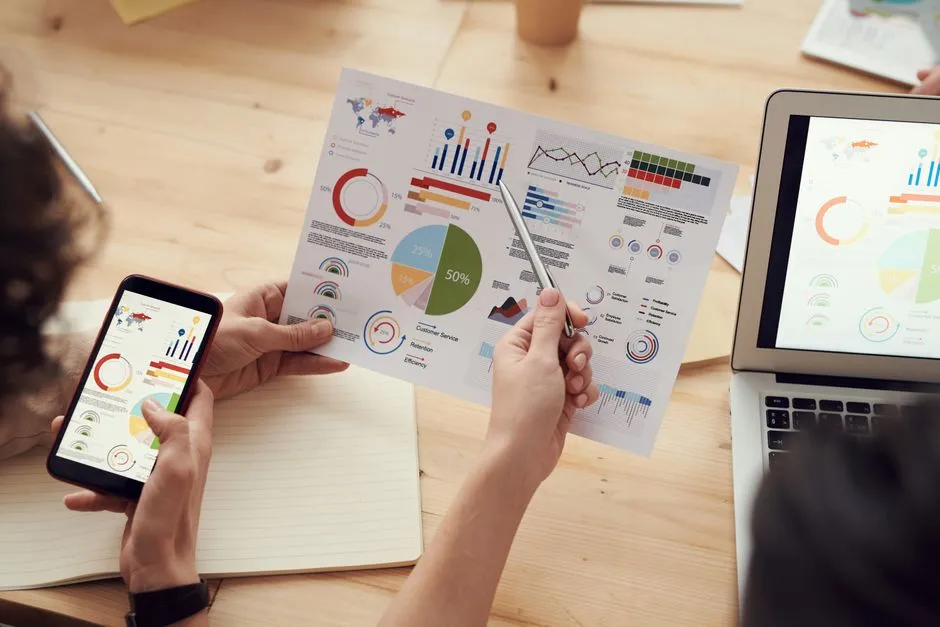
By following these best practices, you can build a strategic framework that drives both individual and organizational success.
Conclusion: Building a Culture of Continuous Growth
In the dynamic landscape of 2026, organizational success hinges on the ability to adapt and empower your people. The right learning and development tools are strategic drivers of employee fulfillment, productivity, and your competitive edge. A thoughtful approach can transform traditional training into a vibrant culture of continuous growth.
But tools alone are not enough. I've seen expensive platforms fail because they existed in isolation. The magic happens when learning is woven into the everyday experience of being valued, recognized, and connected to meaningful work.
Integrating L&D with Your Employee Experience Strategy
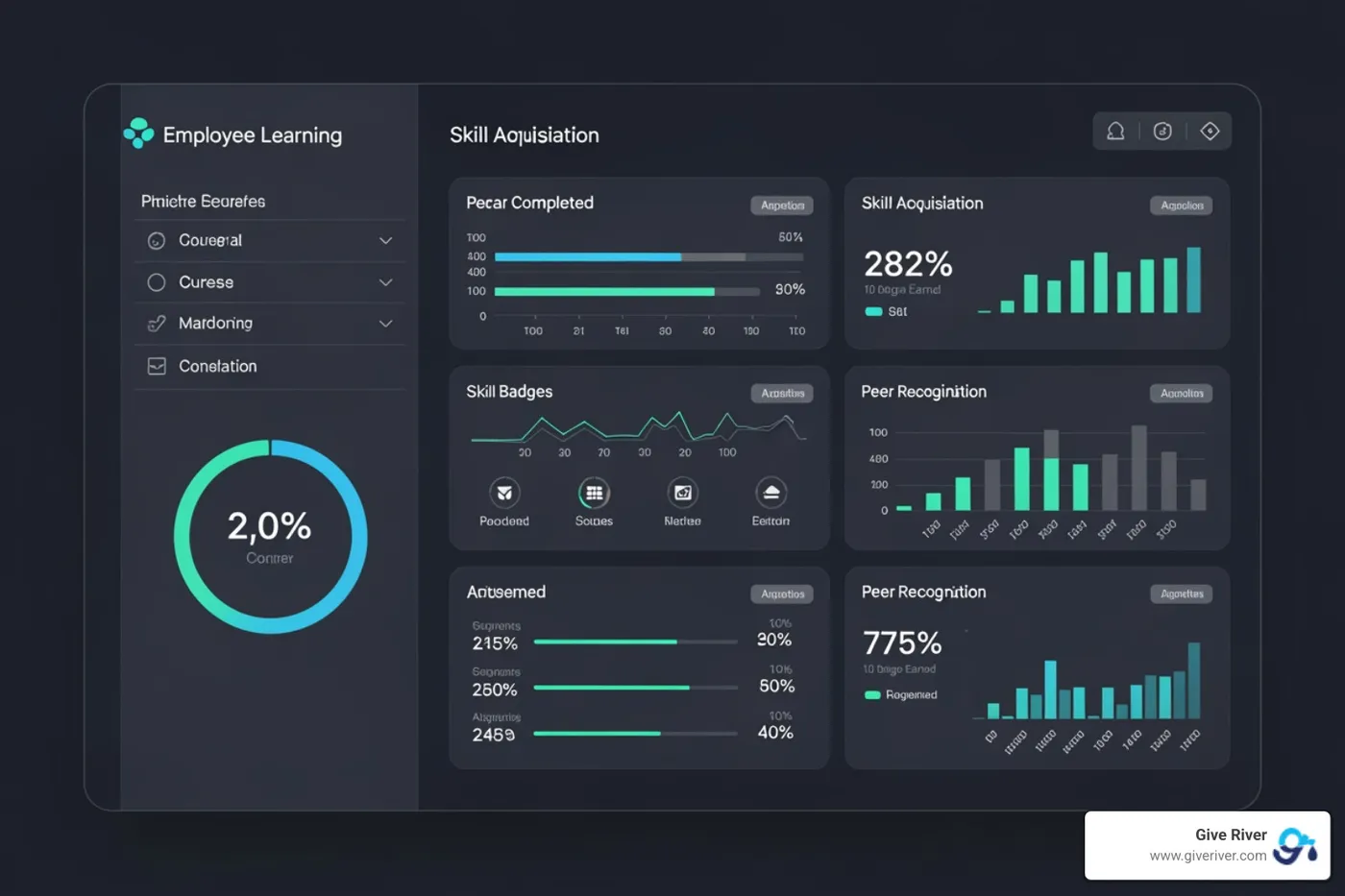
At Give River, we believe in a holistic approach to employee experience, seamlessly integrating L&D with recognition, wellness, and purpose. When an employee completes a course or mentors a colleague, that growth should be celebrated. This is the kind of integrated employee experience that drives real engagement.
While platforms like Bonusly and Kudos offer excellent recognition solutions, they often operate in a silo, separate from development initiatives. Give River's unique 5G Method is designed to bridge this gap, bringing these critical elements together. We know employees thrive when their growth is not only supported but also recognized and tied to a larger purpose. When learning is gamified and progress is celebrated within the same platform, engagement soars.
Our 5G Method—recognition, guidance, growth content, gamification, and community impact—creates a framework where learning feels like an exciting journey, not a mandatory task. When learning is connected to recognition and purpose, adoption rates climb and retention improves.
The workforce of 2026 will expect development experiences that make them feel valued and connected. By selecting the right learning and development tools and integrating them into a broader strategy of recognition and well-being, we can cultivate a workforce that is not just skilled, but also deeply engaged and resilient.
Let's transform your workplace into a hub of continuous learning and positive impact. Explore how Give River's integrated Learning and Development Solutions can empower your team.
More from this category.
Employee Recognition Platforms With Learning & Development (2026)
Which recognition platforms include learning content? Six compared from their own sites, plus why one tool for recognition and learning beats paying for two.

Why Choosing the Right Learning and Development Platforms Matters in 2026
Learning and development platforms have become one of the most critical investments a company can make — yet with over 800 competing systems on the market, finding the right fit feels overwhelming.

Why Investing in Career Development is a Win-Win
A career development program sample gives HR leaders and CEOs a concrete starting point for building structured, meaningful growth pathways for their teams — without having to reinvent the wheel. Here are seven proven program types you can…
See the platform in action.
Free for up to 25 members, or try Core or Growth free for 30 days. A card is required; Free is never charged, and a trial bills when it ends unless you cancel.