The Evolution of Corporate Social Responsibility
New CSR initiatives are revolutionizing how companies create meaningful impact while driving business growth. Today's most innovative programs focus on:

New CSR initiatives are revolutionizing how companies create meaningful impact while driving business growth. Today's most innovative programs focus on:
- Hyper-localized community investment with skill-based volunteering that develops employee leadership
- Tech-driven ESG programs addressing educational equity and diversity gaps
- Authentic environmental action beyond surface-level greenwashing
- Employee-centric approaches that boost engagement and retention
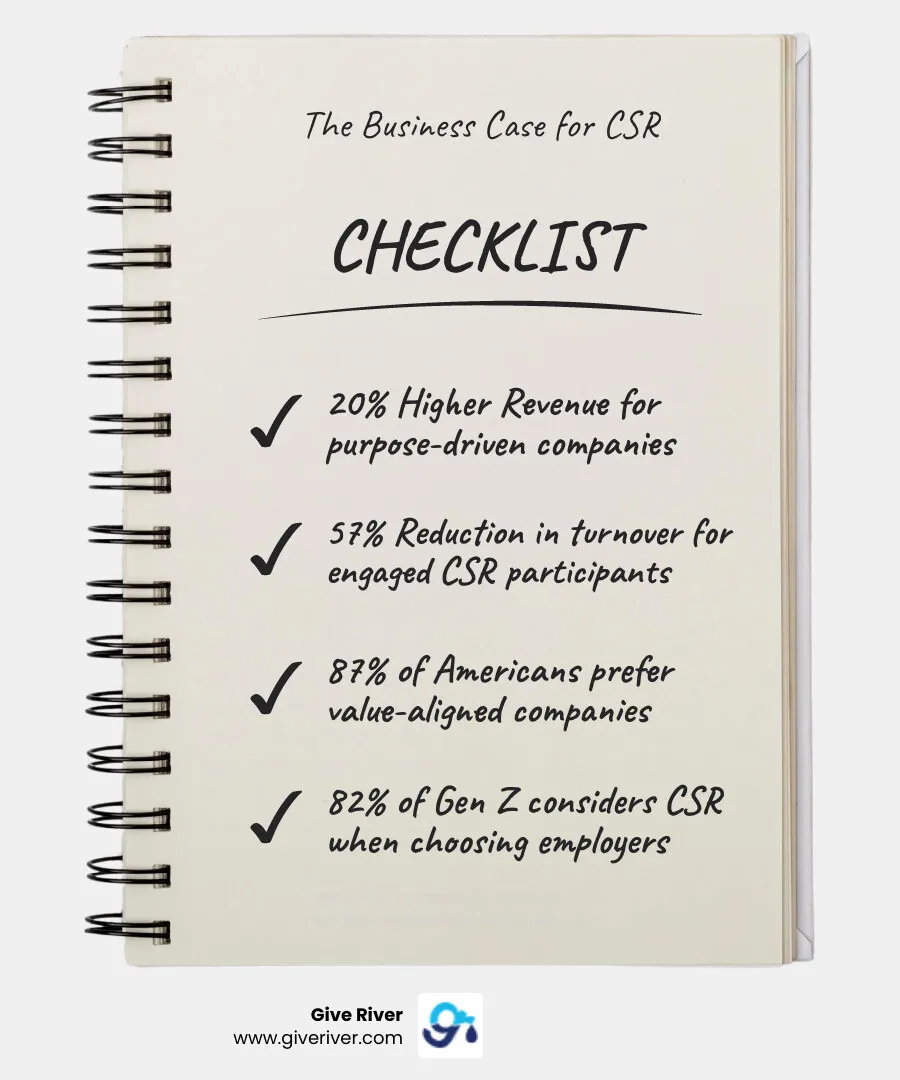
We're living in an age where corporate social responsibility has shifted from philanthropic afterthought to strategic imperative. 92% of consumers want to pay for products that support a cause, while 82% of Gen Z workers consider CSR a significant factor when deciding on their next employer. This isn't just about doing good—it's about business survival.
The old model of writing checks to charities is dead. Companies investing in social purpose now see 6% higher market value and generate 20% more revenue than those that don't. Modern CSR initiatives integrate seamlessly with core business operations, creating authentic connections between employee fulfillment, community impact, and bottom-line results.
But here's what many leaders miss: successful CSR isn't just about the cause you choose—it's about how you engage your people in that mission. While platforms like Bonusly or Kudos focus primarily on peer recognition, Give River differentiates itself by integrating charitable giving and community impact directly into your employee experience strategy.
I'm Meghan Calhoun, and after two decades of driving results in high-pressure workplaces, I've seen how new CSR initiatives can transform company culture from the inside out. My experience building Give River has shown me that the most successful programs combine employee engagement with genuine social impact, creating workplaces where purpose and profit truly align.
Related content about new csr initiatives:
The New Wave: Innovative CSR Initiatives Driving Real Impact
Corporate social responsibility isn't what it used to be. The days of writing a check to charity and calling it good are long gone. Today's most successful companies understand that new CSR initiatives need to be woven into the very fabric of their business strategy—and the results speak for themselves.
Companies that genuinely commit to social purpose aren't just making the world better; they're making their businesses stronger. These organizations see 6% higher market value and generate 20% more revenue than those still treating CSR as an afterthought. This dramatic shift proves that doing good and doing well aren't mutually exclusive—they're mutually reinforcing.
What makes these modern approaches so powerful? They tackle real problems while simultaneously boosting employee morale, attracting top talent, and building unshakeable customer loyalty. Understanding the full scope of a CSR Programme Meaning is essential for any organization ready to move beyond surface-level initiatives to programs that create lasting change.
Hyper-Localized Community Investment & Skill-Based Volunteering
The most impactful new CSR initiatives we're seeing today focus on solving specific problems in the communities where companies actually operate. This hyper-local approach creates deeper connections and delivers measurable results that both employees and community members can see and feel.
CNH Industrial's 'Emprega+Women' program in Brazil perfectly illustrates this strategy in action. When the company recognized that only 15% of their manufacturing plant employees were women—while simultaneously facing a skilled worker shortage—they didn't just throw money at the problem. Instead, they created a targeted training program to upskill and hire women from their local community.
This initiative tackles gender inequality by empowering women with new job opportunities and financial independence, while directly addressing the company's business need for qualified workers. It's the kind of win-win that makes modern CSR so compelling.
The secret ingredient in many of these programs is skill-based volunteering, where employees use their professional expertise to help nonprofits and community organizations. This goes far beyond traditional volunteering—we're talking about engineers mentoring students, marketers helping nonprofits with their campaigns, and finance professionals teaching financial literacy.
The professional development benefits are remarkable. 92% of employees agree that volunteering improves their broader professional skill sets, and the same percentage say it's an effective way to develop leadership abilities. Even more impressive: 80% of active volunteers move more easily into leadership roles within their companies. When you encourage your team to participate in Community Involvement Programs, you're simultaneously investing in community impact and your own leadership pipeline.

Tech-Driven ESG and Educational Equity Programs
Technology companies are leading the charge in using their core strengths to address systemic inequalities, particularly in diversity and educational access. These new CSR initiatives focus on long-term change by building sustainable pipelines of diverse talent and innovation.
Bloomberg's ESG trading challenge for students at Historically Black Colleges and Universities exemplifies this approach. Rather than simply writing about diversity, Bloomberg created a program where more than 60 HBCU students receive access to industry-standard Bloomberg Terminals and compete with $1 million in virtual investment capital. This initiative promotes ESG awareness while creating real pathways for underrepresented students into the finance industry.
The need for such programs becomes clear when you look at the numbers. Just 1% of venture-backed business founders were Black, compared with 77.1% who were white, and only 9.2% of those founders were women. These gaps represent missed opportunities for innovation and economic growth.
Lenovo takes a global approach to this challenge through extensive STEM education investments. Their programs, including 'Girls Belong in Tech' and partnerships with Intel's Skills for Innovation Initiative, provide equitable access to technology education worldwide. By focusing on educational equity, Lenovo is building the diverse talent pipeline that the tech industry desperately needs.
These CSR Initiatives Examples demonstrate how companies can leverage their expertise and resources to create meaningful change while addressing their own long-term talent needs.
Authentic Environmental Action Beyond Greenwashing
Environmental sustainability has moved from nice-to-have to business-critical, but consumers can spot fake efforts from miles away. The most effective new CSR initiatives in this space demonstrate authentic, measurable environmental action that's integrated into every aspect of business operations.
Salesforce set the gold standard by achieving 100% renewable energy and net-zero emissions across its value chain in 2021. This wasn't just a marketing promise—it was a realized goal that required fundamental changes to how the company operates.
Porsche Impact offers another innovative approach by enabling customers to offset their vehicle's CO₂ emissions through contributions to certified environmental projects. Whether it's protecting ancient forests in Alaska through the Afognak Forest Carbon project or supporting the Danjinghe Wind Project in China, Porsche creates opportunities for customers to participate in broader environmental solutions.
The stakes for authenticity couldn't be higher. BP's infamous 'Beyond Petroleum' campaign spent over $200 million promoting environmental friendliness, only to be completely undermined by the Deepwater Horizon oil spill. This disaster serves as a permanent reminder that environmental commitment must permeate every aspect of operations, not just marketing materials.
Consumer behavior reflects these heightened expectations. 66% of all respondents' purchase inclination is affected by the brand's sustainability practices, making authentic environmental action a competitive necessity. Companies looking to understand What are Three Ways Businesses Demonstrate Corporate Social Responsibility must ensure their environmental actions align perfectly with their stated values.

How to Successfully Launch and Measure Your New CSR Initiatives
Creating new CSR initiatives that truly make a difference isn't just about having good intentions—it's about building a strategic foundation that connects your company's values with real-world impact. The most successful programs I've seen don't happen by accident. They're the result of careful planning, authentic employee engagement, and a commitment to measuring what actually matters.
The stakes are higher than ever. Today's workforce and consumers expect more than corporate lip service. They want to see genuine commitment backed by measurable action. When done right, Corporate Social Responsibility Initiatives become powerful engines for both social good and business growth. But when they miss the mark? The backlash can be swift and damaging.
Let's explore how to build CSR programs that resonate with your people, create lasting impact, and drive meaningful results for your organization.
Building Your Strategy: Aligning Purpose with Profit
The secret to successful new CSR initiatives lies in finding that sweet spot where doing good genuinely supports doing well. This isn't about choosing between profit and purpose—it's about finding how they can amplify each other.
Your CSR strategy becomes a magnet for top talent when it authentically reflects your company's mission. Here's a reality check: 75% of candidates research a company's reputation before applying, and an equal percentage won't even consider working for a company with poor corporate responsibility practices. This means your CSR efforts are essentially part of your recruitment strategy.
But the benefits extend far beyond hiring. When your initiatives align with your core values, they create deeper customer connections too. 87% of Americans are more likely to buy from companies that share their values, and more than half are willing to pay premium prices for products from companies with strong CSR strategies. This isn't just feel-good marketing—it's a direct path to increased revenue and market share.
The key is authenticity. Your CSR programs need to feel genuine, not like you're jumping on the latest trend. When there's a disconnect between what you say and what you do, customers and employees notice immediately. The Advantages of Corporate Social Responsibility only materialize when your commitment runs deeper than your marketing campaigns.
Think of your CSR strategy as an extension of your brand story. What problems does your company exist to solve? How can your unique strengths address societal challenges? When you answer these questions honestly, you'll find natural alignment between your business objectives and your social impact goals.
The Crucial Role of Employee Engagement in New CSR Initiatives
Here's something that might surprise you: employee engagement isn't just a nice outcome of CSR—it's actually the engine that makes everything else work. Without your people genuinely buying into your initiatives, even the best-intentioned programs fall flat.
The change happens when employees move from passive observers to active participants. 96% of employees who volunteer view their company culture positively. That's not a coincidence. When people contribute to something meaningful through their workplace, it fundamentally changes how they feel about showing up every day.
The retention impact is remarkable. Companies where employees actively participate in giving and volunteering see a 57% reduction in turnover among those engaged employees. Think about what that means for your bottom line—not just in reduced hiring costs, but in preserved institutional knowledge and stronger team cohesion.
But here's where many companies stumble: they treat employee engagement in CSR as an afterthought. They design programs in boardrooms and expect enthusiasm to follow naturally. The most effective approach flips this script entirely.
While platforms like Bonusly or Kudos focus primarily on peer recognition, Give River's approach is different: we integrate charitable giving and community impact directly into the employee experience. This creates opportunities for people to connect their personal values with their professional lives in meaningful ways.
At Give River, we've seen how powerful this integration can be. When Charitable Giving at Work becomes seamless and personal, employees don't just participate—they become advocates for your company's mission. They track their impact, share their experiences, and invite others to join them.
The result? A workplace culture where purpose isn't just a poster on the wall—it's a lived experience that brings people together around shared values and common goals.

Measuring What Matters: Tracking the True Impact of Your Program
Once your new CSR initiatives are up and running, the real work begins: proving they're actually making a difference. This goes way beyond counting volunteer hours or adding up donation dollars. Modern CSR measurement is about understanding the deeper changes happening—both in the communities you serve and within your own organization.
The shift from traditional metrics to impact-focused measurement represents a fundamental change in how we think about corporate responsibility. Instead of just tracking inputs, we're now focusing on outcomes. Instead of measuring activity, we're measuring change.
Traditional CSR reporting often felt like checking boxes. Companies would report how much they donated or how many hours employees volunteered, but these numbers didn't tell the full story. What skills did employees develop through their volunteering? How did community partners use the support to create lasting change? Did the programs actually strengthen the company's culture and business performance?
Today's most effective measurement approaches combine quantitative data with qualitative insights:
| Traditional CSR Metrics | Modern Impact Metrics |
|---|---|
| Dollars donated | Community partner feedback scores, long-term program sustainability |
| Volunteer hours | Employee engagement rate, skills developed, leadership pipeline growth |
| Number of initiatives | Specific social/environmental outcomes achieved (e.g., literacy rates, carbon saved) |
| Media mentions | Brand sentiment, customer loyalty, purchase intent |
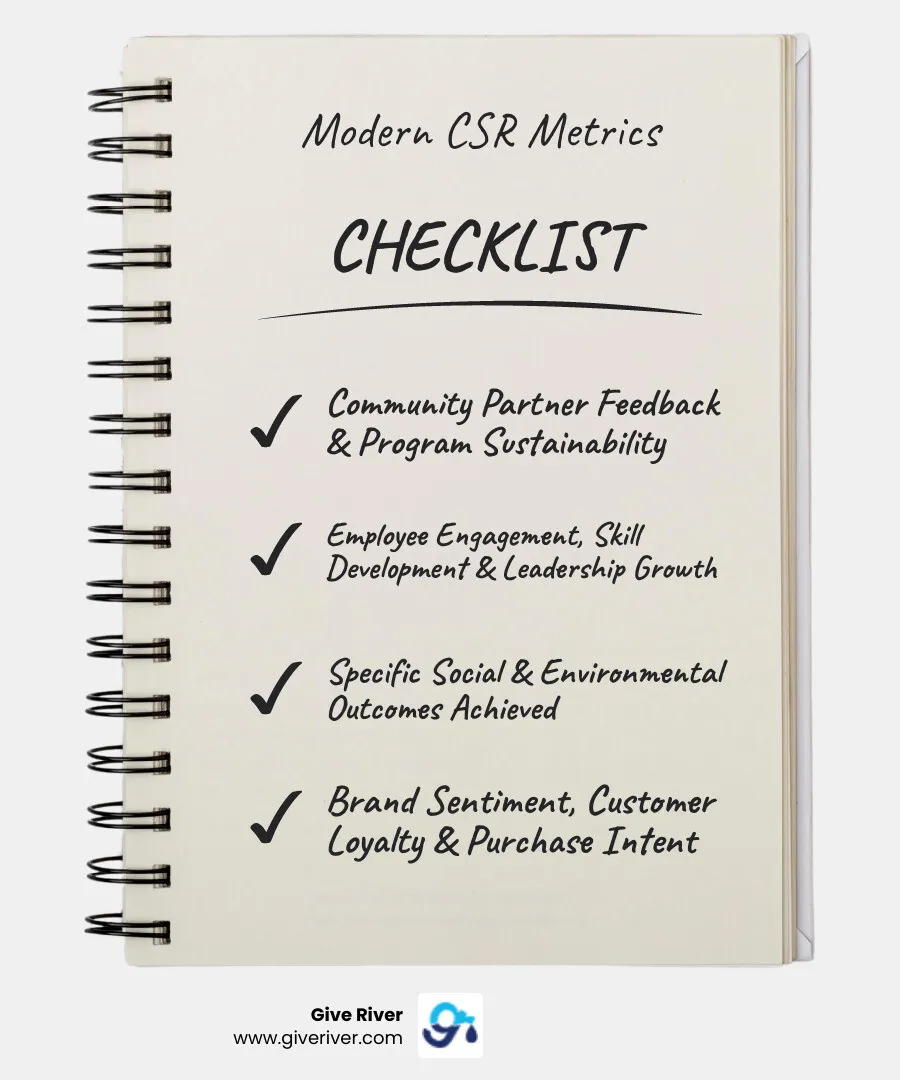
The most valuable metrics tell stories. When you can demonstrate that your environmental initiatives reduced carbon emissions by specific amounts, or that your education programs improved literacy rates in partner schools, you're showing real-world impact that stakeholders can understand and celebrate.
Understanding What is Corporate Social Responsibility Reporting helps you build transparency and accountability into your programs from the start. This isn't just about compliance—it's about creating a feedback loop that helps you continuously improve your approach.
At Give River, we believe measurement should empower, not overwhelm. Our platform helps companies track the metrics that matter most to their specific goals, whether that's employee engagement, community impact, or business outcomes. When you can see the connection between your CSR investments and your results, it becomes much easier to build support for expanding these programs.
The goal isn't perfect measurement—it's meaningful measurement that helps you understand what's working, what isn't, and where you can make the biggest difference moving forward.
Ready to transform your workplace culture through strategic community impact? Learn how to build a powerful charitable impact strategy that aligns with your business goals and empowers your employees to make a real difference.
More from this category.

The Importance of Community Involvement
Community involvement programs are the heartbeat of social wellbeing, changing neighborhoods into collaborative and vibrant spaces. At their core, these programs enable both individuals and businesses to meaningfully participate in…

Recognition Software With Charitable Giving (2026): 6 Platforms Compared
Most recognition platforms let employees donate their rewards. Six compared on donations, company match, causes, and volunteering, from each vendor's own site.
Why Community Involvement Grants Matter for Your Organization's Impact
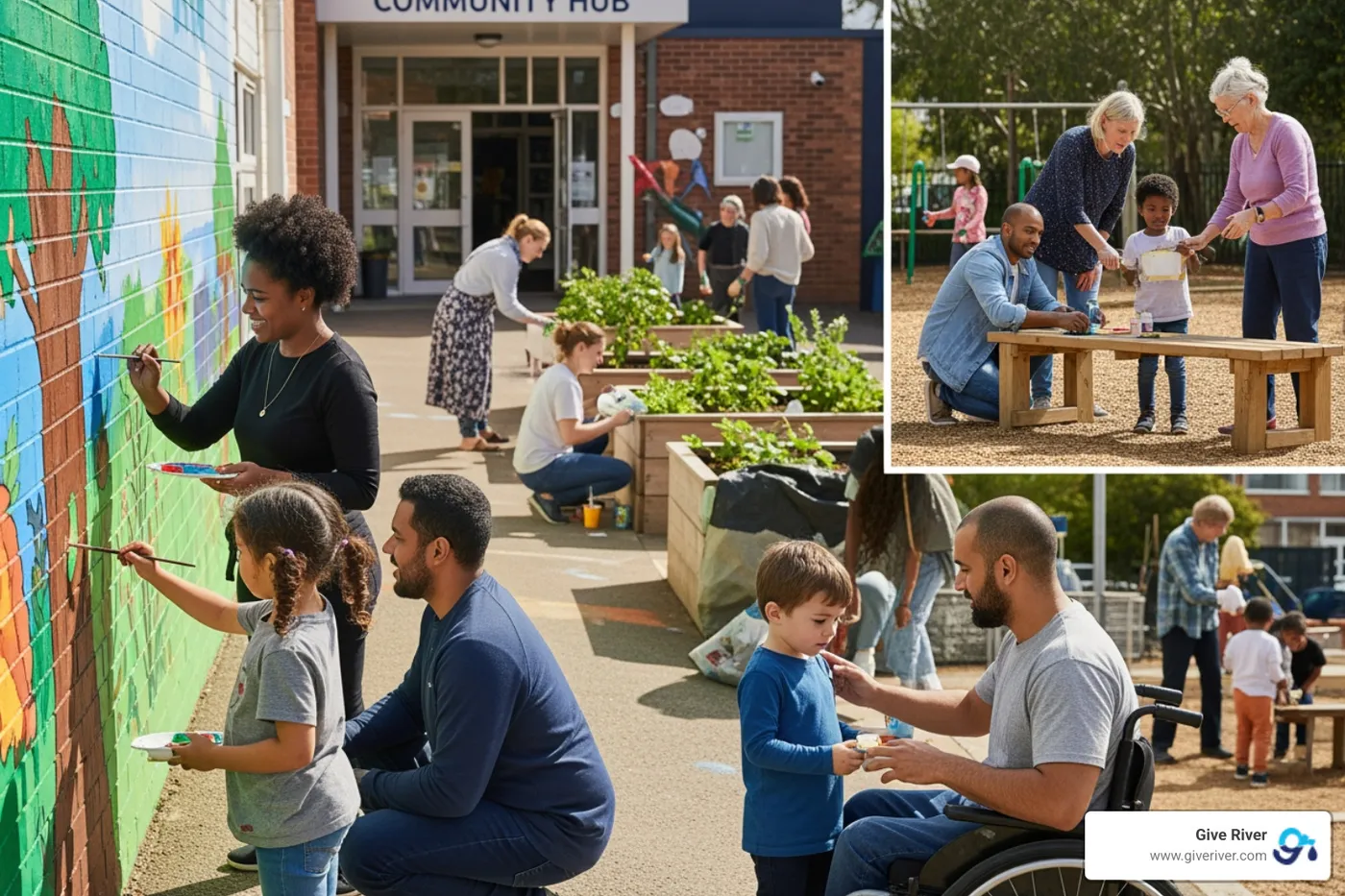
Community involvement grants provide essential funding to help organizations—from nonprofits and schools to businesses—create meaningful change. These grants can feel overwhelming to steer, but they offer a powerful way to address critical…
See the platform in action.
Free for up to 25 members, or try Core or Growth free for 30 days. A card is required; Free is never charged, and a trial bills when it ends unless you cancel.