Why Your Motivation and Reward System Determines Your Company's Future
A motivation and reward system is a structured approach to recognizing and incentivizing employee behavior that drives both individual fulfillment and organizational success. To build an effective system, you need to:

Why Your Motivation and Reward System Determines Your Company's Future
A motivation and reward system is a structured approach to recognizing and incentivizing employee behavior that drives both individual fulfillment and organizational success. To build an effective system, you need to:
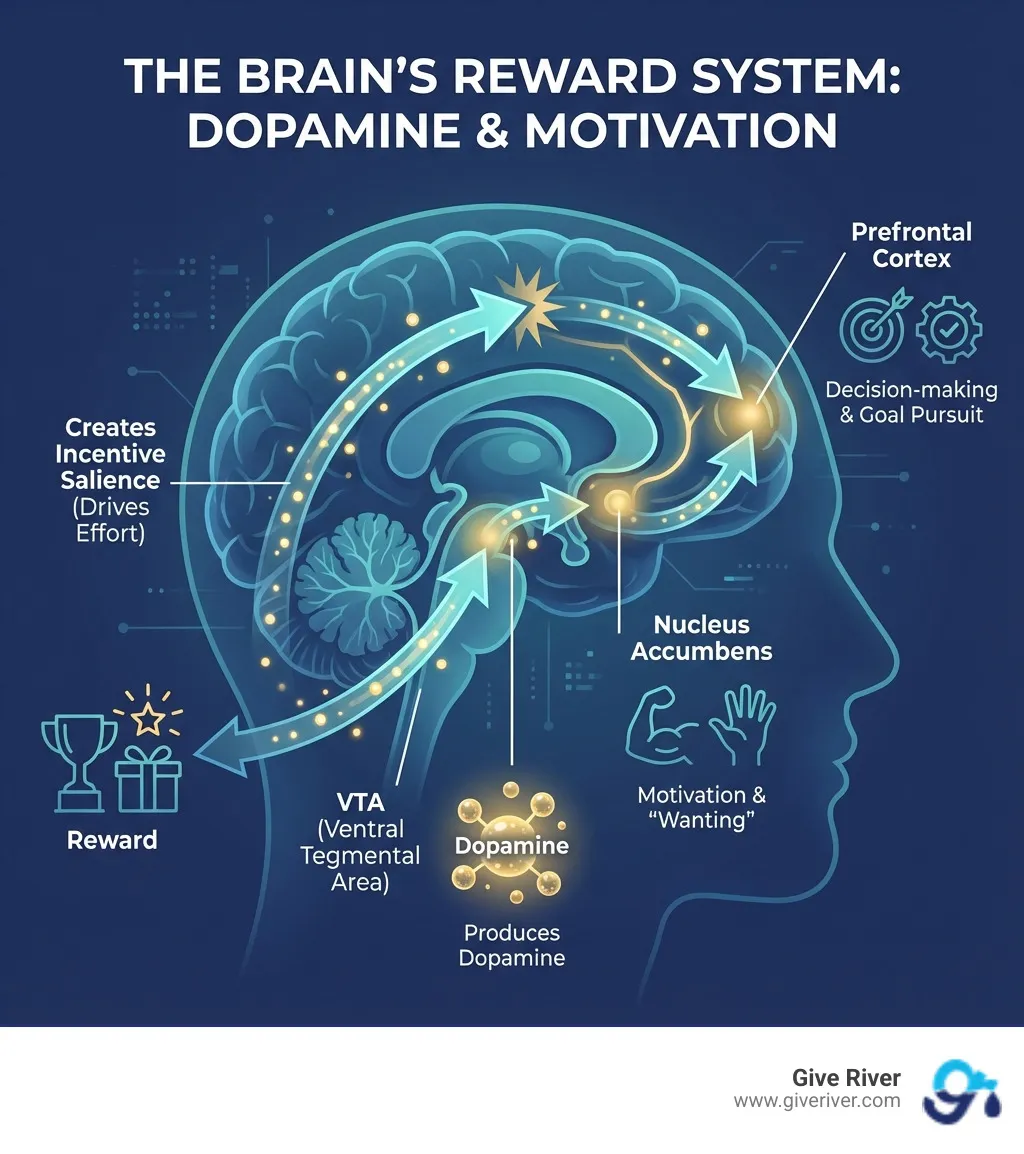
- Understand the brain's reward circuitry - Dopamine-driven pathways that create "wanting" (motivation) and "liking" (pleasure).
- Use positive reinforcement over punishment - Rewards increase productivity by 12% and build 90% higher trust.
- Transform extrinsic rewards into intrinsic motivation - Strategic rewards can jumpstart self-sustaining engagement.
- Personalize recognition - Different people respond to different reward types.
- Gamify the experience - Points, badges, and team challenges leverage natural competitive instincts.
The stakes have never been higher. 69% of employees say rewards and recognition are the most vital factors for staying in their current workplace. Yet many organizations still rely on annual bonuses and birthday cards—transactional approaches that miss how human motivation works.
Your competitors aren't just hiring talent with higher salaries; they're creating environments where people feel valued and connected to purpose. When employees experience that fulfillment, they thrive. Happy employees are 12% more productive, and organizations with engaged staff report nearly a one-third increase in profits. The difference often comes down to understanding the neuroscience of motivation and translating it into daily practice.
Most reward systems are designed by gut instinct rather than science, leading to wasted budgets and cynical employees. But when you align your recognition strategy with how the brain's reward system functions, you create a self-sustaining culture where motivation becomes contagious.
I'm Meghan Calhoun, Co-Founder of Give River. I've spent over two decades studying what makes teams thrive, and I've learned that the organizations winning the war for talent are engineering better experiences that tap into fundamental human psychology.
Motivation and reward system helpful reading:
The Challenge of Modern Motivation
Many organizations grapple with traditional rewards that fail to inspire. The annual bonus that feels like an expectation or the generic "employee of the month" plaque often lead to disengagement and contribute to productivity slumps. We want our teams to be enthusiastic and invested, but without understanding how motivation operates, we're flying blind.
A Science-Backed Solution
The science of the brain's reward circuitry offers a blueprint for building effective motivation and reward systems. By understanding the role of dopamine—the "feel-good" neurotransmitter—we can design systems that genuinely resonate. This is about strategically shaping environments that foster intrinsic drive, cultivate a sense of purpose, and change a workforce from merely compliant to genuinely fulfilled.
The Science-Backed Blueprint for Your Motivation and Reward System
To build a motivation and reward system that works, we must understand the brain's machinery. It’s a system designed to seek and repeat behaviors that lead to positive outcomes.
Understanding the Brain's 'Wanting' and 'Liking' Engine
At the heart of motivation lies the brain's reward system, centered around the mesocorticolimbic circuit. This network drives our desire, learning, and pleasure.
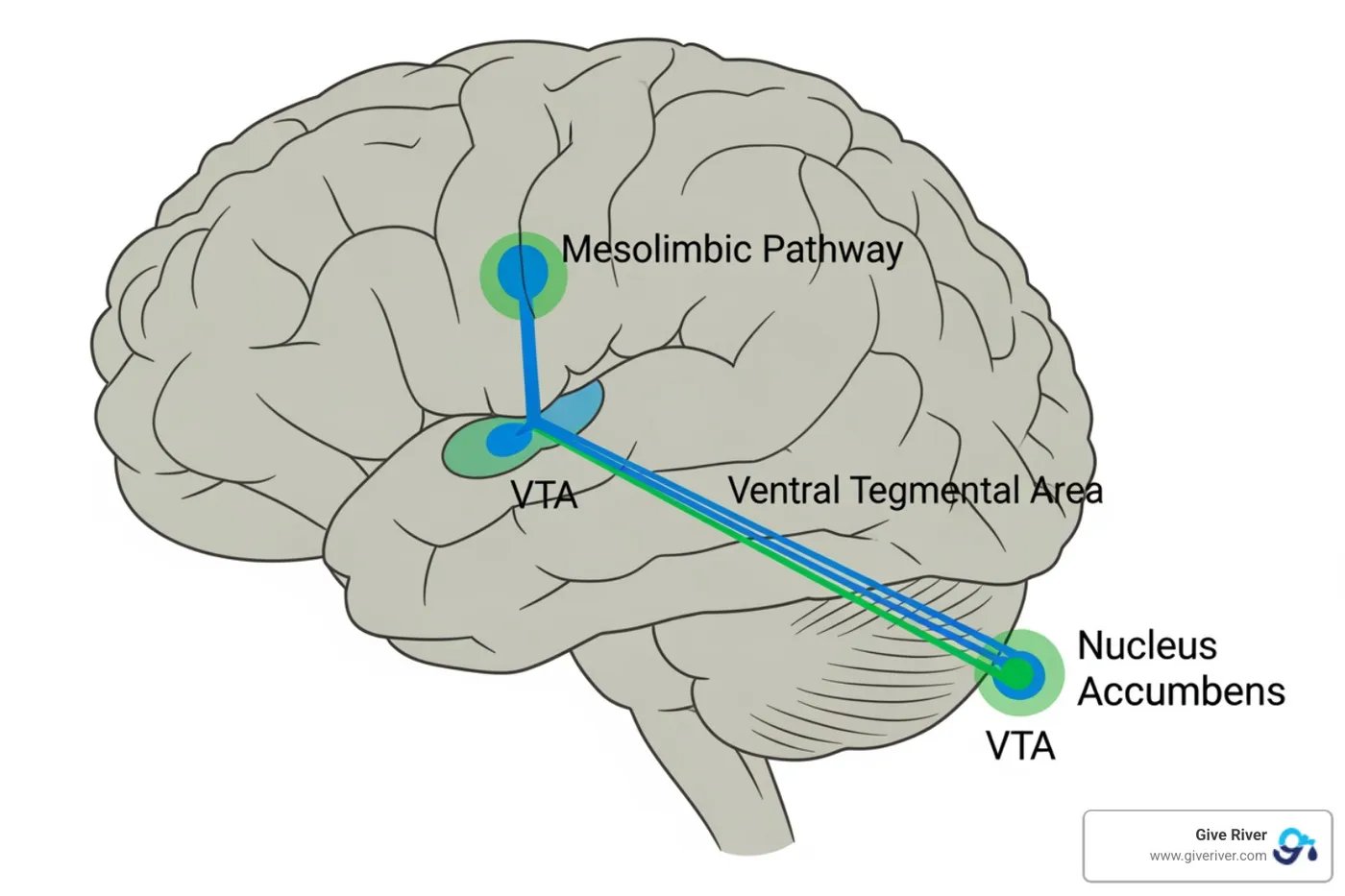
Core Components and Their Function: The key players are neurons in the ventral tegmental area (VTA) that produce and release the neurotransmitter dopamine to targets like the nucleus accumbens (NAc) and the prefrontal cortex (PFC).
- Mesolimbic Pathway (VTA to NAc): This pathway is central to our "wanting" or incentive salience. It's what makes us crave a reward and drives us to seek it.
- Mesocortical Pathway (VTA to PFC): This pathway is involved in decision-making and goal-directed behavior, helping us plan the actions needed to obtain rewards.
If you want a deeper primer on how this system works beyond the workplace, the "Reward system" overview explains how these brain regions and dopamine signaling shape motivation and learning.
Dopamine: The Anticipation, Not Just the Experience: A common misconception is that dopamine is only about the pleasure of receiving a reward. Research shows dopamine signaling increases most significantly during the anticipation of a reward. It's the thrill of the chase that gets our dopamine flowing. This is crucial for learning; if a reward is better than expected, dopamine increases, reinforcing the behavior.
'Wanting' vs. 'Liking': A Critical Distinction: Neuroscientists distinguish between "wanting" (the motivation to pursue a reward, driven by dopamine) and "liking" (the pleasure derived from it, mediated by other systems). For an effective motivation and reward system, we need to engage both: inspire "wanting" with clear goals and fulfill "liking" with meaningful rewards.
From Extrinsic Nudge to Intrinsic Drive: The Art of Motivation Change
Can extrinsic rewards like bonuses help or hinder motivation? The answer lies in 'motivation change.' Extrinsic rewards can act as an 'entry point' for engagement, especially for unmotivated individuals. They can jump-start internally rewarding learning processes, turning extrinsic motivation into intrinsic drive over time.
For instance, a bonus (extrinsic) might motivate an employee to master new software. As they gain skill, the accomplishment itself becomes intrinsically rewarding. However, be mindful of the 'undermining effect,' where adding a reward to an already enjoyable task can decrease intrinsic motivation. The key is context: use extrinsic rewards to initiate engagement or reinforce effort on less interesting tasks. As detailed in Scientific research on the effects of rewards on motivation, we must move "beyond dichotomies" and understand this nuanced interplay.
Designing an Effective Motivation and Reward System: The Power of Positive Reinforcement
Research overwhelmingly shows that positive reinforcement is far more effective than punishment for long-term motivation and trust.
The Benefits of Rewards:
- Increased Productivity: Happy employees are 12% more productive.
- Improved Happiness: Rewards make employees feel appreciated and confident.
- Fostered Trust: 90% of employees who received recognition recently had higher trust in their supervisor.
- Improved Retention: 69% of employees say recognition is vital for retention.
Rewards vs. Punishment: As the blog post "Reward system for employees" notes, rewards are more successful than sanctions. Punishment may deter bad behavior short-term, but it doesn't inspire positive action and can create fear and resentment.
| Feature | Rewards (Positive Reinforcement) | Punishment (Negative Consequences) |
|---|---|---|
| Influence on Behavior | Encourages desired behaviors; increases likelihood of repetition | Suppresses undesired behaviors; does not encourage positive alternatives |
| Impact on Motivation | Fosters intrinsic motivation, engagement, and enthusiasm | Decreases morale, creates fear, reduces initiative |
| Effect on Trust | Builds trust and loyalty with leadership and the organization | Erodes trust, creates a hostile work environment |
| Long-term Efficacy | Sustainable, fosters growth and positive workplace culture | Often temporary, can lead to avoidance and resentment |
Reinforcement Schedules: To maximize impact, consider how you schedule rewards:
- Continuous Reinforcement: Reward every instance of a new behavior to establish it quickly.
- Intermittent Reinforcement: Once a habit is formed, reward it unpredictably to maintain motivation and make the behavior more lasting.
Your 3-Step Blueprint to Building a High-Impact Reward System
Now that we understand the science, let's translate it into action. Building an effective motivation and reward system is about thoughtful design, personalization, and consistency.
Step 1: Align Rewards with Core Business Objectives
Powerful rewards are strategically linked to behaviors that drive your organization's mission. This alignment turns your reward system into a performance accelerator.
- Define SMART Goals: Ensure rewarded behaviors are Specific, Measurable, Achievable, Relevant, and Time-bound.
- Identify Key Behavioral Objectives: What actions contribute most to success? Is it teamwork, innovation, or customer service?
- Connect to Company Values: Reinforcing core values builds culture and a deeper connection to purpose.
- Establish Clear Performance Metrics: Use transparent metrics like sales targets, project completion rates, or customer satisfaction scores.
- Communicate Clear Expectations: Employees need to know what to do, why it matters, and how they will be recognized.
- Foster Purpose-Driven Work: Highlight how individual efforts contribute to the larger goal to boost intrinsic motivation.
By aligning rewards with these objectives, you create a virtuous cycle of motivation and achievement.
Step 2: Personalize Rewards to Maximize 'Wanting'
A one-size-fits-all approach is a common mistake. To maximize the brain's "wanting" response, rewards must be personalized to individual preferences.
- Monetary Rewards: Effective for specific achievements, but their motivational impact can be short-lived without other recognition.
- Non-Monetary Rewards: Often more memorable, these tap into social and experiential aspects of our reward system.
Here are 10 effective non-monetary reward ideas:
- Public Recognition: A shout-out in a team meeting or company newsletter.
- Professional Development Opportunities: Access to courses, workshops, or conferences.
- Flexible Work Arrangements: More autonomy over schedules or work location.
- Experiential Rewards: Tickets to an event, a team outing, or a unique experience.
- Personalized Thank-You Notes: A handwritten note from a leader can be incredibly powerful.
- Extra Time Off: An afternoon off or a "mental health day."
- Mentorship Opportunities: Connection with a senior leader in their field.
- Project Choice: Allowing them to choose a project they're passionate about.
- Donation in Their Name: A charitable contribution to a cause they care about.
- Peer-to-Peer Recognition: Empowering colleagues to recognize each other.
Platforms like Bonusly and Kudos offer excellent peer-to-peer recognition tools, but a truly comprehensive approach goes further. While these platforms are great for social praise, Give River's unique 5G Method creates a more holistic ecosystem by also integrating Guided pathways for career development, Growth opportunities, and Generosity through charitable giving. This connects daily recognition to long-term fulfillment, moving beyond a simple points system. Asking employees what they value is paramount for an impactful motivation and reward system.
Step 3: Launching Your Motivation and Reward System with Gamification and Gratitude
Once you've aligned and personalized your rewards, bring your motivation and reward system to life with engagement and impact. This is where gamification and gratitude become powerful allies.
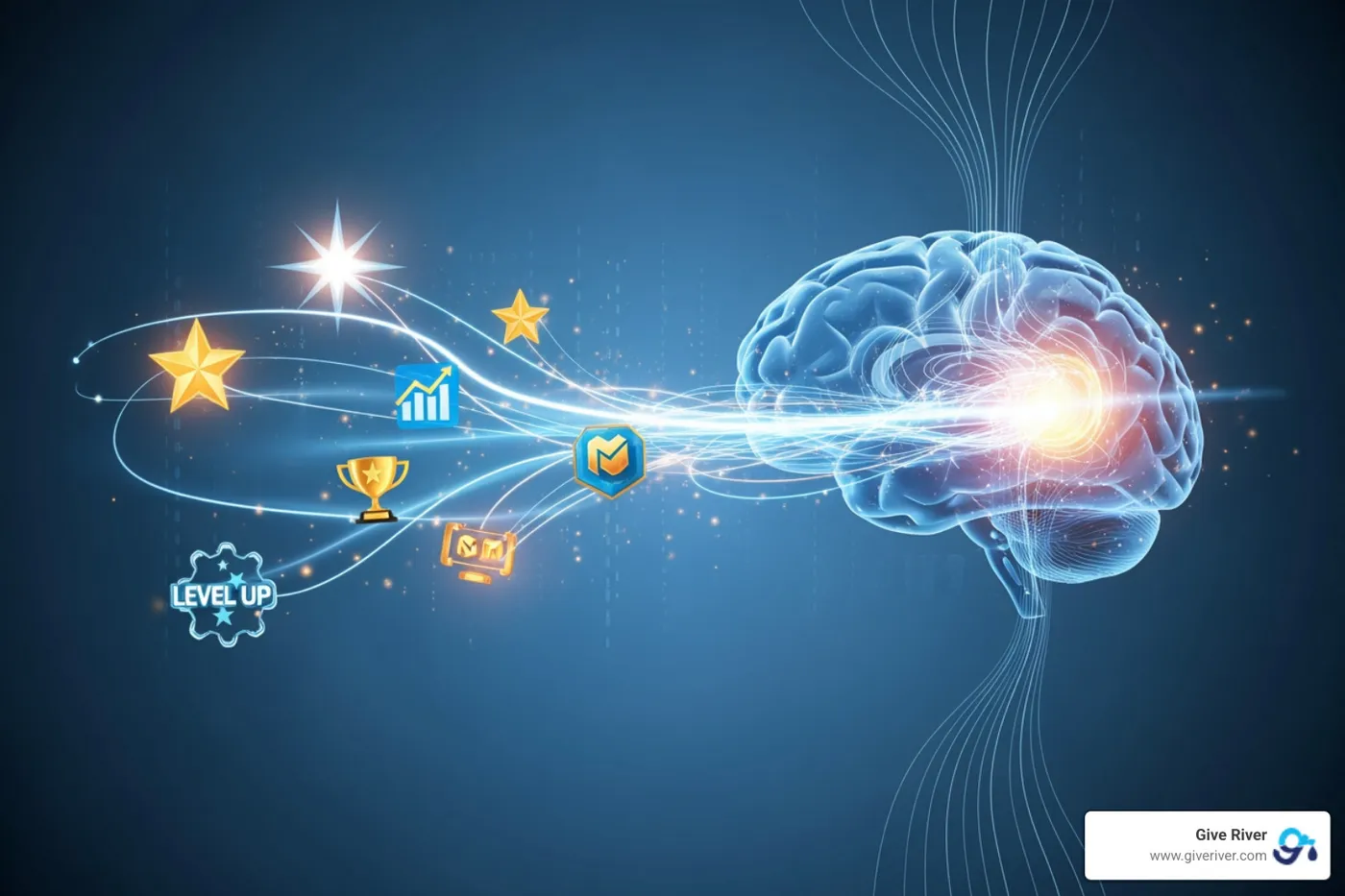
Gamification: Tapping into Our Playful Instincts: Gamification uses game-like elements to drive engagement. It taps into our natural desire for achievement, competition, and progress.
- Badges and Points: Provide immediate, visible feedback on achievement, reinforcing desired behaviors.
- Leaderboards: Can be powerful motivators for those who enjoy healthy competition.
- Levels and Challenges: Structured challenges provide a clear path for growth and mastery.
Gratitude and Peer-to-Peer Recognition: The Heart of Your System: While gamification provides structure, gratitude provides human connection. Peer-to-peer recognition is powerful because it comes from colleagues who understand the work involved.
- Authentic Appreciation: Encouraging employees to thank each other fosters a positive, supportive environment.
- Community Impact: Tying recognition to collective goals and community impact lifts the sense of shared purpose. Our 5G Method at Give River emphasizes Generosity, allowing teams to contribute to causes they care about.
By integrating gamification for engagement and gratitude for meaning, you create a dynamic and fulfilling motivation and reward system.
To transform your workplace culture, we invite you to explore our comprehensive employee rewards solutions. Learn how to build a culture of recognition with our employee rewards solutions and see how our 5G Method can empower your team.
Conclusion
Building a powerful motivation and reward system is a strategic imperative. We've journeyed through the brain's reward system, seeing how dopamine drives our "wanting" and how positive reinforcement trumps punishment in fostering productivity and trust.
By following our 3-step blueprint—aligning rewards with business objectives, personalizing them, and launching with gamification and gratitude—you are engineering an environment where motivation is contagious. This is how you build a culture where employee fulfillment becomes the bedrock of success. Organizations with engaged staff report nearly a one-third increase in profits, a testament to the power of a truly motivated workforce.
At Give River, we build happier, healthier, high-performing teams by integrating recognition, wellness, and growth through our unique 5G Method. It's about changing workplace culture, not just managing it. Accept the science, empower your people, and open up the full potential of your team.
More from this category.

The Impact of Employee Recognition on Workplace Success
Ever notice how a simple "thank you" can transform your entire day? Now imagine that feeling multiplied across your entire organization. That's the power behind the best employee recognition programs – they're not just nice-to-have perks,…

Why Recognition Feels Broken in Today's Workplace
Picture this: your whole department gets the same canned "thank-you" email. It lands with a thud. Connected recognition exists to replace that hollow gesture with a system that consistently spotlights real contributions.

From "Nice-to-Have" to Non-Negotiable: Why Your Business Needs Recognition Software
The business case for corporate recognition software goes far beyond warm feelings. When employees feel genuinely valued, every corner of your organization benefits\u0014from productivity metrics that impress the CFO to…
See the platform in action.
30-day free trial. No credit card. River Guide included on Core and Growth.