Why Blindfolds Uncover Communication Gaps
A blindfold activity on communication removes visual cues, forcing teams to rely entirely on verbal guidance, active listening, and trust. This simple change reveals communication gaps that often hide in plain sight during everyday…
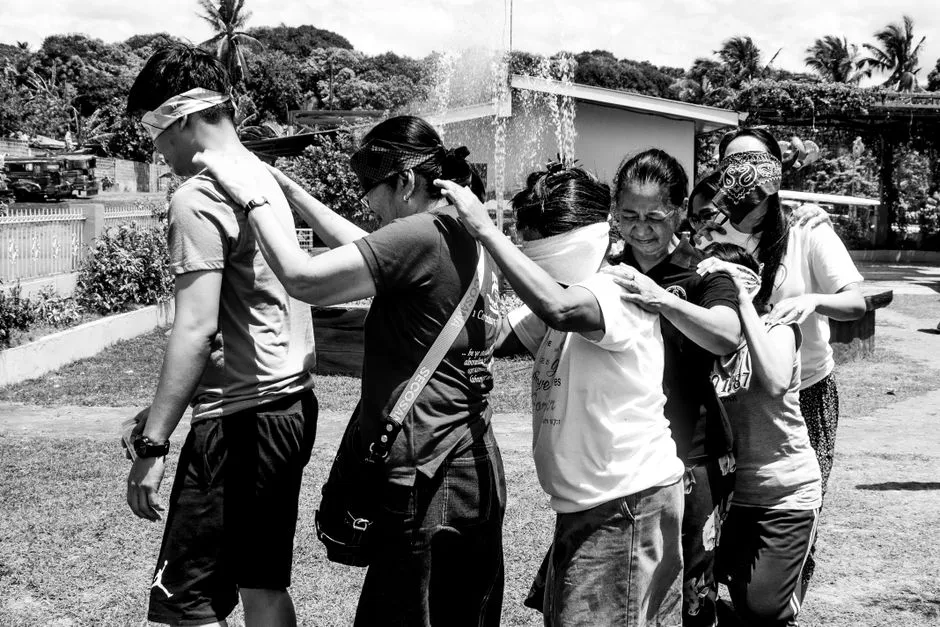
Why Blindfolds Uncover Communication Gaps
A blindfold activity on communication removes visual cues, forcing teams to rely entirely on verbal guidance, active listening, and trust. This simple change reveals communication gaps that often hide in plain sight during everyday workplace interactions.
When we can see each other, we unconsciously use body language and visual context to fill in the gaps of imprecise language. Remove sight, and suddenly every word counts. These exercises create a controlled environment where teams experience what happens when verbal communication breaks down, mirroring the challenges of remote work, emails, and calls where visual context is missing.
These activities are diagnostic tools that expose over-reliance on non-verbal cues, unclear instructions, and poor listening. They aren't just games; they build foundational skills. While digital platforms like Bonusly and Kudos excel at recognizing achievements, they can't teach the core communication skills that make collaboration possible. That's where experiential learning creates lasting impact.
As Meghan Calhoun, co-founder of Give River, I've seen how a well-facilitated blindfold activity transforms how teams interact. These exercises create shared experiences that teams reference long after the blindfolds come off.
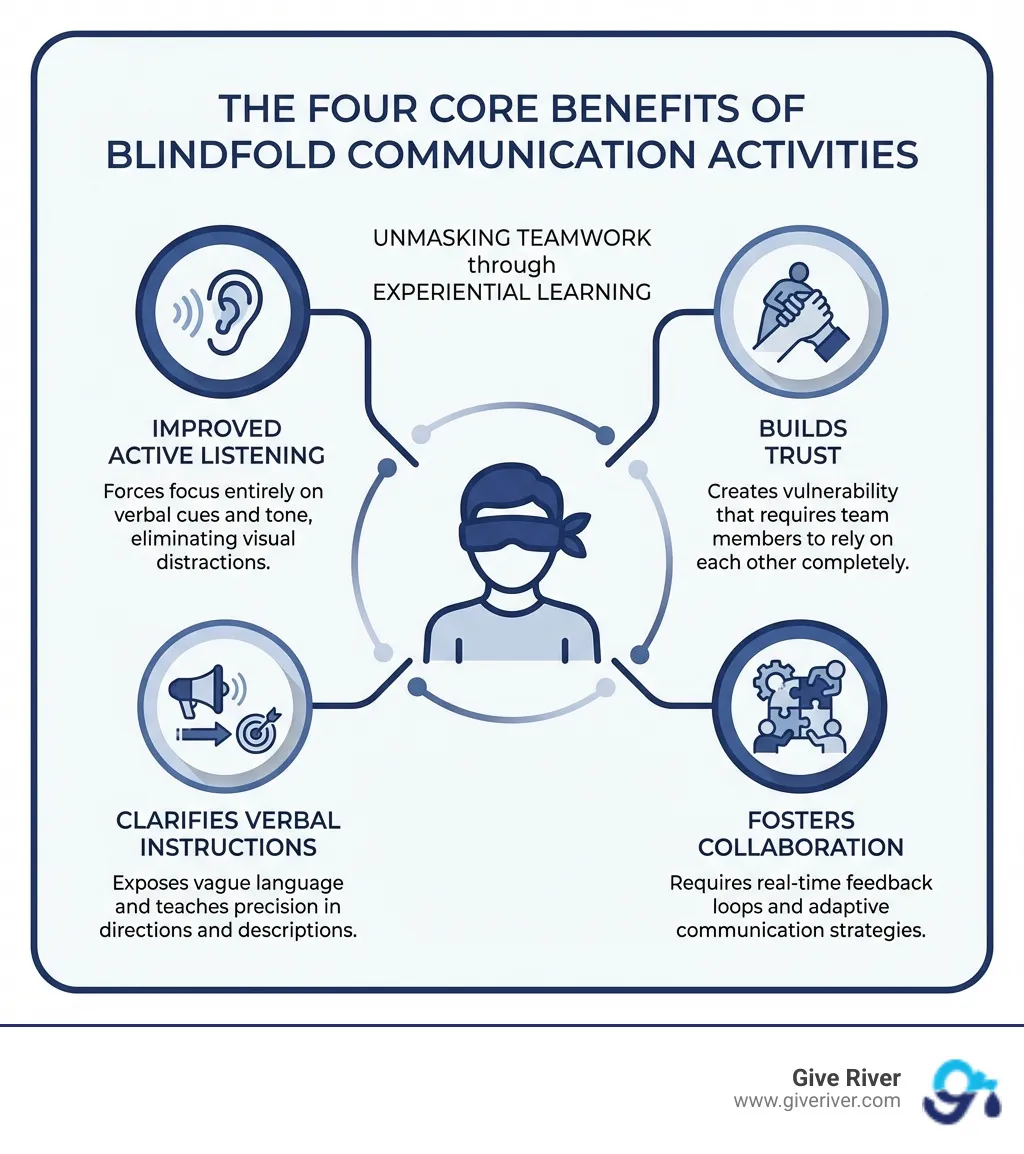
Infographic: Core Benefits of Blindfold Communication Activities include improved active listening, building trust, clarifying verbal instructions, and fostering collaboration.
Blindfold activity on communication terms at a glance:
5 Essential Blindfold Activities for Better Communication
Blindfold activities are powerful because they strip away our most dominant sense—sight—forcing us to rely on clear, verbal communication. This creates a memorable environment for learning and growth, where challenges lead to closer teamwork and innovative problem-solving. Here are five essential blindfold activities that target and improve communication.
1. The Minefield: Navigating Challenges with Trust and Clarity
Objective: To build trust, practice giving clear instructions, and improve active listening.
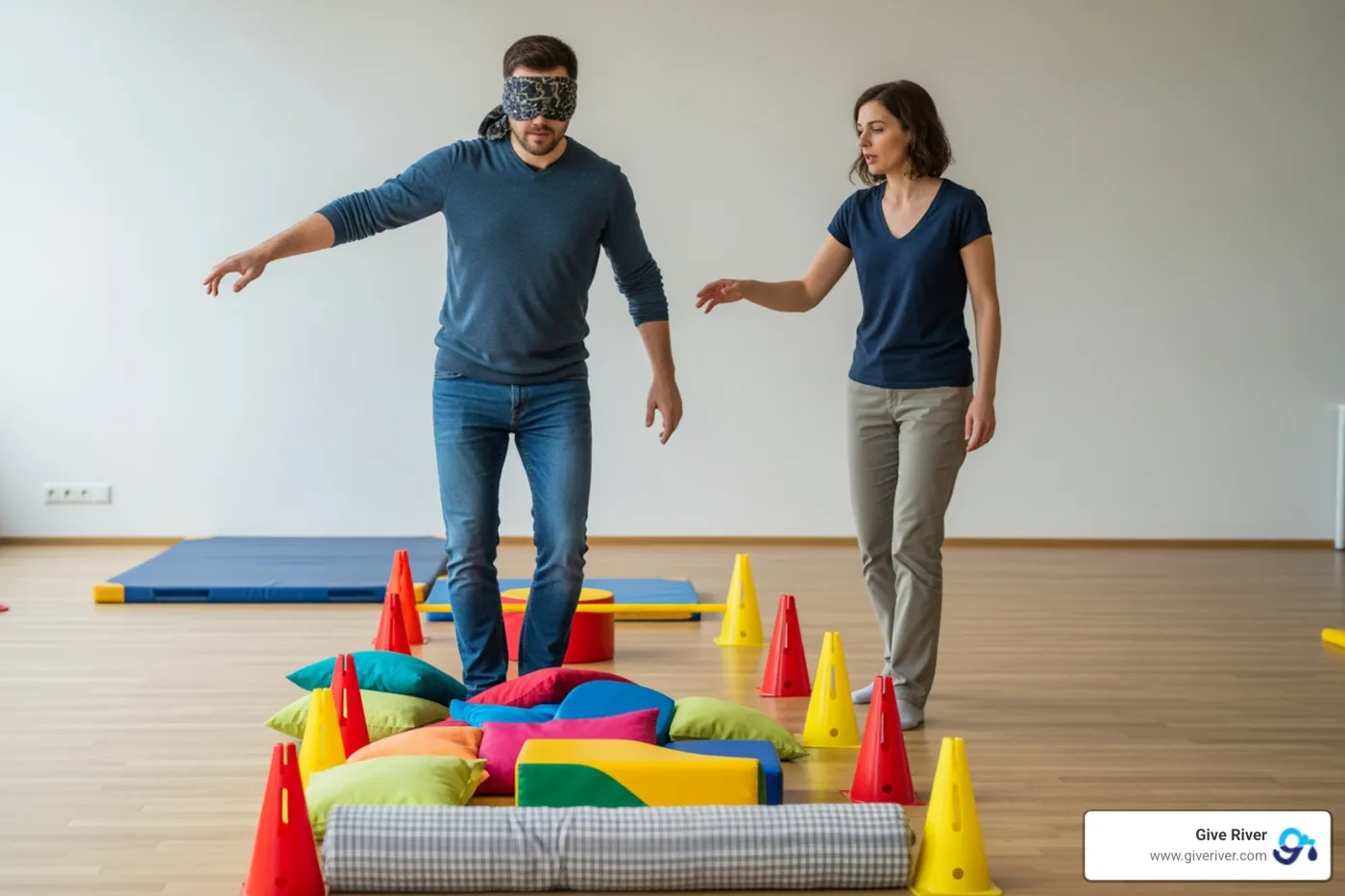
How to Play: In a safe, open area, scatter soft objects (pillows, cones) to create a "minefield." In pairs, one person is blindfolded (the "navigator") while the other (the "guide") uses only verbal commands to direct them from a start to an end point without touching any obstacles.
Key Learnings: This activity highlights the need for precision. Guides learn that vague directions like "go forward" are ineffective, while navigators must listen carefully and ask clarifying questions. It forces teams to establish clear feedback loops to overcome ambiguity. The vulnerability of being blindfolded also builds significant trust between partners.
More info about activities that build teamwork
2. Blind Drawing: Translating Vision into Words
Objective: To develop descriptive language, manage interpretation, and build a shared understanding without visual cues.
How to Play: In pairs, one person is blindfolded (the "drawer"). The sighted partner (the "describer") is given an image or shape and must verbally instruct the drawer on how to recreate it on paper. The describer cannot use non-verbal cues or touch the drawer's paper.
Key Learnings: This exercise exposes the danger of assumptions. Describers learn that terms like "curve" can be interpreted differently, forcing them to be more specific and create a shared vocabulary. It encourages communicators to adapt their style to their partner's needs, fostering flexibility and patience.
More info about boosting team spirit
3. Blind Polygon: Aligning the Team on a Shared Goal
Objective: To practice group problem-solving, identify emergent leadership, and improve team cohesion.
How to Play: A blindfolded team stands in a circle holding a long loop of rope. Their challenge is to work together to form a specific geometric shape, like a perfect square, without letting go of the rope.
Key Learnings: This activity reveals how teams organize and lead without visual cues. Emergent leaders often step up to coordinate efforts and check for alignment. Achieving the goal requires constant, clear feedback from everyone, highlighting how different communication styles interact under pressure. It teaches a balance between giving direction and empowering others to contribute.
4. Colourblind®: A Complex Blindfold Activity on Communication
Objective: A complex blindfold activity on communication for advanced problem-solving, information management, and precise language.
How to Play: Each blindfolded participant is given several unique plastic pieces. Using only verbal communication, the team must describe their pieces to the group to identify the color and shape of two pieces that were removed from the complete set before the activity began.
Key Learnings: Colourblind® teaches teams to handle abstract concepts verbally. It forces them to create a shared communication system, agreeing on terminology for shapes and textures to avoid confusion. Originally developed for air traffic controllers, it proves that precise language and careful feedback are crucial for success, a lesson supported by scientific research on the impact of verbal cues in absence of sight.
5. Blind Maze: Guiding the Way to Clarity
Objective: To practice giving clear, concise instructions and build trust between partners.
How to Play: In pairs, a sighted "guide" must verbally direct a blindfolded "traveler" through a predetermined maze or path without touching them. The maze can be created on the floor with tape or on paper for a tabletop version.
Key Learnings: This activity highlights the importance of feedback loops. Travelers learn to confirm their understanding ("My left or your left?"), while guides learn to adapt instructions in real-time. It's a direct exercise in building trust through clear, consistent guidance, which is essential for effective delegation and teamwork.
How to Facilitate a Successful Blindfold Activity on Communication
Successful facilitation is about creating a safe, engaging, and impactful learning experience. The goal is to foster communication while building connection and skill.
Safety First
Safety is the top priority. Before any blindfold activity on communication, clear the area of all hazards. Use soft surfaces where possible, ensure trained supervision, and establish a clear "stop" word. Always ask participants about their comfort level with blindfolds and offer alternative roles (like guide or observer) for those who are uneasy. This ensures an inclusive and safe environment for everyone.
Clear Instructions
Ambiguity leads to frustration. Before starting, clearly define the objective, rules, and roles. Explaining the "what, why, and how" before the blindfolds go on sets the stage for a productive experience and ensures everyone understands the boundaries of the game.
Adaptations
Blindfold activities are highly adaptable. Modify them for different group sizes, ages, and environments (indoor or outdoor). For example, break large groups into smaller teams or adjust the difficulty to target specific challenges, such as choosing Blind Drawing for descriptive language practice or The Minefield for concise commands. This ensures the activity meets your team's unique needs.
Competitor Context: While digital recognition platforms like Bonusly or Kudos are great for celebrating wins, these hands-on activities build the foundational trust and communication skills that make that recognition meaningful. Give River believes in a holistic approach where experiential learning improves every aspect of workplace engagement.
From Game to Growth: Debriefing and Applying the Lessons
The real value of a blindfold activity on communication emerges in the debrief. This is where a fun experience transforms into tangible insights and actionable strategies for the workplace. Without a thoughtful debrief, it's just a game.
The Power of the Debrief: Turning Experience into Action
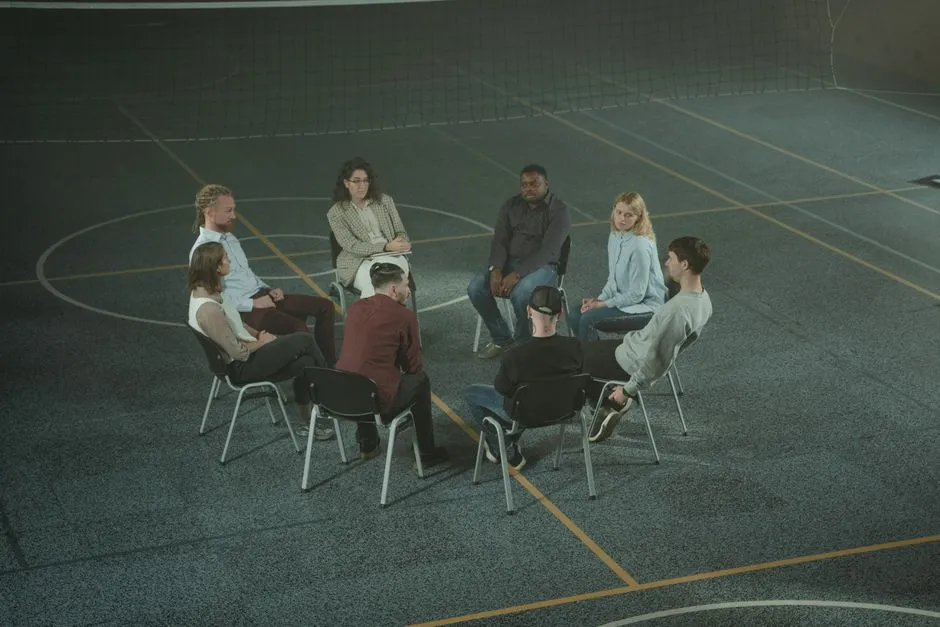
A structured debrief allows participants to reflect on their challenges and connect learnings to their daily work. Guide the discussion with thoughtful questions:
Key Debriefing Questions:
- What was most challenging about this activity?
- How did you adapt your communication strategy as you went?
- What did you learn about your teammates' communication styles?
- Did you feel safe, and did you trust your partner's guidance?
- How can we apply these lessons to our projects or remote collaboration?
Connecting to Workplace Dynamics
The true value comes from linking the activity to real-world scenarios. The frustration of vague instructions in The Minefield mirrors an unclear project brief. The struggle to align in Blind Drawing highlights the need for precise language in technical specs. By drawing these parallels, teams can identify and solve communication breakdowns in their own work.
Benefits Beyond Communication
These activities foster holistic employee development:
- Leadership Development: Emergent leaders practice guiding and motivating peers.
- Creative Problem-Solving: Teams innovate new communication methods to achieve goals, boosting their problem-solving skills in unusual situations.
- Building Empathy: Experiencing vulnerability builds trust and a deeper understanding of teammates.
- Self-Management: Participants become more aware of their own communication habits and their impact on others.
At Give River, we foster growth through experiences that build connection and skill. This is a key differentiator from platforms like Bonusly or Kudos, which focus on employee recognition. While celebrating wins is vital, we believe true engagement starts with building foundational trust and communication. High-performing teams are built on mutual support, and our 5G Method—Gratitude, Gamification, Generosity, Guidance, and Growth—integrates experiential learnings from activities like these with ongoing development. By combining guidance with gamification, Give River helps organizations cultivate a winning culture where recognition is a natural outcome of a connected and empowered team.
More from this category.
Why Most Work Meetings Start on the Wrong Foot (And How to Fix It)
The best 2 truths and a lie ideas for work can transform an awkward, silent meeting opener into a moment your team actually looks forward to. Whether you're onboarding new hires, kicking off a remote all-hands, or just trying to shake off…

The Trust Deficit in Remote Work
Building trust in a virtual team is a critical challenge for modern organizations. While remote work offers flexibility, it can erode team cohesion if not managed intentionally.
Why Connection Building Activities Are the Secret to High-Performing Teams
Connection building activities are structured exercises that help teams develop trust, improve communication, and foster genuine relationships at work — and they're one of the most overlooked drivers of team performance.
See the platform in action.
30-day free trial. No credit card. River Guide included on Core and Growth.