Why Employee Volunteering is More Than Just a Nice Perk
The benefits of employee volunteering are a proven strategy for building stronger teams, attracting top talent, and creating lasting community impact. The results are compelling: employees who volunteer are happier (93%), have higher…

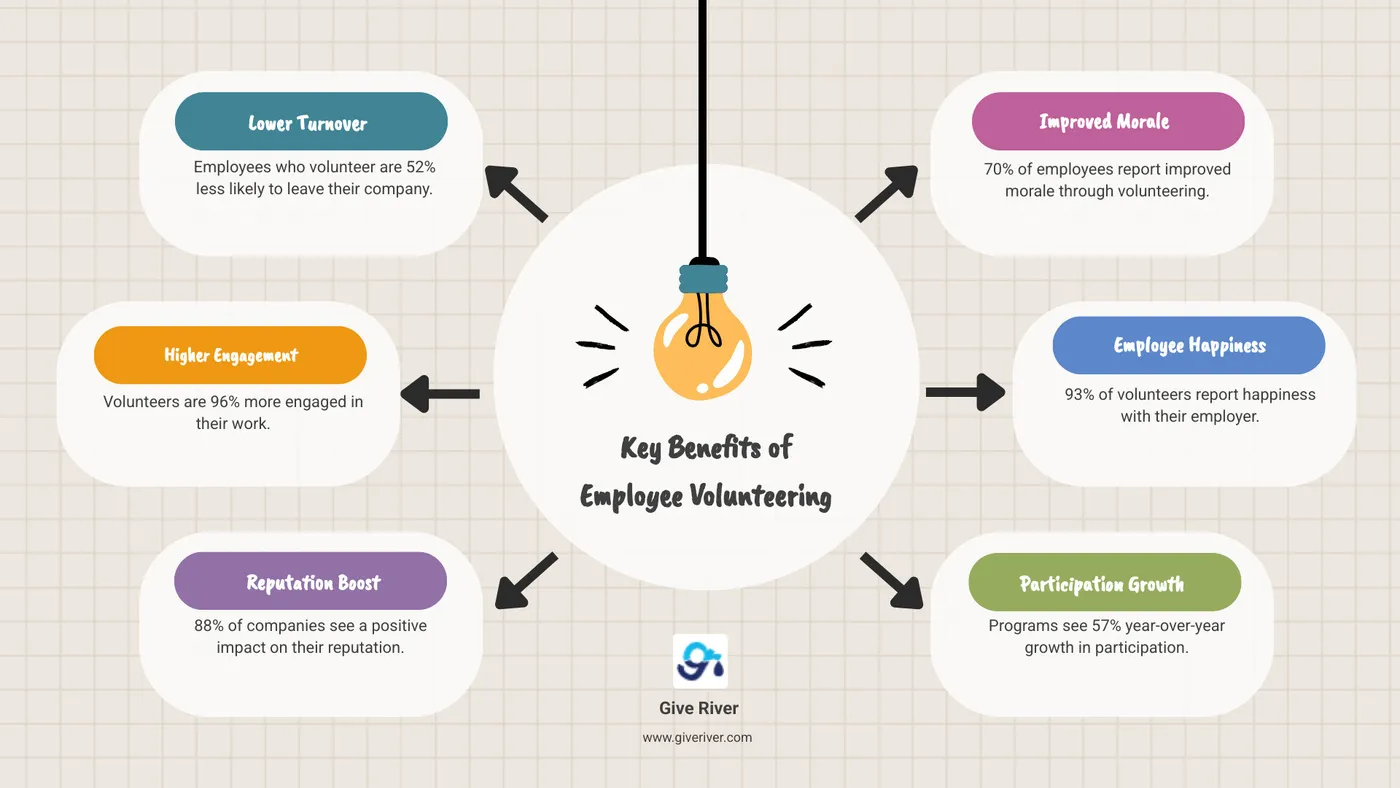
The benefits of employee volunteering are a proven strategy for building stronger teams, attracting top talent, and creating lasting community impact. The results are compelling: employees who volunteer are happier (93%), have higher morale (70%), and are 52% less likely to leave their jobs. For companies, this translates to a stronger reputation and a powerful advantage in attracting talent, as 70% of millennials favor employers committed to their communities.
While 70% of employees seek purpose through their work, traditional engagement strategies often fall short. Today's workforce craves meaningful contributions, not just perks. Employee volunteering is a strategic investment that develops your people, strengthens your culture, and delivers genuine community impact. The challenge isn't whether to implement a program, but how to design one that delivers measurable results for everyone.
As Meghan Calhoun, Co-Founder of Give River, I've seen how purposeful engagement transforms workplace culture. This experience shaped our mission to help companies build happier, healthier teams by connecting work to a greater purpose.
The Tangible Returns: Unpacking the Key Benefits of Employee Volunteering
When we talk about the benefits of employee volunteering, we're looking at a powerful ripple effect that touches individuals, strengthens organizations, and uplifts communities. It's a true win-win-win scenario that forward-thinking leaders are leveraging to transform their workplace culture.
For Employees: Boosting Personal and Professional Growth
The benefits of employee volunteering for individuals create lasting personal and professional change. Volunteering taps into a fundamental desire to make a difference, boosting well-being and morale. The numbers are clear: 93% of volunteer employees express happiness with their employer, and 70% report that volunteering boosts their morale. Scientific research confirms that volunteering is linked to better health and lower stress, creating more resilient people who bring their best selves to work.
Beyond well-being, volunteering is a dynamic learning environment. Employees develop critical skills like teamwork, communication, and project management. In fact, 72% of employee volunteers were more likely to develop new skills at work compared to just 42% of non-volunteers. This hands-on experience builds leadership capabilities and confidence, with 70% of volunteers feeling they have more opportunities to grow professionally, compared to just 39% of non-volunteers. For more ways to strengthen these connections, explore our guide on Peer-to-Peer Recognition Activities.
For the Company: Strengthening Culture, Talent, and Brand
The benefits of employee volunteering create a virtuous cycle for organizations, improving talent acquisition, retention, and brand reputation. In a competitive market, purpose matters. 70% of Millennials favor companies committed to the community, and 55% of employees would even take a pay cut to work for a socially responsible company. The impact on retention is even more direct: employees who participate in corporate purpose programs are 52% less likely to leave their company. This translates to significant savings in recruitment and training costs.
Volunteering also improves your brand and internal culture. 88% of HR executives believe volunteering positively impacts an organization's reputation, and 90% of global consumers would switch brands to one that supports a good cause. Internally, these shared experiences build camaraderie and trust. Millennials who volunteer are twice as likely to rate their corporate culture positively. Strong leadership participation is key to signaling that community involvement is a core value. While platforms like Bonusly or Kudos are excellent for peer-to-peer recognition, they are not built to manage volunteer programs. Give River, in contrast, weaves community impact directly into the fabric of employee engagement, making it seamless to organize, track, and celebrate volunteer contributions. To understand more about how comprehensive programs foster connection, explore our Community Involvement Programs.

For the Community: Creating Real-World Impact
The most profound benefits of employee volunteering are felt in the communities we serve. Every hour an employee dedicates helps a nonprofit address real societal challenges. With global employee volunteer participation increasing by 57% year over year, this collective effort creates tangible change. Nonprofits, which often face rising demand with limited resources, rely on volunteers to bridge the gap. This support allows them to extend their reach and deepen their impact.
When companies align volunteering with their Corporate Social Responsibility (CSR) goals, they create powerful synergy. This resonates with consumers, as 77% are motivated to buy from companies committed to improving the world. Your commitment to CSR is fundamental to a sustainable business model. To learn more about the profound impact of CSR, check out our guide on What is Corporate Social Responsibility and Why is it Important. And for strategies to maximize your charitable efforts, explore our Charitable Impact Strategies.

From Vision to Action: Building and Measuring Your Program
Understanding the benefits of employee volunteering is one thing—bringing them to life is another. The most impactful programs are the result of thoughtful design, genuine commitment, and ongoing refinement. Here’s how to transform your vision into a thriving volunteer culture.
Best Practices for Launching a Successful Program
Successful programs are built on a few critical factors that set the foundation for engagement.
Secure Leadership Support: When executives champion and participate in volunteer initiatives, it signals that this work matters. Visible commitment from the top transforms volunteering from a perk into a core cultural value.
Offer Volunteer Time Off (VTO): Time is a major barrier; 62% of employees say they lack time during the workday. By offering VTO—which 84% of companies now do—you remove a significant hurdle and empower employees to participate without stress.
Provide Choice and Flexibility: A one-size-fits-all approach doesn't work. When companies support both company-created and employee-led opportunities, they see participation rates jump by 12 times. Let employees support causes that resonate with them personally.
Diversify Program Types: Cater to different skills, schedules, and interests. Skills-based volunteering lets professionals use their expertise, while team volunteer days build camaraderie. For remote teams, virtual volunteering ensures inclusivity. Even small Volunteer Acts of Kindness (VAOKs) provide an accessible entry point.
Recognize and Reward Efforts: Acknowledging volunteer contributions reinforces their value. Incentives like volunteer grants, where the company donates based on employee hours, can boost volunteer hours per person by an average of 50%. Connecting these efforts to your company's purpose makes the experience more meaningful. For more inspiration, explore our insights on Best CSR Initiatives Employees.
Measuring the True ROI of Employee Volunteering
While the ROI of volunteering isn't always a simple financial metric, its impact is measurable. Focus on tracking these key outcomes:
Participation Metrics: Start with the basics: participation rates and total hours contributed. This gives you a baseline to track growth over time. Globally, participation increased by 57% year over year, so aim for steady improvement.
Employee Feedback: Use brief surveys and testimonials to gather qualitative data. Ask about their experience, skill development, and feelings of connection to the company. These stories are powerful proof of the program's value.
Community Impact: Collect feedback from your nonprofit partners. Understanding the tangible impact your team made (e.g., meals served, trees planted) provides external validation and motivates employees, as 78% are driven by seeing the difference they make.
Connection to Business Goals: Integrate volunteering questions into employee engagement surveys or exit interviews to correlate the program with retention and satisfaction. Track how your efforts align with broader CSR goals to demonstrate strategic value. For tools to help track your impact, check out our resources on CSR and ESG Initiatives.
Navigating Challenges and Maximizing Success
Even the best programs face obstacles. Be aware of common pitfalls to ensure your efforts succeed.
Lack of Authenticity or Forced Participation: Employees can spot insincerity. Volunteering must be a genuine extension of your company's values, not a PR stunt. Pressuring employees to participate creates resentment and undermines the program's purpose. Engagement must be voluntary to be meaningful.
Inaccessibility and Poor Matching: If opportunities don't accommodate different schedules, locations (including remote workers), or interests, you're leaving people out. Ensure your program is inclusive and that volunteer activities align with employee skills and passions to maximize impact and satisfaction.
No Visible Impact: Volunteers lose motivation when they can't see the difference they're making. Communicate outcomes clearly and consistently to keep your team connected to the "why" behind their efforts.
This is where the right technology makes all the difference. While platforms like Bonusly or Kudos focus on recognition and rewards, they lack the dedicated tools for managing a volunteer program from start to finish. Give River stands out by integrating community impact directly into the employee experience. Our platform makes it seamless to find meaningful opportunities, track volunteer hours, share impact stories, and celebrate good deeds as part of your company culture. We connect the dots between individual contributions and collective impact, ensuring that every volunteer moment gets the visibility and appreciation it deserves.
By focusing on genuine engagement, offering diverse and accessible opportunities, and using intuitive tools that simplify management and amplify impact, we can transform employee volunteer programs into powerful drivers of positive change. Learn how Give River can help you build and manage your charitable impact by visiting our charitable impact solutions page.
More from this category.

The Importance of Community Involvement
Community involvement programs are the heartbeat of social wellbeing, changing neighborhoods into collaborative and vibrant spaces. At their core, these programs enable both individuals and businesses to meaningfully participate in…

Recognition Software With Charitable Giving (2026): 6 Platforms Compared
Most recognition platforms let employees donate their rewards. Six compared on donations, company match, causes, and volunteering, from each vendor's own site.
Why Community Involvement Grants Matter for Your Organization's Impact
Community involvement grants provide essential funding to help organizations—from nonprofits and schools to businesses—create meaningful change. These grants can feel overwhelming to steer, but they offer a powerful way to address critical…
See the platform in action.
Free for up to 25 members, or try Core or Growth free for 30 days. A card is required; Free is never charged, and a trial bills when it ends unless you cancel.