Why Collaborative Digital Workspaces Matter Now More Than Ever
Collaborative digital workspaces are virtual environments that integrate communication, project management, and real-time collaboration tools. These cloud-based platforms are fundamentally changing how teams connect and get work done…
Why Collaborative Digital Workspaces Matter Now More Than Ever
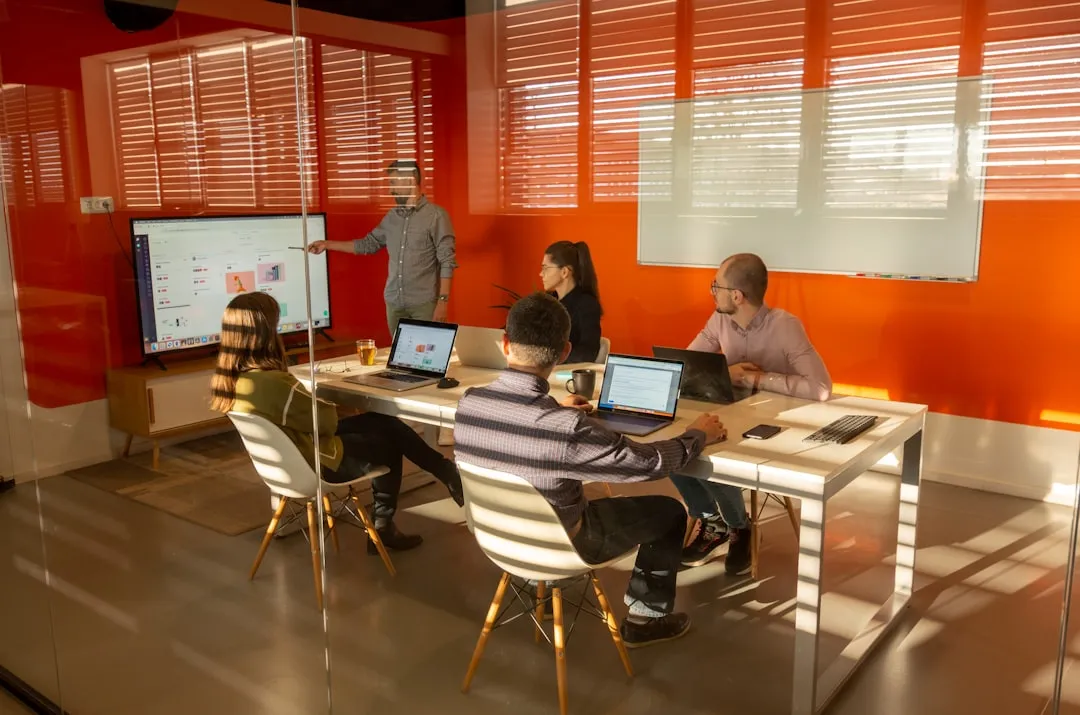
Collaborative digital workspaces are virtual environments that integrate communication, project management, and real-time collaboration tools. These cloud-based platforms are fundamentally changing how teams connect and get work done across any distance or time zone.
Not long ago, the workplace meant a brick-and-mortar office. Today, with 35% of US employees working from home full-time and another 23% in a hybrid model, organizations face a new challenge: how do you create genuine connection and high performance when your team is scattered?
The answer isn't just more technology—it's about reimagining how work happens. Digital workspaces can offer superior communication, but only when designed with human fulfillment at their core.
As Meghan Calhoun, Co-Founder of Give River, I've spent over two decades building high-performing teams. I've learned that effective collaborative digital workspaces require more than just tools—they need intentional strategies that foster gratitude, connection, and purpose. Through my work with Give River, I've seen how the right digital environment can transform isolated workers into connected, thriving teams.
Essential collaborative digital workspaces terms:
Unpacking the Power of Collaborative Digital Workspaces
The shift to remote and hybrid work is a fundamental change in how we approach work. In this landscape, collaborative digital workspaces are the cornerstone for maintaining productivity, fostering connection, and driving innovation. These are strategic ecosystems designed to replicate and improve upon in-person collaboration.
Core Benefits for Modern Remote and Hybrid Teams
For distributed teams, the advantages of well-implemented collaborative digital workspaces are profound, ensuring everyone remains aligned, productive, and engaged.
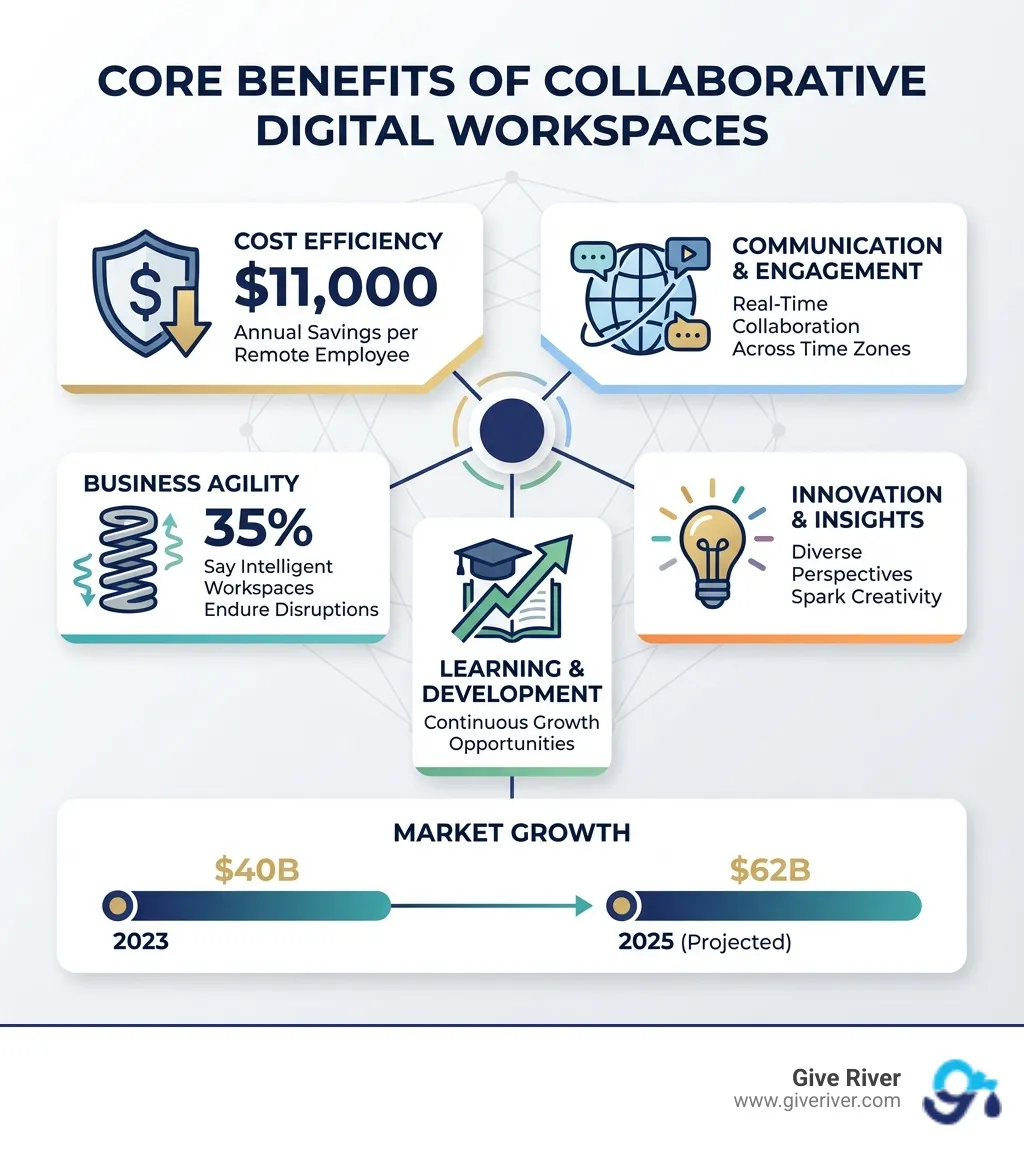
Increased Business Agility: Digital workspaces foster a flexible environment for rapid decision-making. This agility is vital, with 35% of leaders in a Box-sponsored IDC report indicating that intelligent digital workspaces are most likely to endure market disruptions.
Significant Cost Efficiency: The financial benefits are clear. Organizations save an average of $11,000 annually for every remote employee, freeing up resources for strategic initiatives.
Improved Communication and Engagement: These platforms break down communication silos by providing centralized hubs for real-time and asynchronous interaction, keeping teams aligned across time zones.
Increased Innovation and Insights: Diverse teams drive innovation. The World Economic Forum found that inclusive companies are more innovative. Digital workspaces bring diverse colleagues together, and platforms like Miro—used by over 100 million people—accelerate brainstorming, reporting a 3.6x faster time to market.
Improved Remote Productivity and Work-Life Balance: By centralizing tools, digital workspaces streamline workflows and reduce context switching. This efficiency and flexibility empower employees to manage their work-life balance, leading to greater job satisfaction.
Key Technologies Powering the Digital Shift
A robust technological foundation is essential for a successful collaborative digital workspace. These components create a seamless and secure environment for modern teams.
Cloud Infrastructure: As the bedrock of digital workplaces, cloud services enable access to apps and data from anywhere. It facilitates real-time collaboration, centralized resources, version control, and security. More than 80 percent of successful change initiatives rely on cloud services.
SaaS (Software as a Service) Platforms: Applications like Slack, Miro, and Box are delivered over the internet, offering specialized tools for communication, project management, and collaboration without local installation.
Artificial Intelligence (AI) Integration: AI is making digital workplaces more intelligent by automating tasks, enhancing search, and providing data-driven insights.
Mobile Access: Optimization for smartphones and tablets is crucial, ensuring team members can stay connected and contribute from anywhere.
Integrated Communication Tools: A unified hub for instant messaging, video conferencing, and email reduces the need to jump between different applications.
Workflow Automation: Tools that automate routine processes like approvals and notifications significantly boost efficiency and reduce manual work.

How AI is Augmenting Team Collaboration
Artificial Intelligence is a transformative force in collaborative digital workspaces, augmenting human capabilities and making workflows smarter.
AI Agents in Collaboration: Intelligent assistants can summarize conversations, draft responses, and route requests, freeing up teams for more complex, creative work. Platforms like Slack are integrating AI agents that act as knowledgeable teammates.
Automated Summaries and Meeting Notes: AI can generate concise meeting summaries, highlight decisions, and identify action items. For example, Gather offers AI meeting notes to ensure no one misses crucial information.
Intelligent Search and Knowledge Retrieval: AI-powered search instantly sifts through documents, chats, and project files to find needed information. This supports real-time decisions and faster onboarding.
Workflow Automation and Optimization: AI can analyze and automate repetitive tasks like data entry or report generation, leading to significant efficiency gains.
Predictive Analytics: By analyzing team performance and project data, AI can offer insights into potential issues, allowing leaders to address challenges proactively. The impact is tangible, with 24 percent of companies already using AI to optimize service operations.
Enhancing Communication and Engagement in Your Collaborative Digital Workspace
Effective communication and genuine engagement are the lifeblood of any successful team. Collaborative digital workspaces are designed to nurture these elements.
Real-time Chat and Asynchronous Updates: Tools like Slack provide channels for both instant messaging and structured updates, ensuring efficient communication across different time zones and work schedules.
Virtual "Water Cooler" Moments: To combat the loss of spontaneous office interactions, platforms like Gather offer virtual spaces where colleagues can connect naturally, fostering team culture.
Shared Digital Canvases for Ideation: Tools like Miro provide a shared "Intelligent Canvas" for teams to brainstorm and plan visually, ensuring all voices are heard and sparking innovation.
Fostering Culture through Digital Recognition: A thriving digital workspace cultivates a positive culture. While platforms like Bonusly and Kudos excel at peer-to-peer recognition, often centered on points or small monetary rewards, we at Give River take a different approach. Instead of just recognizing achievements, we focus on changing culture through gratitude, gamification, and generosity. Our 5G Method boosts fulfillment and productivity by encouraging a game of good deeds that incorporates recognition, wellness, growth, and community impact, creating a more holistic and purpose-driven environment.
Integrated Workflows for Seamless Collaboration: The best digital workspaces, like Box, centralize documents in a cloud repository, enabling real-time editing and version control to ensure everyone works with the latest information.
Overcoming Common Implementation Challenges
Implementing collaborative digital workspaces successfully requires addressing common challenges proactively.
- Cybersecurity Risks: With 69 percent of organizations citing cybersecurity as a hurdle, it's a major concern.
- Solution: Implement robust security measures like multi-factor authentication, data encryption, and access controls. Partner with secure providers like Box that prioritize compliance.
- Resistance to Change: Employees may be skeptical of new tools and workflows.
- Solution: Manage change through clear communication, comprehensive training, and by involving key stakeholders early to explain the benefits.
- Legacy Systems and Integration Complexities: Existing systems may not integrate well with modern tools.
- Solution: Adopt a phased approach to replacing outdated systems and use middleware or AI to bridge short-term gaps.
- Tool Overload and Complexity: An abundance of tools can lead to confusion and inefficiency.
- Solution: Audit existing tools and select a core suite of integrated platforms. Provide clear guidelines on which tools to use for specific tasks.
- Data Silos: Information can get trapped in different applications, hindering collaboration.
- Solution: Emphasize integrated platforms that centralize knowledge and encourage transparency.
Building a Secure and Effective Digital Workplace for the Future
The digital workplace is an evolving ecosystem. As technology and work models shift, our strategies for creating effective collaborative digital workspaces must adapt.
Essential Strategies for Creating Effective Collaborative Digital Workspaces
Building a thriving digital workplace demands a strategic approach that prioritizes people, processes, and technology.
Begin with a Digital Workplace Audit: Before making changes, audit your existing tools, workflows, and pain points. Understand how teams communicate and where work gets stuck to identify opportunities.
Introduce AI Where it Supports Real Work: Integrate AI strategically to simplify tasks like summarizing threads or routing requests. The goal is to reduce friction and free up your team for higher-value activities.
Build for Clarity, Not Complexity: Focus on unifying core platforms rather than adding more tools. Select solutions that work well together and provide clear guidelines for collaboration.
Implement Robust Security Guardrails: Make security and compliance non-negotiable. Implement role-based access, audit trails, and data encryption to protect data without creating excessive user friction.
Prioritize User Training and Continuous Support: Invest in comprehensive onboarding and ongoing support to ensure teams feel confident using the new tools. Create a knowledge-sharing system for best practices.
Foster a Culture of Trust and Transparency: Technology alone doesn't build a great team. Underpin your digital workplace with a culture of transparent communication and mutual respect. This is where Give River's approach shines, helping organizations build a culture of gratitude and generosity that supports genuine human connection.
The Future Outlook for Digital Workplaces
The future of collaborative digital workspaces is dynamic, shaped by AI and evolving work models.
AI at the Core: AI will become an intelligent agent embedded in our work, anticipating needs, providing proactive insights, and managing complex workflows.
Seamless Integration and Hyper-Personalization: Deeper integrations will create a seamless user experience, while hyper-personalization will allow individuals to customize their digital environment.
Evolving Work Models: The hybrid model will endure, requiring digital workplaces to provide equitable experiences for both in-office and remote team members through improved virtual presence and asynchronous tools.
Focus on Employee Well-being and Fulfillment: The focus will increasingly shift to how digital tools can support employee well-being. This aligns with Give River's mission to use gamified good deeds and generosity to nurture purpose, connection, and gratitude.
An effective digital workplace isn’t built overnight, but it starts by removing friction and supporting better, faster collaboration. By embracing these strategies, we can create collaborative digital workspaces that empower teams to thrive.
The goal is to build a stronger, more connected team, and that's what we help organizations achieve at Give River. Our solutions transform workplace culture, making your digital workspace a place where every contribution is recognized and every team member feels supported.
More from this category.
Why Most Work Meetings Start on the Wrong Foot (And How to Fix It)
The best 2 truths and a lie ideas for work can transform an awkward, silent meeting opener into a moment your team actually looks forward to. Whether you're onboarding new hires, kicking off a remote all-hands, or just trying to shake off…

The Trust Deficit in Remote Work
Building trust in a virtual team is a critical challenge for modern organizations. While remote work offers flexibility, it can erode team cohesion if not managed intentionally.

Why Connection Building Activities Are the Secret to High-Performing Teams
Connection building activities are structured exercises that help teams develop trust, improve communication, and foster genuine relationships at work — and they're one of the most overlooked drivers of team performance.
See the platform in action.
30-day free trial. No credit card. River Guide included on Core and Growth.